
Subtotal ¥0.00
Discover 5 key steps to prevent patient identification errors improve safety and strengthen healthcare data integrity
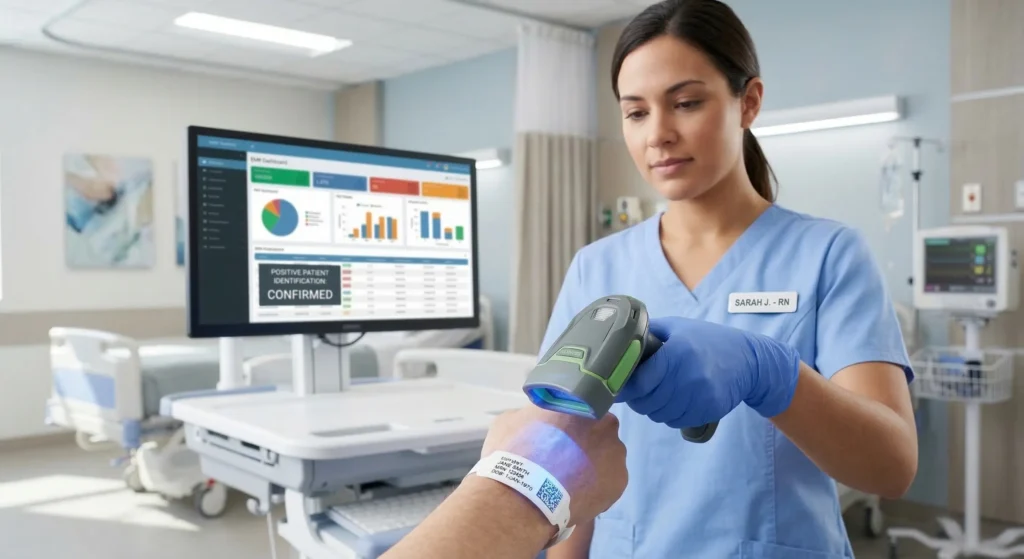
You might already know that fragmented systems and high-stress clinical environments are a recipe for devastating medical mix-ups.
But how do you actually stop patient identification errors before they reach the bedside?
Well, you’re in the right place because I’ve put together a complete, step-by-step strategy.
As a health IT and risk management expert, I know that relying on outdated verification workflows is a massive liability. Implementing bulletproof positive patient identification (PPID) is absolutely crucial for protecting your patients and your facility.
Some of these strategies rely on rigorous human protocols.
Others depend on advanced technology like EMPIs and barcode scanning.
But they are all proven to eliminate duplicate records, stop adverse events, and guarantee safety.
In this post, you’re going to learn exactly how to safeguard your hospital with the 5 Key Steps to Prevent Patient Identification Errors.
Let’s dive right in.
Step 1: Enforce the “Two Unique Identifiers” Protocol
In healthcare risk management, a single assumption at the bedside can lead to catastrophic outcomes. We constantly hear from clinical directors and hospital executives who are deeply concerned about the rising risks of data mix-ups. To successfully drive medical error prevention, you have to start with the absolute foundation of clinical workflow standardization.
The first line of defense in achieving positive patient identification (PPID) is strictly enforcing a dual-verification process before any treatment, medication administration, or procedure begins.
Standardize Two Patient Identifiers
Relying on a single data point is a liability. To meet and exceed The Joint Commission safety goals, your clinical staff must use at least two distinct data points to verify a patient’s identity.
- Primary Identifier: The patient’s full legal name.
- Secondary Identifiers: Date of birth (DOB) or a unique Medical Record Number (MRN).
Using two patient identifiers ensures that even in cases involving common names (like “John Smith”) or chaotic emergency room environments, the right care reaches the right person.
The “Ask, Don’t Confirm” Method
Human error often thrives on convenience. A tired nurse might walk into a room and ask, “Are you John Doe?” A confused, hearing-impaired, or distracted patient might simply nod “yes.” This is how critical patient safety protocols fail.
Instead, mandate the “Ask, Don’t Confirm” communication method:
- Do: Ask open-ended questions. “Could you please state your full name and date of birth for me?”
- Don’t: Ask affirmative or leading questions.
By forcing the patient to actively provide their information, you eliminate the risk of passive misidentification.
Identifiers You Must Strictly Avoid
As we partner with facilities to implement robust identification solutions like those from LinkWin, we frequently audit outdated workflows. You must explicitly train your staff to never use temporary or subjective markers as identifiers.
Never use the following to verify identity:
- Room or Bed Numbers: Patients are frequently moved, and bed assignments change rapidly.
- Physical Descriptions: Relying on physical traits is highly subjective and incredibly prone to error.
- Diagnosis or Condition: Treating “the broken leg in Room 4” is a dangerous habit that completely undermines patient data integrity.
Getting this very first step right is non-negotiable. Without standardized, verbal verification, downstream technology and treatments are built on a flawed foundation.
Step 2: Implement and Optimize Barcode Scanning Technology
Point-of-Care Verification & EHR Accuracy
To achieve positive patient identification (PPID) and fundamentally prevent patient identification errors, we rely on 2D barcoded patient wristbands. This is not just a standard hospital ID; it is the unbreakable link between the physical patient and their Electronic Health Record (EHR). Scanning this barcode directly at the bedside guarantees point-of-care verification, serving as your frontline defense against mixing up treatments or records.
Health Information Technology Integration
Integrating reliable health information technology (HIT) is where we see the biggest impact on safety. Our LinkWin solutions are built to effortlessly streamline the scanning process across your entire facility.
- Barcode Medication Administration (BCMA): LinkWin ensures that the right drug goes to the right patient by seamlessly connecting bedside scans to the pharmacy database.
- Specimen Collection: We standardize the clinical workflow, ensuring blood and tissue samples are accurately tracked from the exact moment of collection.
- Patient Data Integrity: By keeping the system fast and responsive, we encourage consistent use, which directly aids in hospital liability reduction.
Stopping Barcode Workarounds
Even the best systems fail if staff bypass them. We must firmly address workarounds to maintain strict patient safety protocols and ensure robust medical error prevention.
- Ban Pre-Printing: Never allow staff to print barcode labels at the nurse’s station before entering the patient’s room.
- Stop Pre-Labeling: Tubes, vials, and charts must only be labeled after successfully scanning the patient’s wristband at the bedside.
- Enforce Real-Time Scans: Auditing tools must track scan timestamps to ensure staff are conducting real-time, in-room verification rather than scanning proxy barcodes or chart stickers.
Step 3: Utilize an Enterprise Master Patient Index (EMPI)
When handling healthcare risk management, an Enterprise Master Patient Index (EMPI) is our strongest asset against fragmented data. Relying on an EMPI ensures we maintain a single, accurate profile for every person walking through our doors, making it a crucial part of our 5 Key Steps to Prevent Patient Identification Errors.
Eliminate Duplicate Medical Records
Having multiple files for the same person creates dangerous clinical blind spots. An EMPI steps in as the definitive single source of truth across disparate healthcare networks and internal departments.
- Unified Information: Connects scattered data from outpatient clinics, emergency rooms, and specialized care into one centralized hub.
- Clear Visibility: Guarantees clinicians always see the complete, accurate medical history, significantly dropping the risk of medical mix-ups.
Enforce Data Governance at Registration
Solid patient data integrity starts the second a patient approaches the front desk or admissions desk. If we fail to capture accurate details at the very first touchpoint, those minor mistakes will multiply across the entire system.
- First-Touch Accuracy: We implement strict, standardized data collection rules right at registration.
- Block Downstream Errors: Catching a typo or missing middle initial early stops the wrong labs or treatments from being ordered later on.
Leverage Algorithm-Driven Matching
Human eyes get tired during long shifts, but technology does not. A robust EMPI relies on advanced matching algorithms to do the heavy lifting in the background.
- Smart Detection: Algorithms instantly flag discrepancies that busy staff often miss, such as transposed birthdates, misspelled surnames, or recent address changes.
- Automated Precision: Seamlessly links the correct records together based on complex data points, ensuring our patient safety protocols are backed by clean, reliable data.
Step 4: Actively Involve Patients to Prevent Patient Identification Errors
Empowering Patients in Safety Protocols
When we look at hospital liability reduction, we often focus entirely on our internal systems. But to truly prevent patient identification errors, we must empower patients and their families. They are the final, critical checkpoint in our positive patient identification (PPID) process. By clearly explaining exactly why we constantly ask for their details, we turn patients from passive recipients of care into active partners in their own safety.
Bridging Health Literacy Gaps
A global healthcare environment means treating people from all walks of life. We cannot let language barriers or cognitive limitations compromise our patient safety protocols. We must adapt our communication to make our verification processes universally understood.
- Utilize clear visual aids: Show patients exactly how point-of-care verification works using simple graphics or translated instruction cards.
- Leverage professional interpreters: Ensure non-native speakers fully grasp the identification process from the moment they walk through the doors.
- Involve dedicated caregivers: For patients dealing with cognitive decline, rely on trusted family members to act as a secondary check for patient data integrity.
Encouraging Patient Self-Advocacy
Meeting The Joint Commission safety goals requires a complete team effort. We must actively encourage patients to speak up and advocate for themselves. They need to expect—and demand—an ID check every single time.
- Set clear expectations early: Inform patients at registration to expect constant checks. Tell them straight: “If a staff member doesn’t check your wristband, stop them and ask.”
- Normalize questioning: Teach patients that demanding an ID check before any medication, blood draw, or procedure is a standard and expected step in medical error prevention.
- Build a ‘Speak-Up’ culture: Ensure patients feel completely comfortable and supported when they question clinical staff about their identity verification.
Step 5: Training and Audits to Stop Patient Identification Errors
Even the best technology is only as effective as the people using it. To truly drive hospital safety and achieve consistent medical error prevention, we must build a resilient culture of safety from the ground up. Continuous training and active monitoring are how we keep our frontline teams sharp and our patients secure.
Clinical Workflow Standardization
Regular, unannounced audits of daily operations are non-negotiable for modern healthcare facilities.
- Routine spot checks: We conduct regular, unexpected observations to ensure staff are strictly adhering to established patient safety protocols at the bedside.
- Identify workflow gaps: These audits are not designed to micromanage. Instead, they act as diagnostic tools to pinpoint exactly where clinical workflow standardization is breaking down under pressure.
- Immediate correction: Catching procedural slip-ups early is the most direct way to stop patient identification errors before they ever reach the patient.
Blame-Free Reporting
A punitive environment forces mistakes into the shadows. We must shift the focus from blaming individuals to improving the underlying systems.
- Encourage near-miss reporting: We must create secure channels where staff feel completely safe reporting close calls without the fear of punishment or termination.
- Proactive risk management: Analyzing these near-misses provides us with invaluable, real-world data for effective healthcare risk management.
- Drive down risk: Fixing systemic flaws based on honest, blame-free feedback leads to significant hospital liability reduction and continuously improves the integrity of our patient data.
