
Subtotal ¥0.00
Explore the evolution of patient identification technology from paper to digital with barcode RFID biometrics and EHR integration for safer healthcare.
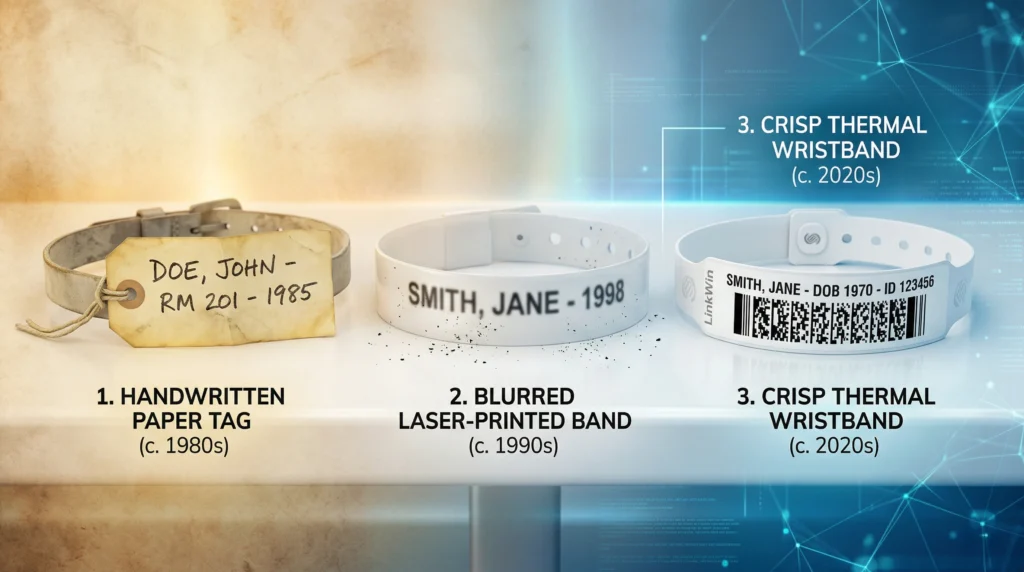
Patient identification technology is no longer a simple wristband or a handwritten chart—it’s a critical frontline defense against medical errors that affect millions worldwide every year. If you’re a healthcare leader committed to positive patient identification and reducing wrong-patient events, understanding the evolution from paper-based methods to digital systems is essential. From barcode patient wristbands to cutting-edge biometric verification and seamless EHR integration, this transformation is reshaping patient safety and workflow efficiency. Ready to explore how these innovations drive accuracy, compliance, and smarter care? Let’s dive into the milestones and trends that every hospital professional needs to know.
The Foundations: Paper-Based Patient Identification in Early Healthcare
In the early days of healthcare, patient identification relied heavily on paper-based methods. Hospitals and clinics used handwritten charts, physical documents, and manual logs to track patient information. This approach formed the foundation of patient identification technology, but it also introduced significant limitations.
Limitations of Paper-Based Identification
- Human Error: Handwriting errors, misfiled charts, and lost documents led to frequent misidentification.
- Time-Consuming Processes: Retrieving and updating paper records slowed down care delivery.
- Inconsistent Standards: Lack of uniform patient ID practices across institutions created confusion.
- Data Security Issues: Physical records were vulnerable to damage, theft, or unauthorized access.
- Limited Accessibility: Paper records were often only available in one location, restricting coordination among caregivers.
Early Standardization Attempts
Recognizing these challenges, early healthcare systems began standardizing patient identification practices. Basic patient ID wristbands were introduced, featuring printed labels to improve accuracy and consistency. However, these initial steps were still paper-centric, setting the stage for the later digital evolution.
These paper-based foundations highlight the critical need for reliable patient safety wristbands and structured identification methods that would evolve into today’s advanced digital solutions. Understanding this background helps us appreciate the technological strides made to reduce medical errors and enhance positive patient identification in modern healthcare.
Key Milestones in the Shift Toward Digital Identification (1960s–1990s)
The move from paper-based patient identification toward digital methods began taking shape between the 1960s and 1990s. Early efforts focused on structured medical records, which made patient information easier to track and manage. This laid the groundwork for more reliable positive patient identification.
One major milestone was the introduction of barcode patient wristbands in the late 1980s. These wristbands allowed quick scanning at the point of care, significantly reducing human error and supporting better patient safety wristbands practices. Barcodes became a standard tool in hospitals aiming to enhance accuracy in patient matching.
During this period, regulatory drivers also played a crucial role. Governments and healthcare organizations pushed for better patient ID systems to reduce medical errors and improve data privacy. Initiatives like HIPAA compliant patient ID standards emerged, demanding more secure and consistent approaches.
Overall, this era marked the essential shift from handwritten, paper-based records to more standardized, tech-driven identification methods. It set the stage for the digital transformation steps that followed, including RFID patient identification and integration with electronic health records (EHR).
The Digital Transformation Era: Barcode and RFID Wristbands Take Center Stage (2000s–2010s)
The 2000s to 2010s marked a big leap in patient identification technology. Hospitals widely adopted barcode patient wristbands and RFID patient identification systems, moving away from handwritten or printed labels to digital solutions that improved accuracy and speed.
Benefits of Barcode & RFID Wristbands
- Positive patient identification became easier at every step of care.
- Reduced medical errors by linking the wristband directly to the electronic health records integration.
- Enabled point-of-care patient scanning, speeding up medications and procedures.
- Improved safety with patient safety wristbands that healthcare staff can quickly verify.
Challenges Faced
- Technical hurdles: Early barcode scanners and RFID readers had compatibility and reliability issues.
- Wristband durability: Traditional printing methods sometimes failed, leading to smudging or fading of barcodes.
- Privacy concerns about radio frequency usage in sensitive environments.
- Costs for installing new scanning equipment and training staff.
Thermal Printing Integration
Thermal wristband printing became the go-to method during this time because it produced clear, durable barcodes directly on the wristbands. This integration improved:
- Print quality and speed,
- Longevity of wristbands during patient stays,
- Ease of on-site wristband generation for admitted patients.
Table: Barcode vs. RFID Wristbands
| Feature | Barcode Wristbands | RFID Wristbands |
|---|---|---|
| Identification Type | Optical code scan | Radio frequency scan |
| Accuracy | High but line-of-sight needed | Very high, no line-of-sight |
| Cost | Lower upfront | Higher setup cost |
| Durability | Improved with thermal printing | Durable and reusable |
| Privacy | Low privacy risk | Privacy concerns over tracking |
This era set the stage for further digital patient matching advances, leading into more sophisticated tools like biometrics and IoT-based systems seen today. The integration of barcode and RFID wristbands with EHRs became standard practice globally, helping hospitals meet regulatory demands like HIPAA compliant patient ID protocols while enhancing care quality.
Modern Innovations: Biometrics, IoT, and Seamless EHR Integration (2010s–Present)
The evolution of patient identification technology today is driven by smart, contactless methods and better system connections. Biometrics, like fingerprint and facial recognition, are becoming popular for positive patient identification. These methods reduce errors by making sure patients are correctly matched to their records every time, without relying on wristbands alone.
Alongside biometrics, the Internet of Things (IoT) has introduced wearable devices that continuously monitor patient data. These connected devices not only track vital signs but also help with accurate patient ID by syncing information directly to hospital systems. This means fewer manual checks and faster care at the point-of-care patient scanning.
A big leap forward has been the seamless integration of electronic health records (EHR). Modern patient safety wristbands and devices now easily connect to EHR systems, giving healthcare professionals instant access to reliable, up-to-date patient information. This interoperability improves workflow, cuts down medical errors, and supports better clinical decisions.
In short, modern hospital wristband technology goes beyond just barcode or RFID bands. It’s about combining biometrics, IoT, and EHR integration to create a safer, faster, and more efficient patient identification experience — a must-have for today’s healthcare facilities aiming to improve medical error reduction and comply with HIPAA-compliant patient ID standards.
Benefits of Digital Patient Identification Systems: Safety, Efficiency, Cost Savings, and Patient Experience
Switching to digital patient identification systems offers clear benefits over old methods. Here’s what stands out:
| Benefit | Details |
|---|---|
| Patient Safety | Digital systems like barcode patient wristbands and RFID patient identification reduce medical errors by ensuring positive patient identification at every step. This cuts down risks from wrong medication or procedures. |
| Improved Efficiency | Electronic health records integration paired with point-of-care patient scanning speeds up check-ins, treatments, and record updates, freeing staff to focus more on care than paperwork. |
| Cost Savings | Automated identification lowers costs linked to manual errors, wasted materials, and duplicated tests. Thermal wristband printing cuts supply expenses by printing on demand. |
| Better Patient Experience | Faster service and accurate care lessen patient stress. Biometric patient verification and contactless systems provide smooth, hassle-free interactions. |
Ultimately, digital patient ID technology fosters trust and safer care by making sure every patient is accurately identified every time. This is crucial in today’s fast-paced healthcare environment worldwide.
Challenges and Considerations in Adopting Digital Solutions
Switching to digital patient identification systems comes with its own set of challenges. Here are the main issues to keep in mind:
| Challenge | Description | What to Watch For |
|---|---|---|
| Technical | Integration with existing Electronic Health Records (EHR), hardware compatibility, and software glitches. | Ensure smooth EHR integration and reliable devices. |
| Human | Staff training, resistance to change, and workflow disruptions during implementation. | Provide clear training and ongoing support to reduce errors. |
| Privacy | Protecting patient data and meeting regulations like HIPAA compliance for digital systems. | Use HIPAA compliant patient ID methods and secure data storage. |
| Cost | Upfront investment for hardware (e.g., thermal wristbands), software licensing, and maintenance. | Budget carefully and consider long-term savings from error reduction. |
| Equity | Making sure all patients, regardless of background, can access and benefit from new tech. | Avoid digital gaps by including patient-centric design and alternatives. |
Understanding these challenges helps ensure the shift to digital patient identification improves safety and efficiency without unintended setbacks.
The Role of Reliable Hardware in Digital Success: Thermal Wristbands and Beyond
When it comes to digital patient identification, reliable hardware is just as important as software. Thermal wristbands, for example, have become a staple in hospitals worldwide because they offer durability and clear printing that holds up even with daily wear and tear. These wristbands are designed to resist smudging and fading, ensuring that barcode patient wristbands and RFID patient identification tags stay readable from admission to discharge.
Why thermal printing matters:
- Produces sharp, scannable barcodes for positive patient identification
- Eliminates the need for ink ribbons, reducing maintenance and costs
- Works fast to print wristbands at the point of care, speeding up admission processes
Beyond thermal wristbands, other hardware like RFID readers, scanners, and biometric devices contribute to smooth patient verification workflows. Trusted manufacturers play a crucial role in creating tech that meets hospital needs, such as ensuring wristbands are HIPAA compliant, comfortable to wear, and compatible with electronic health records integration.
In short, the right hardware keeps patient safety wristbands reliable and effective, reducing medical error risks and helping healthcare providers deliver better care worldwide. Without strong hardware foundations, even the best digital patient identification systems can fall short.
Future Trends Shaping Patient Identification Technology
The future of patient identification technology is exciting and focused on making healthcare safer and more seamless. Here are the key trends to watch:
AI-Powered Patient Matching: Artificial intelligence helps prevent errors by improving digital patient matching. It can analyze multiple data points quickly, reducing chances of mix-ups and enhancing positive patient identification.
Blockchain for Security and Privacy: Blockchain technology is gaining traction for creating tamper-proof patient records. It ensures that patient data remains secure, HIPAA compliant, and private, which is critical in digital patient identification systems.
Advanced Wearables and IoT Devices: Beyond traditional hospital wristband technology, future ID solutions will rely on smart wearables. These IoT-enabled devices provide continuous monitoring and contactless patient verification, blending identification with health tracking.
Patient-Centric Design: The trend is moving toward involving patients more directly in their identification process. Apps and user-friendly interfaces will give patients control over their data and identification methods, improving engagement and trust.
EHR Interoperability and Regulation: Seamless integration with electronic health records and adherence to evolving regulations will remain crucial. This helps maintain data consistency across systems, supports point-of-care patient scanning, and safeguards against medical errors.
In , patient identification is evolving into a smarter, safer system through AI, blockchain, wearable tech, and patient-focused designs. These innovations will improve hospital wristband technology and digital patient matching worldwide, enhancing patient safety wristbands and reducing risks for both providers and patients.
Best Practices for Implementing Modern Patient Identification Systems
Implementing digital patient identification technology takes more than just buying the latest hardware or software. To get real benefits like patient safety wristbands that reduce medical errors and smooth electronic health records integration, you need a clear plan. Here are the best steps to follow:
1. Needs Assessment
- Understand your environment: Start by assessing the specific needs of your healthcare facility. Consider patient volume, types of care, and existing workflows.
- Identify pain points: Look for areas where positive patient identification is currently weak or error-prone.
- Define goals: Set clear objectives such as cutting down patient ID mistakes or speeding up point-of-care patient scanning.
2. Vendor Selection
- Check compatibility: Make sure the hospital wristband technology and software fit with your current systems, especially EHRs.
- Demand compliance: Choose vendors offering HIPAA compliant patient ID solutions to protect privacy.
- Evaluate support: Look for reliable service, easy scalability, and good customer feedback.
3. Staff Training
- Hands-on sessions: Train your clinical and administrative staff on the proper use of barcode patient wristbands, RFID patient identification, and biometric patient verification systems.
- Emphasize safety protocols: Ensure everyone understands the importance of correct scanning and patient matching.
- Continuous education: Keep updating skills as technology evolves.
4. Continuous Monitoring
- Track performance: Regularly monitor system usage, error rates, and patient feedback.
- Adjust workflows: Be ready to tweak processes based on real-world results.
- Report issues: Establish a clear way to report and fix problems quickly.
5. Safety Protocols
- Standardize procedures: Develop clear protocols for patient scanning at every point of care.
- Double-check IDs: Encourage verification steps to prevent mix-ups.
- Data security: Protect sensitive data with strong passwords and encrypted networks.
Following these best practices helps ensure your digital patient identification system works effectively—boosting safety, efficiency, and patient experience worldwide.
