
Subtotal ¥0.00
Enhance patient safety post-pandemic with durable barcoded medical wristbands designed for infection control and error reduction.
The Post-Pandemic Healthcare Landscape: Heightened Vulnerabilities
Since the COVID-19 pandemic, healthcare systems worldwide have faced heightened vulnerabilities that directly affect patient safety. Frontline providers grapple with increased diagnostic errors, medication mix-ups, patient falls, and catheter-associated urinary tract infections (CAUTIs). Burnout among healthcare workers has led to critical lapses in verification processes, making these risks even more pressing.
Several factors have reshaped traditional hospital safety protocols:
- Remote care expansion has reduced face-to-face checks, increasing reliance on accurate digital records.
- Visitor restrictions limit family advocacy, placing more pressure on clinical teams for error prevention.
- The patient population now includes more acutely ill individuals with complex needs, increasing the margin for error.
In this changing landscape, robust patient identification systems—especially the use of reliable patient identification wristbands—have become essential. Strong wristband protocols support resilience, reduce patient misidentification risks, and ensure compliance with critical standards like those from The Joint Commission. Without this foundational safety step, hospitals cannot guarantee safe medication administration or procedural accuracy in today’s complex environment.
Core Role of Medical Wristbands in Patient Safety
Medical wristbands are crucial for accurate patient verification at every stage of care — from admission and medication to procedures, testing, and discharge. They significantly reduce risks of patient misidentification, which is a common cause of errors in hospitals.
These wristbands play a vital role in preventing ‘wrong patient’ mistakes during critical moments like blood transfusions, surgeries, and emergency treatments. Using clear and lasting patient identification wristbands ensures the right care reaches the right person every time.
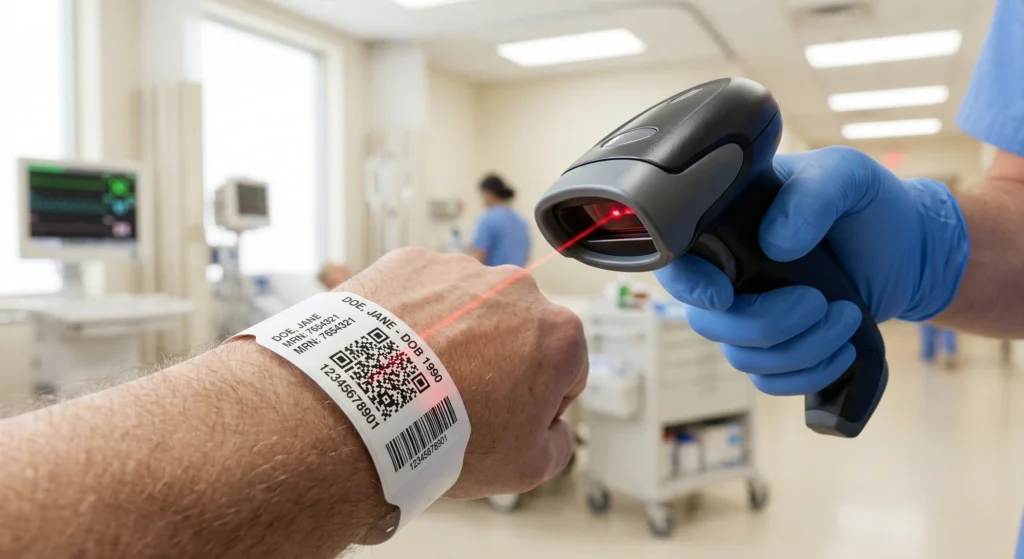
Integration with electronic health records (EHR) through barcoded medical wristbands or RFID-enabled wristbands enables real-time data access. This helps healthcare providers follow the ‘five rights’ of medication administration — right patient, right drug, right dose, right route, and right time — improving overall medication safety.
In short, medical wristbands are a backbone of hospital patient safety protocols, especially in a post-pandemic world where precise identification and quick access to patient information are more important than ever.
Specific Benefits in Infection Control and Post-Pandemic Settings
Post-pandemic, patient identification wristbands play a critical role in infection control and safety. Here’s why LinkWin thermal wristbands stand out:
| Benefit | Details |
|---|---|
| Durable, Antimicrobial Materials | Withstand frequent sanitization without fading or damage, reducing infection risks. |
| Moisture-Resistant | Resist sweat and cleaning fluids, ensuring information stays clear and accurate. |
| Reduced Physical Contact | Quick-scan barcodes and RFID reduce the need to touch wristbands, lowering cross-contamination chances. |
| Clear Visual Alerts | Color-coded bands highlight allergies, fall risks, or infectious status to protect isolated or high-acuity patients. |
| Fast On-Demand Customization | LinkWin’s thermal printing delivers crisp, legible wristbands instantly, supporting fast patient turnover and safety. |
Using these medical wristbands meets hospital patient safety protocols and supports infection control in healthcare, a must for post-pandemic resilience. They ensure staff verify patient identity swiftly and safely, cutting down on potential patient misidentification risks and providing extra protection in busy environments.
By integrating LinkWin’s thermal printable wristbands, hospitals get durable, easy-to-use, and hygienic solutions perfectly suited to today’s healthcare challenges.
Types of Medical Wristbands and Their Applications
When it comes to patient identification wristbands, there are several types designed to meet different hospital patient safety protocols and patient needs.
Standard Printed ID Bands: These provide basic identification with the patient’s name, DOB, and hospital ID. They’re simple but essential for any healthcare setting.
Color-Coded Alert Wristbands: Used widely to signal specific risks—like red for allergies or yellow for fall risk. These bands follow standardized protocols to quickly communicate critical information to all staff.
Barcoded and RFID-Enabled Bands: These allow for automated scanning and tracking, integrating with electronic health records to improve medication administration safety and reduce patient misidentification risks.
Specialized Options: Pediatric wristbands are smaller and gentler on delicate skin, adult bands focus on comfort for longer stays, and long-stay variants use durable, skin-friendly materials for patients who require extended care.
When selecting wristbands, look for:
- Material Durability: Must withstand moisture, frequent sanitizing, and patient movement.
- Print Quality: Clear, legible labels that resist fading or smudging.
- Skin-Friendliness: Hypoallergenic materials to avoid irritation.
- Compatibility: Works well with hospital printers, including thermal printable wristbands like those from LinkWin, for fast and reliable production.
Choosing the right medical wristbands is crucial to maintaining infection control in healthcare and meeting Joint Commission standards wristbands requirements, especially in the post-pandemic healthcare landscape.
Implementation Best Practices for Maximum Impact
To boost patient safety post-pandemic, standardizing patient identification wristbands across all hospital departments is crucial. This avoids confusion and ensures every staff member follows the same protocol, reducing errors caused by inconsistent wristband use.
Staff training is key. Combine wristband scans with verbal confirmation in daily workflows to double-check patient identities. This simple pairing strengthens medication administration safety and lowers patient misidentification risks.
Next, make sure wristbands integrate smoothly with hospital systems. Whether using barcoded medical wristbands or RFID patient tracking, seamless tech integration means faster, more reliable patient data access, supporting the ‘five rights’ of medication.
Common issues like damaged bands, wristband removal, or patients refusing to wear them need addressing upfront. Use durable hospital wristbands from trusted suppliers like LinkWin and educate patients and staff on their importance to minimize these risks.
To measure success, track:
- Error rate reductions
- Scan compliance levels
- Staff feedback on wristband usability and workflow integration
Following these best practices ensures medical wristbands truly enhance hospital patient safety protocols in this new post-pandemic world.
Technological Advancements and Future Trends in Patient Safety Post-Pandemic
Medical wristbands have come a long way from simple ID bands to smart wristbands that offer real-time patient monitoring. This evolution plays a big role in boosting hospital patient safety protocols by cutting down errors and speeding up care decisions.
At the forefront, LinkWin leads with thermal printing technology that’s not only fast and reliable but also eco-friendly. Their thermal printable wristbands are perfect for today’s healthcare needs—customized on-demand, highly legible, and durable for post-pandemic settings.
Looking ahead, these wristbands are syncing up with AI-driven alerts and telemedicine tools. That means healthcare teams get instant warnings and smooth handoffs during remote care, helping reduce risks like medication mix-ups and patient misidentification.
Moreover, predictive safety analytics powered by data from barcoded medical wristbands and RFID patient tracking are shaping the future of patient safety. These tech advances help hospitals comply with Joint Commission standards wristbands while improving outcomes globally.
Finally, aligning with global standards and regulations ensures that these innovations bring consistent safety gains across diverse healthcare systems, making patient identification wristbands an essential part of resilient, post-pandemic healthcare worldwide.
Case Studies and Evidence of Effectiveness
In the post-pandemic healthcare landscape, consistent use of patient identification wristbands has proven vital in reducing medical errors. Several hospitals worldwide report a significant drop in medication mix-ups and wrong-patient events after implementing barcoded medical wristbands paired with robust scanning protocols. For example, one facility saw medication errors decrease by over 40% within six months of adopting these wristbands for every stage of care.
Quantitative data supports this impact: barcode scanning patient ID systems linked to electronic health records have improved verification accuracy dramatically. Hospitals leveraging LinkWin thermal printable wristbands, known for their durability and clear print, have not only cut errors but also achieved a strong return on investment by reducing costly rework and patient safety incidents.
Testimonials from busy post-pandemic environments highlight how LinkWin solutions streamline workflows. Staff appreciate the wristbands’ moisture-resistant and skin-friendly materials, which hold up well even with rigorous infection control standards. The quick-printing feature helps meet demand without delays, supporting better compliance with hospital patient safety protocols.
These real-world successes underline why medical wristbands are a non-negotiable part of maintaining post-pandemic healthcare resilience and meeting Joint Commission standards worldwide.
Challenges and Solutions in Patient Safety Post-Pandemic
When it comes to patient safety post-pandemic, hospitals often face some common roadblocks with patient identification wristbands. The biggest challenges usually include:
- Cost perceptions: Some facilities hesitate to invest in premium medical wristbands, seeing them as an extra expense rather than a necessity.
- Workflow integration: Adding barcode scanning or RFID tracking means changing routines, which can slow down care if staff aren’t fully on board.
- Band durability: Cheap wristbands can fade, tear, or become uncomfortable, leading to removals or replacements that risk misidentification.
These issues can directly affect hospital patient safety protocols and increase patient misidentification risks.
But here’s where LinkWin’s premium thermal wristbands come in. These wristbands are built to last with durable, antimicrobial materials that withstand frequent sanitization without wearing out. The thermal print stays clear and legible, reducing the need for replacements—saving money in the long run and ensuring accurate patient ID at every care point.
To tackle workflow resistance, we suggest:
- Training and education so staff understand the importance of wristband checks alongside verbal confirmation.
- Standardizing wristband use across all departments to avoid confusion.
- Addressing patient concerns by choosing skin-friendly materials that encourage compliance.
- Promoting the clear benefits of wristband scanning to reduce medication errors and improve safety metrics.
By combining high-quality barcode scanning patient ID wristbands with strong implementation strategies, healthcare providers can overcome barriers and deliver safer care to all patients, regardless of demographics or acuity levels. LinkWin’s thermal printable wristbands offer a reliable, cost-effective solution tailor-made for the evolving demands of post-pandemic healthcare.
