
Subtotal ¥0.00
Protecting the Most Vulnerable explores neonatal and pediatric ID solutions with soft hypoallergenic NICU wristbands and RFID infant security
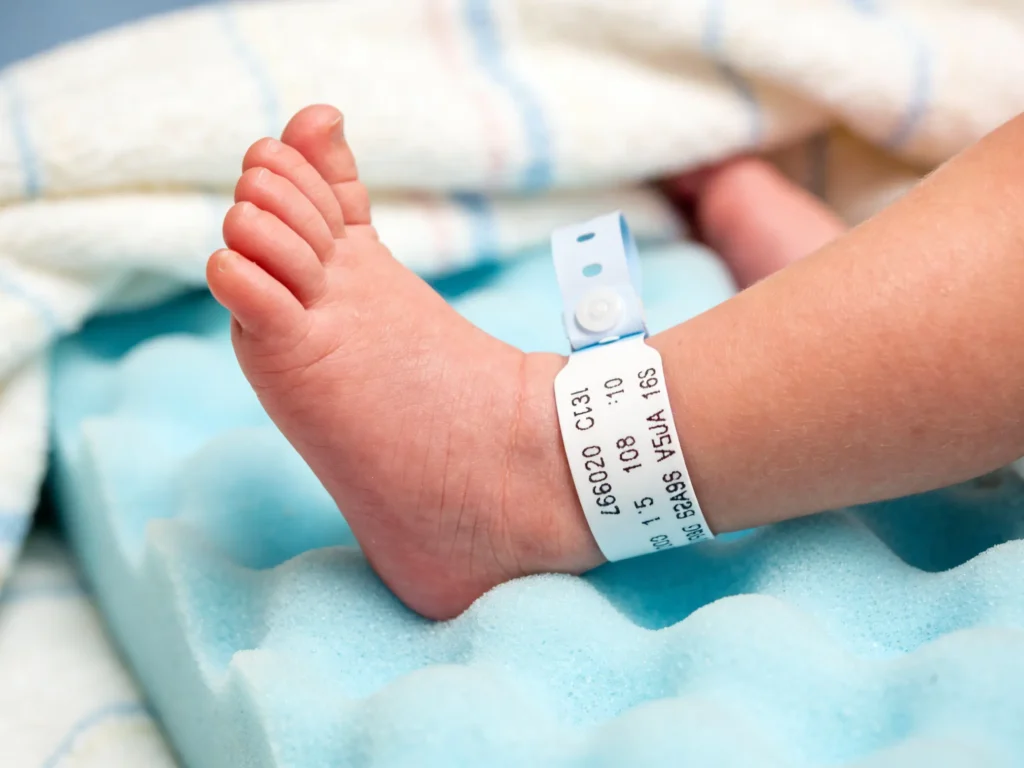
You might already know that standard identification protocols fail when applied to the NICU and PICU.
But do you know the true cost of those failures?
Neonatal skin integrity is compromised by rigid materials. Positive patient identification (PPID) becomes impossible when bands slip off tiny wrists. And suddenly, the risk of “never events” skyrockets.
In this post, you’re going to learn exactly how to bridge the gap between medical-grade safety and gentle care.
We are diving deep into specialized Neonatal and Pediatric Identification Solutions—from hypoallergenic patient ID materials that prevent dermatitis to advanced RFID infant protection that secures your perimeter.
Here is the blueprint for protecting your most vulnerable patients.
Let’s dive right in.
Why One Size Does Not Fit All: The Challenges of Pediatric ID
Treating children as “small adults” is a dangerous mindset in healthcare, especially regarding identification. Standard adult solutions simply fail in the pediatric ward and NICU. We understand that Positive patient identification (PPID) requires a specialized approach that respects the unique anatomy and behavior of our youngest patients.
Physiological Constraints: Understanding Fragile Skin Integrity
For a neonate, skin is not just a covering; it is a vital, yet underdeveloped, organ. Neonatal skin integrity is compromised because the bond between the epidermis and dermis is incredibly weak.
- Risk of Injury: Rigid edges on standard bands can slice through paper-thin skin or cause pressure ulcers.
- Infection Control: Any break in the skin barrier invites infection, complicating recovery.
- Material Needs: NICU wristbands must be exceptionally soft to prevent medical adhesive-related skin injury (MARSI).
Dealing with Size Fluctuation and Edema in Preemies
Premature infants are physiologically unstable. Their limb circumference can change drastically within hours due to fluid intake and edema. Effective preemie identification solutions must be dynamic. A wristband that is secure at 8:00 AM can become a tourniquet by noon if swelling occurs. We advocate for adjustable, non-constricting designs that maintain circulation while ensuring the ID stays attached.
Behavioral Factors: Active Toddlers and Sensory Issues
The challenge evolves as the patient grows. Toddlers are naturally curious and often determined to remove foreign objects. Furthermore, children with sensory processing disorders find standard pediatric barcode wristbands unbearable if they are scratchy or stiff.
- Durability: Bands must withstand tugging, chewing, and crawling without falling off.
- Comfort: If the material irritates, the child will remove it, instantly breaking the chain of safety.
- Readability: Scanners must be able to capture data from a constantly moving target.
The Material Science of Safety: What Makes a Wristband ‘NICU-Ready’?
When we engineer NICU wristbands, we aren’t just making a label; we are creating a medical device that touches the most fragile organ of a premature infant—their skin. A standard adult band is simply too rigid and abrasive. To be truly ‘NICU-Ready,’ the material science must balance durability for scanning with extreme gentleness to maintain neonatal skin integrity.
Hypoallergenic and Latex-Free: Preventing Contact Dermatitis
In the NICU, a baby’s skin barrier is underdeveloped. Even a minor reaction to a wristband can lead to serious complications. That is why hypoallergenic patient ID solutions are non-negotiable.
We strictly avoid latex and phthalates in our manufacturing process. By using inert, biocompatible materials, we significantly reduce the risk of contact dermatitis. The goal is simple: positive identification without the side effect of skin irritation.
Soft-Lock Technology: Moving Away from Pressure Points
Traditional snap closures are a hazard for neonates. If a baby rests their weight on a hard plastic clip, it can quickly cause a pressure ulcer.
We utilize Soft-Lock technology to eliminate this risk. Instead of rigid clips, we use soft, self-adhesive closures or adjustable velcro-style fasteners designed specifically for preemie identification solutions. This ensures the band stays secure without digging into the wrist or ankle, regardless of how the baby is positioned.
Antimicrobial Coatings: Reducing Hospital-Acquired Infections (HAIs)
In a high-care environment, every surface is a potential vector for bacteria. Anti-microbial ID tags are an essential line of defense.
Our wristbands are treated with antimicrobial coatings that inhibit the growth of bacteria and fungi. This doesn’t replace hygiene protocols, but it adds a critical layer of protection against Hospital-Acquired Infections (HAIs), keeping the ID band from becoming a breeding ground for pathogens.
LinkWin’s Material Advantage: Ultra-Soft Foam Solutions
At LinkWin, we realized that standard thermal materials weren’t enough. That is why we developed our proprietary medical grade soft foam.
Unlike paper or plastic, our foam bands offer a cushioned buffer between the ID information and the infant’s skin.
- Breathable: Prevents moisture buildup and maceration.
- Flexible: Moves with the baby, accommodating edema or weight changes.
- Printable: The outer surface accepts high-resolution thermal printing for reliable scanning.
This ultra-soft foam is the cornerstone of our approach to protecting the most vulnerable patients while ensuring positive patient identification (PPID).
Technological Integration: Barcode, RFID, and Beyond
When we talk about pediatric identification solutions, the technology embedded in the band is just as vital as the material touching the skin. We need data accuracy that supports clinical workflows without compromising the gentle care these patients require. It is not just about having a name tag; it is about seamless integration with hospital systems.
2D vs. Linear Barcodes: Optimizing for Curved Infant Wrists
Standard linear barcodes are often a headache on tiny limbs. Because a neonate’s wrist is so small, a long linear barcode wraps around the curve, making it nearly impossible for scanners to read the full sequence. I always recommend 2D barcodes (like DataMatrix or Aztec) for pediatric barcode wristbands.
- Compact Footprint: They pack significantly more data into a small square area.
- Readability: Scanners can read them from any angle, even on a curved surface.
- Reduced Handling: This ensures positive patient identification (PPID) on the first try, so nurses don’t have to twist or manipulate a fragile baby’s arm just to get a beep.
RFID in the Nursery: Enhancing Security and Abduction Prevention
Safety goes beyond medical errors; we have to think about physical security too. RFID infant protection systems are becoming the gold standard in modern nurseries. By embedding a passive or active RFID chip into the NICU wristbands, we link the child directly to the hospital’s security network.
If an infant is moved towards an exit or a restricted area without authorization, the system instantly locks doors and triggers alarms. It acts as an invisible shield, providing robust infant security systems that give parents and administrators peace of mind.
Non-Line-of-Sight Scanning for Sleeping Neonates
In the NICU, sleep is medicine. Waking a preemie to find a barcode hidden under a blanket or inside a swaddle causes stress and physiological instability. This is where RFID technology truly shines.
It allows for non-line-of-sight scanning. Nurses can verify identity and document care for closed-loop medication administration through swaddles, blankets, or isolette walls. This capability allows the medical team to perform safety checks without ever disturbing the sleeping infant.
Print Durability: Resisting Phototherapy, Humidity, and Alcohol
A wristband is useless if the data fades after two days. NICU environments are surprisingly harsh on printed materials due to unique environmental factors. We utilize premium thermal printable wristbands with a specialized topcoat designed to survive these conditions:
- Phototherapy Resistance: The print must not fade under the intense blue lights used to treat jaundice.
- Humidity Tolerance: Preemie identification solutions must withstand the high-humidity environment of incubators without the text smearing.
- Chemical Durability: The surface must resist degradation from frequent wiping with alcohol and sanitizers to maintain JCI patient safety goals.
Improving Workflow and Compliance for Nursing Staff
When managing a high-stress NICU or pediatric ward, the last thing nursing staff needs is technology that fights back. We design our neonatal and pediatric identification solutions to work with the clinical team, not against them. By simplifying the identification process, we help hospitals maintain high standards of care without sacrificing efficiency.
The ‘Golden Hour’ Efficiency: Speeding Up Admission
In critical care, the first hour after birth—the “Golden Hour”—is vital for long-term outcomes. Administrative tasks cannot become a bottleneck. Our systems are optimized for a rapid patient admission workflow, allowing nurses to generate and apply ID bands in seconds.
- Instant Printing: High-speed thermal printable wristbands eliminate wait times.
- Easy Application: Intuitive designs mean bands can be applied quickly without disturbing a fragile infant.
- Immediate Scanning: High-contrast print ensures the first scan works, vital for immediate medication needs.
Mother-Infant Pairing Systems: Tethered ID Solutions
Security and peace of mind are non-negotiable for new parents. We utilize hospital mother-baby matching systems that create an unbreakable link between the parent and the child. This usually involves printing a set of bands with identical barcodes and visual identifiers at the exact same time.
This “tethered” approach ensures positive patient identification (PPID) from the moment of delivery. If a check is needed, a quick scan of both the mother’s and the baby’s band confirms the relationship instantly, preventing mix-ups and easing parental anxiety.
Seamless EMR Integration with Epic, Cerner, and Meditech
A wristband is only as good as the data it connects to. Our identification products are engineered for full compatibility with leading Electronic Medical Record (EMR) systems like Epic, Cerner, and Meditech.
This integration is crucial for maintaining closed-loop medication administration. When a nurse scans a pediatric barcode wristband, the system immediately verifies the “Five Rights” of medication safety (right patient, right drug, right dose, right route, right time). This seamless connectivity helps facilities meet strict JCI patient safety goals and reduces the administrative burden on staff, allowing them to focus on what matters most: patient care.
Best Practices for Application and Monitoring
Even the most advanced medical grade soft foam wristband is only as effective as the protocol behind it. We can engineer the perfect material, but proper application is what truly guarantees positive patient identification (PPID). To ensure safety standards are met without compromising comfort, nursing staff need to follow a strict routine.
The Two-Finger Rule: Ensuring Correct Tension
Applying NICU wristbands is a balancing act. If it is too tight, you risk restricting circulation or causing edema; too loose, and the band might slip off, compromising infant security systems.
I always recommend the “Two-Finger Rule” (or for extremely small preemies, the “Pinky Rule”). You should be able to comfortably slide one finger underneath the band. This ensures the pediatric barcode wristbands remain scan-ready for closed-loop medication administration without acting like a tourniquet.
Site Rotation: Preserving Skin Integrity on Limbs
Neonatal skin integrity is incredibly fragile, sometimes lacking the protective barrier found in older children. Leaving an ID band in the exact same spot for days can lead to pressure ulcers or skin breakdown.
To combat this, we advise a strict rotation schedule:
- Rotate limbs: Move the band from the right wrist to the left ankle during routine care or baths.
- Inspect underneath: Always check the skin condition when moving the band.
- Document: Record the rotation in the patient’s chart to maintain accountability.
This practice is vital for preemie identification solutions, ensuring that safety doesn’t come at the cost of skin health.
Regular Audits: Checking Legibility During Shift Changes
Technology is great, but environmental factors in a NICU—like humidity, phototherapy lights, and alcohol wipes—can degrade thermal printable wristbands over time.
Incorporating ID checks into shift changes is a smart way to align with JCI patient safety goals. Staff should verify that the text is human-readable and the barcode is scannable. If a wristband shows signs of fading or wear, replace it immediately. This proactive approach prevents scanning failures during critical moments, ensuring the patient admission workflow and ongoing care remain seamless.
Case Study: Elevating Patient Safety Standards
Real-World Scenarios: Reducing Skin Abrasions and Errors
I have worked with numerous facilities that initially treated wristbands as a simple commodity, only to face rising rates of contact dermatitis and scanning failures. In one specific deployment, switching from standard vinyl to medical grade soft foam immediately improved neonatal skin integrity. The fragile skin of a 26-week preemie simply cannot handle rigid edges. By implementing positive patient identification (PPID) protocols with our softer materials, we saw a dramatic drop in skin breakdown incidents. Furthermore, high-contrast thermal printing resolved scanning issues, ensuring closed-loop medication administration worked seamlessly without waking the infant to adjust the band.
The ROI of Safety: Liability, Workflow, and Parent Satisfaction
While premium NICU wristbands might seem like a line-item cost, the return on investment is substantial when you look at the bigger picture. Meeting JCI patient safety goals requires reliable data and safe patients.
- Reduced Liability: Accurate pediatric barcode wristbands prevent medication errors and misidentification, mitigating expensive legal risks associated with infant security systems.
- Streamlined Workflow: Nurses stop wasting time taping over faded IDs. A durable patient admission workflow means the band stays on and scans right the first time.
- Parent Trust: Parents notice the details. Using hypoallergenic patient ID solutions shows families that you prioritize their child’s comfort and safety above all else.
FAQ: Common Questions About Neonatal and Pediatric ID Solutions
When I speak with hospital administrators and nursing managers, the same specific concerns arise regarding protecting the most vulnerable patients. Here is a breakdown of the most frequent questions we encounter when implementing NICU wristbands and pediatric identification solutions.
Are RFID wristbands safe for premature infants?
Yes, modern RFID infant protection systems are safe for preemies. We typically utilize passive RFID tags, which do not emit constant high-energy signals. The primary safety concern is actually the physical material of the band, not the radio waves. For these tiny patients, I always recommend medical grade soft foam bands to ensure the tag does not create pressure points that could compromise neonatal skin integrity.
How often should NICU wristbands be changed?
Unlike adult ID bands, you should not change a preemie identification solution on a daily schedule. Every time you remove an adhesive band, you risk epidermal stripping on fragile skin.
- Best Practice: Only change the wristband if the data is illegible, the band is soiled, or the infant has outgrown it due to edema.
- Goal: Maintain positive patient identification (PPID) with absolute minimal skin disruption.
What is the best way to scan a wiggling baby?
Scanning a moving target is difficult, especially during closed-loop medication administration. The solution is moving away from traditional linear barcodes to 2D barcodes (QR style). A 2D code on a pediatric barcode wristband is omnidirectional. This allows nurses to scan from almost any angle—even if the band is curved around a tiny wrist—without having to wake the baby or twist their arm.
How do mother-infant pairing systems work?
Hospital mother-baby matching creates a secure link between the parent and child immediately upon birth. When we process the admission, we print a set of bands with identical coding.
- Visual Match: Staff can visually verify that the names and unique ID numbers correspond.
- Electronic Match: Scanning the mother’s band followed by the infant’s band confirms the relationship in the system.
- Security: If a mismatch occurs, or if a baby is moved toward an exit without the paired tag, infant security systems trigger an alarm to prevent abduction.
