
Subtotal ¥0.00
Pink wristband meaning explained Learn the restricted extremity alert and safety rules to prevent injury with clear hospital color code guidance
The “Three No’s”: What is Strictly Prohibited?
When you see a pink restricted extremity alert on a patient’s wrist, think of it as a definitive “Stop” sign for that specific limb. In our line of work, preventing medical errors is the top priority, and this simple band communicates a critical message without a single word being spoken. We rely on nursing safety protocols to ensure that everyone—from the phlebotomist to the surgeon—respects the “Three No’s” to protect the patient’s long-term health.
Here is exactly what is off-limits on a limb alert wristband arm:
No Blood Pressure Cuffs
Applying a tourniquet or inflating a blood pressure cuff creates significant constriction. On a compromised limb, this pressure can trigger or worsen lymphedema (swelling) or damage a fragile vascular access point like an AV fistula. We strictly avoid any circumferential pressure here.
No Venipuncture (Blood Draws)
Needle sticks are strictly prohibited. Poking a vein in a restricted extremity increases the risk of infection and phlebitis. Since the lymphatic or venous drainage might already be compromised, the arm cannot handle the trauma of a standard blood draw.
No IV Insertions
We never start a peripheral IV line in a “pink” arm. Introducing fluids or medications into a compromised limb can lead to infiltration and severe tissue damage. The No BP or IV arm rule is absolute—vascular access must be secured elsewhere to ensure patient safety.
Clinical Indications: Why is a Patient Wearing Pink?
When we place a pink band on a patient, it isn’t a suggestion; it is a critical restricted extremity alert. This color code signals to every doctor, nurse, and phlebotomist that a specific limb is vulnerable and off-limits for standard procedures. Ignoring this warning can lead to permanent damage. Here is why we strictly use these limb alert wristbands in clinical settings.
Mastectomy & Lymph Node Removal
This is perhaps the most widely recognized use of the pink band. Patients who have undergone breast cancer surgery often have lymph nodes removed from the underarm area. This disrupts the body’s natural ability to drain fluid.
If medical staff ignore mastectomy arm restrictions and apply a tourniquet or blood pressure cuff, it can trigger lymphedema—a painful, chronic, and potentially irreversible swelling of the arm. Adhering to lymphedema precautions is vital for long-term patient quality of life.
Hemodialysis Patients (AV Fistula)
For patients with kidney failure, their vascular access is their lifeline. An arteriovenous (AV) fistula or graft connects an artery to a vein to allow for dialysis. This access point is incredibly delicate.
Compressing this arm with a blood pressure cuff can cause the fistula to clot or fail, requiring emergency surgery to fix. AV fistula protection is non-negotiable. The pink band ensures hemodialysis access safety by warning staff to find an alternative site for monitoring.
PICC Lines & IV Ports
Peripherally Inserted Central Catheters (PICC lines) and implanted ports are long-term IV access points that often go directly toward the heart. We treat these with extreme care.
Using an arm with a PICC line for a standard blood pressure reading or a secondary IV insertion can damage the catheter, cause occlusion (blockage), or introduce infection. We utilize PICC line precautions to protect these essential medical devices from mechanical stress.
Pre-existing Injury or Paralysis
Sometimes the risk isn’t a device, but the limb itself. Patients suffering from paralysis (such as stroke survivors) or severe nerve damage may not have sensation in a specific arm.
- Risk: They cannot feel pain if a tourniquet is too tight or if an IV infiltrates (leaks into tissue).
- Solution: Designating this as a No BP or IV arm prevents injury to a limb that cannot signal distress.
By using a standardized pink band, we eliminate the guesswork and protect patients who cannot protect themselves.
The Push for Standardization: AHA and State Guidelines
In the past, walking into different hospitals felt like entering different countries. One facility might use a pink band for a restricted extremity alert, while another down the street used it for something completely different. We realized early on that without a unified system, we were gambling with patient safety.
The “Color Confusion” Problem
Before standardization, hospital color code standards were a mess. A nurse transferring between facilities could easily mistake a warning signal because the color codes weren’t consistent. This lack of uniformity is what we call the “color confusion” problem. It creates a breeding ground for mistakes, where a split-second assumption based on the wrong color could lead to a serious medical error. Medical error prevention relies on clarity, and inconsistency is the enemy of safety.
The Current Standard (AHA)
To solve this, the American Hospital Association (AHA) released a standardized toolkit to align wristband colors across the board. While adoption varies slightly by region, the industry has largely rallied behind specific colors for specific alerts to ensure continuity of care.
Under these guidelines, Pink is universally recognized as the Restricted Extremity alert. This consensus allows healthcare providers—whether they are full-time staff or traveling nurses—to instantly recognize that the patient requires limb alert wristband precautions without needing to check a manual.
Beyond Color: Text on the Wristband
We know that color alone isn’t a fail-safe. Lighting conditions vary, and some staff members may be colorblind. That is why relying solely on a color-coded alert band is risky. The best practice, which we strictly adhere to, is including pre-printed text on the wristband.
A proper safety band doesn’t just show pink; it explicitly reads “RESTRICTED EXTREMITY” or “LIMB ALERT.” This text provides a secondary verification method, ensuring that patient identification systems work effectively even if the color isn’t immediately distinguished.
Why text matters:
- Colorblind Safety: Protects staff who cannot distinguish red/pink shades.
- Clarity: Removes ambiguity in dim lighting.
- Reinforcement: Acts as a double-check before any procedure begins.
Where Should the Wristband Be Placed?
Placement isn’t random; it is a critical component of effective patient safety wristbands. If the alert isn’t located exactly where the risk is, it defeats the purpose of the warning. We need to ensure the visual cue is right in the line of sight of the healthcare provider.
The Affected Limb Rule
The standard is straightforward: place the restricted extremity alert on the specific limb that needs protection. If you have an AV fistula or risk of lymphedema in your left arm, the pink band must go on your left wrist.
This acts as an immediate physical barrier. When a phlebotomist or nurse approaches that specific side to place a tourniquet or cuff, the limb alert wristband serves as a “stop sign” directly at the point of contact.
Bilateral Restrictions
In complex cases where both arms are compromised—such as after a double mastectomy or if there are vascular access issues in both limbs—we apply bands to both wrists.
- Never assume that marking one side implies the other is safe.
- Medical error prevention relies on explicit, undeniable instructions.
- Double-banding ensures there is zero confusion, regardless of which side of the bed a clinician approaches.
Visibility Issues
A hidden wristband is a useless wristband. For nursing safety protocols to work, the band must be the first thing a clinician sees.
To maintain the integrity of patient identification systems:
- Do not cover the band with personal watches, fitness trackers, or jewelry.
- Ensure the band sits outside of long sleeves or hospital gowns.
- The band should not be taped over or rotated so the text is hidden.
We design these bands to be durable and visible because a split-second check prevents lifelong complications.
Pink vs. The Rest: Understanding the Safety Spectrum
Walking into a hospital often means seeing a variety of color-coded alert bands. While standardization is the goal, confusion can still happen. As a provider of patient identification systems, I know that distinguishing these colors is critical for medical error prevention. It is vital to understand the American Hospital Association wristband colors so you do not mix up a restricted extremity alert with a standard allergy warning.
Pink (Restricted Extremity)
The pink wristband is the universal restricted extremity alert. It signals to all clinical staff that the specific limb is strictly off-limits. Whether it is due to lymphedema precautions or hemodialysis access safety, this band screams: No BP, No IV, No Needles on this side. It is the primary shield for protecting a vulnerable limb.
Red (Allergy Alert)
Red signals immediate danger. In hospital color code standards, a red band stands for an Allergy Alert. This could be an allergy to medications, food, or insects. It prompts the nurse to stop and double-check the patient’s file before administering any drugs or meals.
Yellow (Fall Risk)
When you see yellow, think caution. This band indicates a Fall Risk. It tells staff that the patient may be unsteady, dizzy, or confused. It is a visual cue to provide assistance during transfers and to keep bed rails up to prevent injury.
Purple (DNR)
Purple carries a serious message. It typically signifies DNR (Do Not Resuscitate). This ensures that a patient’s end-of-life wishes are respected immediately without the staff needing to hunt for paperwork during a critical situation.
Green (Latex Allergy)
While red covers general allergies, green is frequently used specifically for a Latex Allergy. Since gloves and medical tubing often contain latex, this distinct color helps staff grab the right equipment instantly, preventing severe reactions.
Best Practices for Healthcare Facilities
Implementing the pink wristband protocol is only half the battle. The physical quality of the patient identification systems used in your facility plays a massive role in medical error prevention. If the band fails, the safety net disappears. Here is what facilities need to prioritize when sourcing these critical tools.
Durability Matters
A restricted extremity alert is useless if it falls off in the shower or the ink smears after a single day. Hospital environments are tough—wristbands are constantly exposed to water, soap, sweat, and alcohol-based sanitizers.
We ensure our bands are built to last. The material must be:
- Water-resistant: Capable of withstanding daily hygiene routines.
- Smear-proof: Vital information must remain legible to nurses and doctors at all times.
- Tamper-evident: The clasp should be secure so the band cannot be transferred or accidentally lost.
Patient Comfort
Safety shouldn’t come at the cost of comfort. Patients often wear these bands for extended periods, recovering from surgeries like mastectomies or managing long-term conditions. If the material is stiff or has sharp edges, it causes skin irritation, prompting patients to try and remove it.
We focus on using soft, flexible, and hypoallergenic materials. When a limb alert wristband feels natural on the skin, compliance goes up, and the band stays exactly where it needs to be—on the patient’s wrist.
The LinkWin Advantage
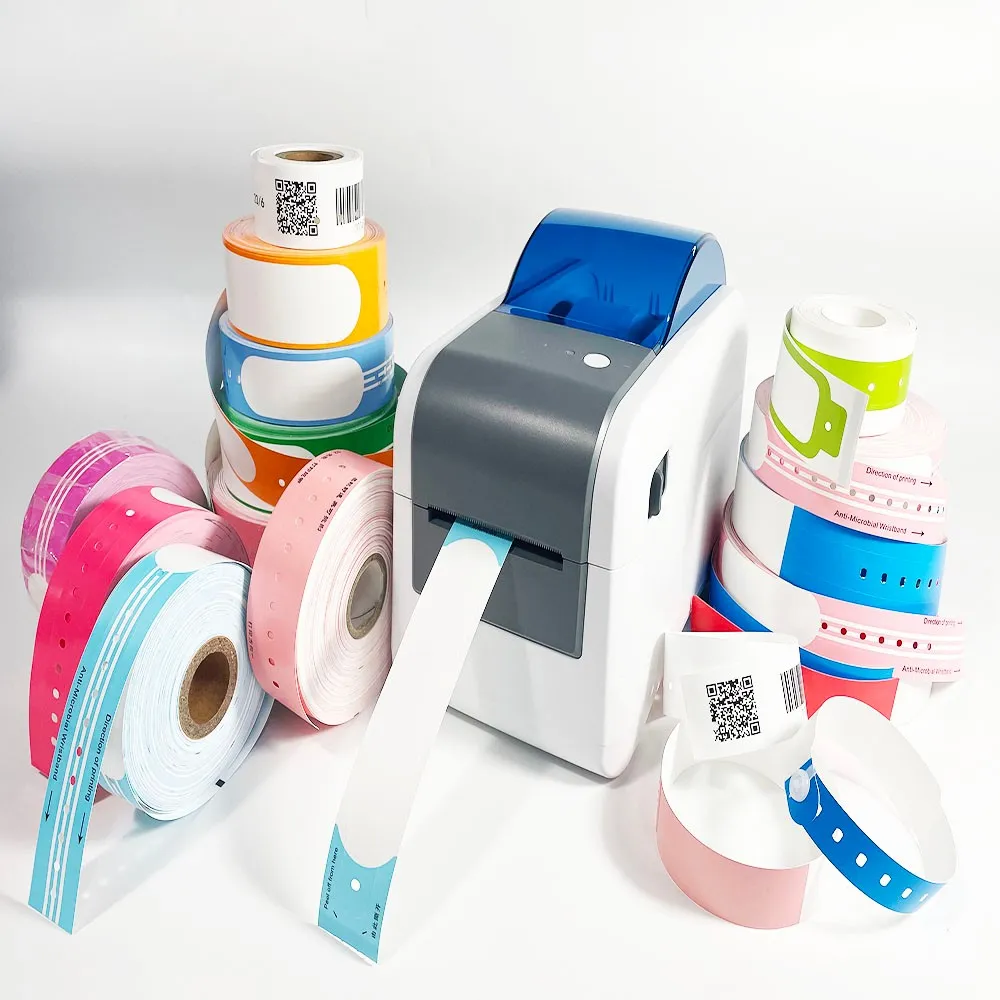
At LinkWin, we don’t just sell bands; we provide safety solutions. We understand that a color-coded alert band is a communication tool that speaks when the patient cannot.
Our wristbands feature:
- High-Definition Thermal Printing: Ensures text and barcodes stay crisp and readable throughout the patient’s stay.
- Customizable Options: We can adapt to specific facility protocols or add “Limb Alert” text directly onto the pink background for added clarity.
- Reliable Supply Chain: We ensure global customers get the high-quality safety consumables they need without delay.
By choosing LinkWin, you are investing in a system that prioritizes durability and clarity, directly reducing the risk of accidental sticks on a restricted limb.
Frequently Asked Questions (FAQ)
Can I take the pink wristband off when I get home?
Yes, once you are discharged, you can remove the disposable patient safety wristband. The hospital color code standards are designed specifically for communication within the healthcare facility. However, just because the band is gone doesn’t mean the risk is. If you have lymphedema precautions or need AV fistula protection, those restrictions apply for life. While you don’t need to wear the hospital band at home, many of our clients switch to a permanent medical ID bracelet or necklace to ensure medical error prevention during future emergencies.
What if a nurse tries to take blood pressure on my pink-banded arm?
Speak up immediately! Even with strict nursing safety protocols, hospitals are high-stress environments, and oversight can happen. If a clinician reaches for your restricted extremity, firmly say, “Stop, this is a no BP or IV arm.” Point clearly to the pink band. Your active participation is the final layer of defense. Never assume the staff sees the color; always verbally confirm the restriction to protect your limb.
Is pink used for anything else?
Under the current American Hospital Association wristband colors guidelines, pink is exclusively reserved for the restricted extremity alert. This standardization is crucial to avoid “color confusion” among staff. While pink is culturally associated with breast cancer awareness (which often correlates with mastectomy arm restrictions), in a clinical safety context, it strictly signals a functional warning. It tells staff to stop and find another site for access, ensuring patient identification systems work effectively to prevent harm.
