
Subtotal ¥0.00
Discover resin vs wax ribbons for synthetic wristbands and learn why proper ribbon pairing ensures durable barcodes in healthcare and event environments
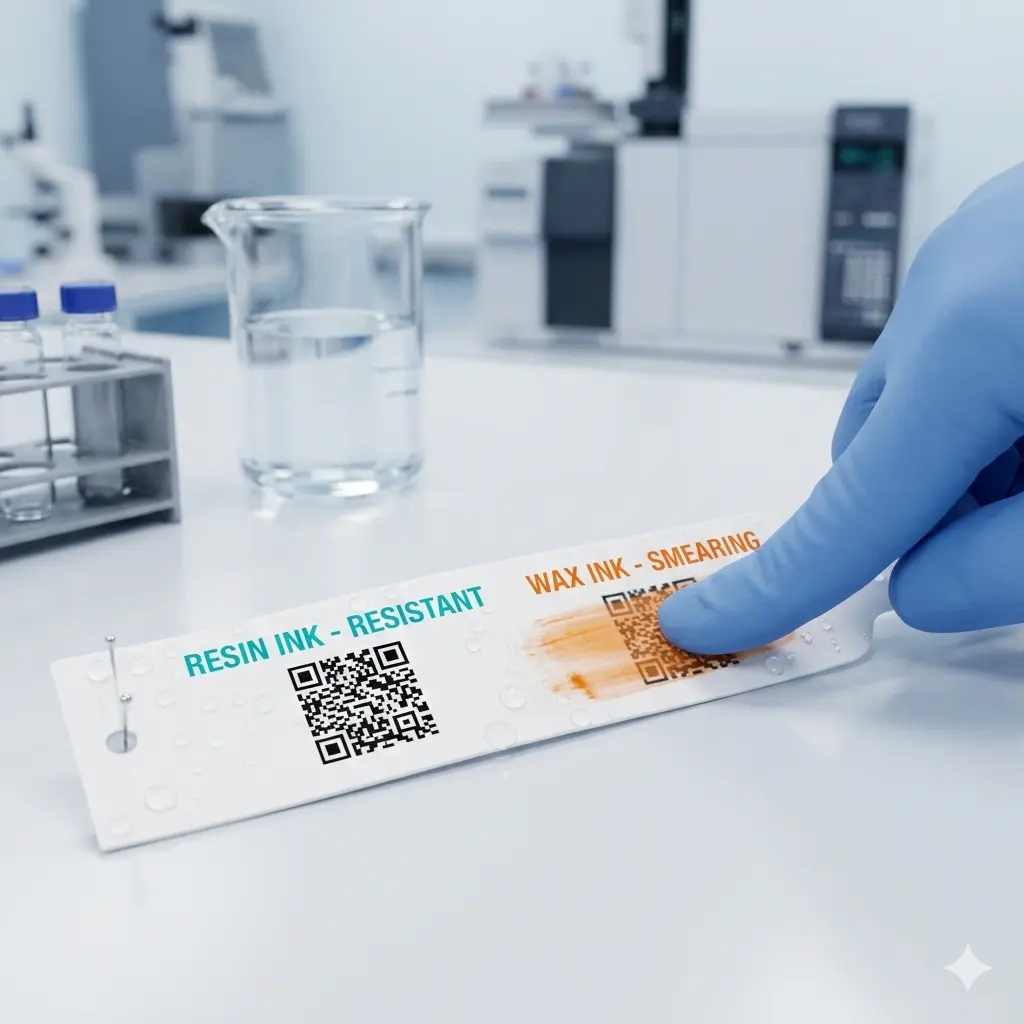
Ever seen a barcode vanish after a single splash of sanitizer or a day at the pool?
It’s an operational nightmare for hospital patient ID and a total disaster for event security. The truth is, attempting to use a standard wax ribbon on synthetic wristbands is like writing on glass with a crayon—it might look okay for a second, but it won’t last the car ride home.
I’ve spent years troubleshooting “unscannable” failures in high-stakes environments, and they almost always stem from this one mismatched pairing. If you’re looking for 100% scannability, smudge resistance, and printhead longevity, you need to understand the molecular bond between your ink and your substrate.
In this guide, I’m going to show you why resin ribbons are the only way to ensure image permanence on polypropylene wristbands.
Let’s dive right in.
The Science of the Bond: Why Wax Fails Where Resin Wins
In my years of providing labeling solutions, I’ve seen the same mistake repeated globally: trying to save a few cents by pairing wax ribbons with polypropylene wristbands. The result is always the same—a smeared, unreadable mess that fails the moment it’s touched. Understanding the chemistry behind thermal transfer printing is the only way to ensure your data stays put.
The Porosity Problem: Why Wax Needs Paper
Wax ribbons are engineered for one thing: paper. Paper surfaces are naturally porous, filled with microscopic valleys and fibers. When the printhead melts the wax, it sinks into these “nooks and crannies,” creating a mechanical lock.
Synthetic substrates, however, are smooth and non-porous. On a plastic wristband, wax has nowhere to go. It sits loosely on the surface, making it incredibly vulnerable to:
- Smudging with a simple thumb swipe.
- Complete erasure from friction against clothing.
- Fading within minutes of exposure to moisture.
The Molecular Anchor: Resin’s Chemical Bond
Resin ribbon durability isn’t just about being “tougher” ink; it’s about a molecular fuse. Resin is a plastic-based compound. When the thermal printhead applies heat, the resin doesn’t just sit on the wristband—it chemically bonds with the synthetic material. This creates an “anchor” that turns the print and the wristband into a single, inseparable unit. This is how we achieve the professional-grade scratch resistance required for high-stakes environments like hospitals and heavy-duty events.
The Heat Factor: Printhead Energy Settings
Because resin is a much harder, more durable material than wax, it requires a higher melting point to achieve that bond. To get the best results, you must optimize your high-heat printer settings:
- Increased Darkness/Heat: You must dial up the printhead energy to ensure the resin fully liquefies.
- Speed Calibration: Because resin requires more “soak time” for the heat to transfer, you may need to lower your print speed compared to wax.
- Precision Pressure: Ensuring the printhead applies uniform pressure across the synthetic substrate is critical to preventing voids in the barcode.
Using the wrong energy settings with a resin ribbon will result in light, “flaky” print. But when dialed in correctly, the bond is permanent.
Why the Right Ribbon Pairing is Non-Negotiable for Synthetic Wristbands
In high-stakes environments, a faded barcode isn’t just an inconvenience—it’s a system failure. When we utilize thermal transfer printing on polypropylene wristbands, the ribbon choice determines whether your data survives the day or disappears within hours. For synthetic substrates, we consider the resin bond a mandatory requirement for operational safety and efficiency.
Healthcare & Patient ID: Survival Against Chemical Exposure
In medical facilities, a hospital patient ID is constantly exposed to harsh substances. Standard wax cannot withstand the rigors of a clinical environment.
- Alcohol and Sanitizers: Nurses and staff use hand sanitizers dozens of times a day; resin provides the necessary resistance to prevent the ink from dissolving.
- Medication Spills: Resin ribbon durability ensures that patient data remains legible even when in contact with various liquid medications.
- Patient Safety: If a barcode becomes unreadable, it compromises the “five rights” of medication administration.
Water Parks & Festivals: Scratch Resistance in the Wild
For the leisure and events industry, wristbands are subjected to physical abuse and environmental factors that would destroy a paper-based alternative.
- Chlorine and Saltwater: Resin provides the smudge resistance needed for guests spending hours in pools or the ocean.
- Sunscreen and Oils: The chemical compounds in sunscreens act as solvents; resin is the only material that maintains image permanence against these oils.
- High-Friction Environments: From crowded festivals to water slides, the superior scratch resistance of resin prevents the print from wearing off during physical activity.
The Scannability Standard: Beyond Visual Legibility
A wristband that looks “readable” to the human eye can still fail a scanner. We emphasize barcode scannability as the true benchmark of a successful print.
- Edge Definition: Resin ribbons create crisp, sharp edges on synthetic surfaces, which is critical for 2D and 1D barcodes.
- Preventing Latency: A failed scan at a gate or a bedside causes immediate bottlenecks and manual entry errors.
- System Reliability: Using the correct pairing ensures a 100% first-time scan rate, maintaining the flow of data across your entire platform.
We treat the bond between the ribbon and the synthetic substrate as a single, unified component. Without the correct resin pairing, the durability of the synthetic wristband itself is effectively neutralized.
Breaking Down the Costs: Why Resin Ribbon Value Beats Cheap Alternatives
The Fallacy of the Cheap Ribbon
Choosing a wax ribbon for synthetic wristbands to save a few cents is a classic “penny wise, pound foolish” mistake. When a barcode smudges or fades on a polypropylene wristband, the initial savings vanish instantly. You aren’t just losing the ribbon; you’re paying for:
- Wasted Media: Throwing away expensive synthetic substrates.
- Labor Costs: Staff spending hours re-printing and re-applying wristbands.
- Operational Risk: Failed scans in hospitals or event gates that stall workflows and compromise safety.
The LinkWin Perspective: Protecting Your Hardware
At LinkWin, we look beyond the surface. We design our resin ribbons not just for image permanence, but for hardware health. High-quality resin contains specialized back-coatings that reduce friction. By using a proper resin ribbon cost-benefit analysis, you’ll realize that the right ribbon actually extends your printhead longevity. Cheaper, abrasive alternatives wear down heating elements, leading to costly replacements long before their time.
Ribbon Comparison: Finding the Right Pairing
| Ribbon Type | Durability & Scuff Resistance | Price Point | Best Substrate Match |
|---|---|---|---|
| Standard Wax | Low (Smudges easily) | Lowest | Paper Labels |
| Wax-Resin Hybrid | Moderate (Good for shipping) | Mid-range | Coated Paper / Some Synthetics |
| Full Resin | Maximum (Chemical & Heat Proof) | Premium | Synthetic Wristbands / PET / PP |
Total Cost of Ownership (TCO)
A thermal transfer ribbon (TTR) is essentially an insurance policy for your data. With full resin, you get the smudge resistance and scratch resistance required for high-stakes environments. Investing in the correct pairing up front eliminates the “hidden taxes” of re-work, frustrated users, and premature equipment failure. Our focus is on providing a solution where the barcode scannability remains perfect from the moment of print until the wristband is removed.
Technical Troubleshooting: Optimizing Resin vs. Wax Ribbons for Synthetic Wristbands
Getting a crisp, permanent image on synthetic substrates isn’t just about the ribbon choice; it’s about the thermal transfer printing configuration. Because resin ribbons have a higher melting point than wax, your standard “out-of-the-box” settings will likely fail.
Precision Heat and Darkness Adjustments
Resin requires significant energy to liquefy and anchor to synthetic surfaces. If your print is faint or scratches off easily, you need to increase the printhead energy (darkness). However, there is a fine line—too much heat can cause the ribbon to melt through or snap.
- Start Low: Increase darkness settings in small increments until the image is solid black and smudge-resistant.
- Speed Control: High-heat printing often requires a slower print speed to allow the resin to bond properly.
- Balance: If you see “ghosting” or ribbon burning, drop the heat and check your pressure settings.
Preventing Printhead Burn-Through
A common mistake is using a ribbon that is narrower than the wristband. In thermal transfer printing, the ribbon acts as a lubricant and a cooling shield for the printhead. If the synthetic wristband makes direct contact with the printhead elements without a ribbon buffer, it causes “burn-through” and permanent damage.
| Component | Optimization Rule | Why it Matters |
|---|---|---|
| Ribbon Width | Must be wider than the wristband | Protects the printhead from abrasive synthetic edges. |
| Darkness Setting | Higher for Resin / Lower for Wax | Ensures a permanent chemical bond on non-porous surfaces. |
| Print Speed | 2-4 inches per second (IPS) | Provides enough dwell time for resin to transfer effectively. |
| Head Pressure | Medium-High | Ensures even contact across the entire synthetic substrate. |
Essential Maintenance for High-Heat Printing
Operating at the higher temperatures required for resin ribbon durability puts extra stress on your hardware. To maintain printhead longevity, I recommend a strict maintenance routine to prevent residue buildup.
- Clean Every Roll: Use a 99% Isopropyl alcohol cleaning pen or wipe every time you change a ribbon.
- Check for Build-up: Synthetic materials can shed micro-plastics under high heat; keep the path clear.
- Pressure Calibration: Ensure the toggle pressure is even. Uneven pressure leads to ribbon wrinkling and poor barcode scannability.
Frequently Asked Questions: Resin vs. Wax Ribbons for Synthetic Wristbands
Can I use wax-resin ribbons for synthetic wristbands?
While wax-resin hybrids offer better durability than pure wax, they generally fall short for synthetic wristbands in high-contact environments. If the wristband will face heavy friction, water, or soap—like in a hospital or water park—full resin ribbons are the only way to ensure the print doesn’t smudge or disappear.
Why is my resin ribbon snapping during the print process?
Resin ribbon breakage is usually caused by excessive darkness or heat settings. Because resin requires more energy to transfer, users often crank the heat too high, which can melt the ribbon base or cause it to “snap” under tension.
- Solution: Lower the heat in small increments.
- Check: Ensure the ribbon is properly threaded and the printhead is clean.
How do I know if my wristband is synthetic or paper-based?
A quick “tear test” is the most reliable method. Paper wristbands will tear easily and show fibrous edges. Synthetic substrates (like Polypropylene) will stretch or resist tearing entirely. If it feels like plastic and doesn’t rip, you must use a resin ribbon for a permanent bond.
Does resin ribbon damage the thermal printhead?
The ribbon itself doesn’t damage the head, but the high-heat settings required for resin can shorten printhead longevity. To protect your hardware:
- Use a ribbon slightly wider than the wristband to provide a protective lubricant layer.
- Perform regular maintenance with isopropyl alcohol.
- Only use the minimum heat necessary to achieve a crisp, scannable barcode.
| Feature | Wax Ribbon | Wax-Resin | Full Resin |
|---|---|---|---|
| Compatibility | Paper | Coated Paper/Synthetics | Synthetic/Polypropylene |
| Smudge Resistance | Low | Medium | High (Non-Negotiable) |
| Chemical Resistance | None | Low | High |
| Required Heat | Low | Medium | High |
