
Subtotal ¥0.00
Discover 5 key features to check when sourcing red alert wristbands for compliant patient safety and healthcare procurement
Understanding Red Alert Wristbands in Modern Healthcare Procurement
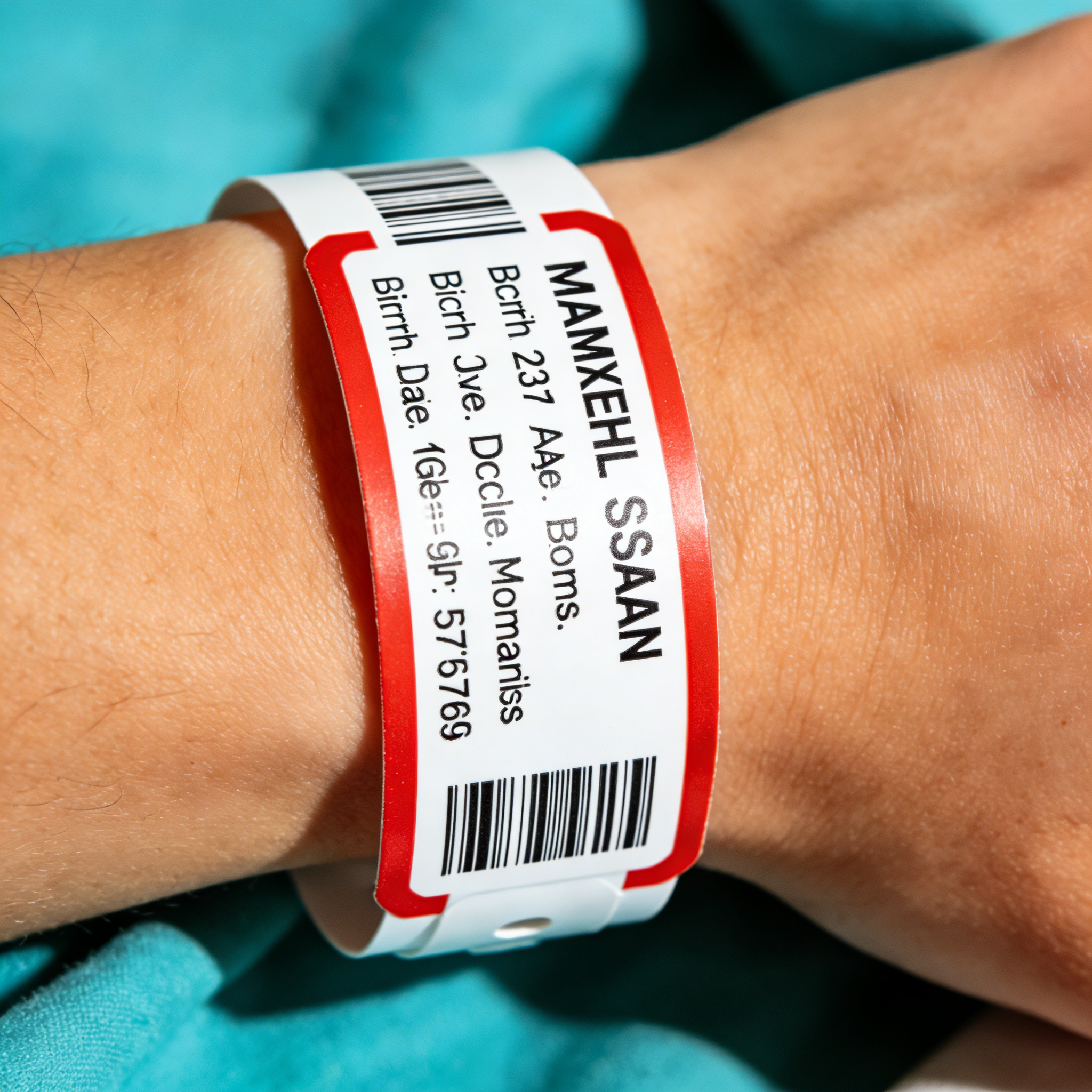
When we talk about patient safety, visual cues are the first line of defense. In the world of healthcare procurement, red allergy alert bands are not just administrative supplies; they are critical warning signals. Following the AHA wristband guidelines (American Hospital Association), the industry has standardized RED to signify “STOP” and “DANGER.” This universal color code specifically alerts staff to patient allergies, ensuring that a nurse or doctor knows immediately to pause and check the medical record before administering drugs or food.
Common Use Cases Across Facilities
We see these color-coded patient wristbands deployed across the entire spectrum of care. They are non-negotiable tools in:
- Acute Care Hospitals: For rapid identification during triage and pre-surgery.
- Outpatient Clinics: To prevent adverse reactions during routine procedures.
- Long-Term Care: Ensuring daily medication safety for elderly residents.
Risks of Non-Compliant Sourcing
Sourcing the wrong product isn’t just a logistical headache; it is a liability. Using non-compliant bands—those with inconsistent coloring or poor legibility—drastically increases the risk of medication errors. If a wristband falls off or the red dye fades to pink, a clinician might miss a life-saving warning. As procurement professionals, our goal is to eliminate these gaps in patient safety identification by selecting standardized, high-visibility solutions that leave no room for ambiguity.
Feature 1: Compliance with National and State Color-Coding Standards
When Sourcing Red Alert Wristbands, the very first box I check isn’t price—it’s strict adherence to safety standards. In healthcare, color isn’t just a design choice; it is a critical communication tool. If the shade is off or the coding doesn’t match the universal protocol, the risk of a medication error skyrockets.
Verifying AHA-Aligned RED Designation
The American Hospital Association (AHA) established the gold standard for color-coded patient wristbands, designating Red for Allergies. This creates a visual “STOP” sign for clinicians before they administer medication or food.
As a supplier, I ensure that Red allergy alert bands are distinct and unmistakable. You need to verify that the wristbands you source align perfectly with these AHA wristband guidelines. There is no room for interpretation here—a band that looks orange or pink under fluorescent hospital lights can lead to dangerous confusion.
Checking for State-Specific Standardization Compliance
While AHA guidelines are the baseline, local regulations often add another layer of requirements. Many states and regions have adopted specific State standardization compliance laws that dictate exactly how the text “ALLERGY” appears or if specific iconography is required.
Before finalizing an order, cross-reference the product specifications with your local health department’s requirements. Uniformity across facilities is key to preventing staff confusion, especially for agency nurses moving between hospitals.
Requesting Documentation and Testing Reports
Never rely solely on a catalog image. To guarantee safety and liability protection, you must request concrete proof from your supplier. I always recommend asking for:
- Color Fastness Reports: Proof that the red warning color won’t fade after exposure to water or sanitizers.
- Compliance Certifications: Documentation stating the product meets national patient safety goals.
- Physical Samples: Test the visibility and color accuracy in your actual facility lighting.
Feature 2: Material Safety and Patient Comfort
When we talk about Red Alert Wristbands, the focus is usually on visual identification, but the physical material is just as critical. If a patient is already compromised, the last thing we want to do is introduce a new allergen through their ID band. As procurement professionals, we must look beyond the price tag and ensure the product won’t cause harm.
Mandatory Latex-Free and Non-Irritating Materials
In my experience, sourcing latex-free medical bands is non-negotiable. A significant number of patients and healthcare staff suffer from latex sensitivities. Using a latex-based product for patient safety identification—specifically for those already flagged with allergies—is a massive liability. We always ensure the base material, whether it is vinyl or Tyvek, is strictly hypoallergenic and free from phthalates to prevent adverse reactions.
Skin Sensitivity Considerations for Extended Wear
Patients often wear these bands for days or even weeks. Cheap, rigid plastics can cause chafing, sweating, and skin breakdown, particularly in elderly patients or neonates with fragile skin. I prioritize hypoallergenic alert wristbands that feature:
- Soft, rounded edges to prevent cutting into the skin.
- Breathable materials to reduce moisture buildup and bacterial growth.
- Lightweight construction so the patient barely notices the band during recovery.
Certifications for Biocompatibility
Never rely on a supplier’s verbal promise regarding safety. I always request documentation proving biocompatibility. You should be looking for testing reports that confirm the bands meet international standards (like ISO 10993) for skin irritation and sensitization. If a supplier cannot provide a data sheet proving their wristbands are safe for long-term mucosal or skin contact, that is a major red flag.
Feature 3: Durability, Waterproofing, and Tamper-Evident Design
When I look at sourcing criteria, physical resilience is often where generic products fail. A wristband is useless if it falls off during a shower or becomes unreadable after a day of wear. In a busy healthcare environment, these bands face constant exposure to water, friction, and movement.
To ensure patient safety isn’t compromised by hardware failure, here is what I prioritize in durable hospital identification bands:
- Water and Fluid Resistance: Hospitals are wet environments. Between patient showers, sweat, and exposure to medical fluids, the material must hold up. We ensure our waterproof alert wristbands do not absorb moisture, get soggy, or allow the red warning color to fade.
- Tamper-Evident Closures: The clasp mechanism is critical. You need a tamper-evident closure—usually a snap or adhesive seal—that cannot be unfastened once applied. The only way to remove the band should be by cutting it with scissors. This prevents accidental removal and stops patients from swapping bands.
- Tear-Resistant Materials: Paper bands don’t cut it for multi-day stays. We use multi-layered synthetic materials that resist tearing and stretching. This ensures the “ALLERGY” text remains legible from admission to discharge, reducing the need for constant re-banding.
Feature 4: Print Quality, Legibility, and Customization
When Sourcing Red Alert Wristbands, visual clarity is non-negotiable. If a clinician has to squint to read a warning, the system has failed. We prioritize high-contrast designs where the word “ALLERGY” stands out instantly against the red background. This is vital for effective patient safety identification and preventing critical errors during rush hours.
High-Contrast and Smudge-Proof Design
Standard ink often smears when exposed to alcohol rubs, water, or sweat. We use top-tier, smudge-proof materials to ensure pre-printed allergy wristbands remain legible throughout a patient’s stay. The font size must be large enough to be read at a glance, ensuring the alert is never missed regardless of lighting conditions.
Tech-Ready Customization
Modern healthcare demands more than just text. Your bands should support digital integration to streamline workflows. We offer customization options that bridge physical alerts with digital records.
Key Customization Features:
- Barcodes & QR Codes: High-resolution printing surfaces for scannable medication administration.
- RFID Compatibility: Embedded chips for real-time tracking and patient verification.
- Variable Data: Space for printing specific allergens (e.g., “LATEX” or “PENICILLIN”) alongside the standard warning.
| Feature | Why It Matters |
|---|---|
| High-Contrast Text | Ensures the red allergy alert bands are visible even in low light. |
| Thermal Coating | Prevents ink from fading due to sanitizers or daily wear. |
| Writable Surface | Allows staff to manually add specific allergy details if needed. |
Don’t settle for generic bands that fade. Secure sourcing means ensuring the information stays sharp from admission to discharge.
Feature 5: Total Cost of Ownership and Supply Reliability
When Sourcing Red Alert Wristbands, the sticker price on the invoice is only half the story. I often see procurement managers focus strictly on the lowest unit cost, only to lose money later due to supply chain disruptions or poor product longevity. To make a smart decision, you need to evaluate the Total Cost of Ownership (TCO).
Analyzing Unit Pricing vs. Volume Discounts
If you are handling bulk sourcing patient alerts, the math changes significantly. Buying in small batches might seem safer for immediate cash flow, but it drastically increases your per-patient cost over the fiscal year.
- Tiered Pricing Structures: Look for suppliers that offer transparent price breaks at higher volumes (e.g., 10,000 vs. 50,000 units).
- Landed Cost: Always calculate the final price including shipping and duties. A slightly cheaper band from an unreliable source often becomes expensive once freight is added.
Evaluating Supplier Lead Times and Inventory Stability
A stockout in a critical care setting is a safety risk, not just an inconvenience. Your healthcare procurement checklist must prioritize reliability. We know that hospitals cannot pause operations because a shipment is stuck at customs.
- Consistent Stock Levels: Ensure your supplier maintains local inventory or has a proven track record of consistent manufacturing output.
- Emergency Fulfillment: Ask if they have the capacity to rush orders if your facility sees a sudden spike in admissions.
After-Sales Support and Quality Guarantees
We believe that a supplier’s job doesn’t end at delivery. If a batch of red allergy alert bands has adhesive issues or poor print quality, you need a partner who resolves it immediately, not one who argues over contracts.
- Clear Return Policies: Look for swift replacement protocols for any manufacturing defects.
- Quality Warranties: Ensure the supplier guarantees that the bands will meet the durability and legibility standards required for the duration of a patient’s stay.
Red Flags to Watch Out For During Supplier Evaluation
When sourcing red alert wristbands, you can’t afford to guess. I’ve seen samples that look great in a catalog but fail instantly in a hospital ward. To protect your facility and ensure accurate patient safety identification, keep a sharp eye out for these warning signs.
Inconsistent Colors and Poor Printing
If the “red” looks more like pink or orange, walk away. Color-coded patient wristbands rely on instant visual recognition. A red allergy alert band that fades or varies in shade between batches creates dangerous confusion.
- Smudging Ink: Rub the pre-printed text. If it smears, it won’t survive a shower or sanitization.
- Wrong Shade: The red must match standard alert guidelines, not just be “red-ish.”
Missing Safety Documentation
Never just take a supplier’s word for it. If they hesitate to provide lab reports, that is a massive red flag. You need hard proof that you are buying latex-free medical bands.
- No Certs: Lack of biocompatibility testing means you risk patient reactions.
- Vague Claims: Ensure they explicitly certify the bands as hypoallergenic alert wristbands.
Weak or Faulty Closures
The mechanism matters. A proper tamper-evident closure is non-negotiable.
- Reusability: If you can undo the clasp without destroying the band, it is not secure.
- Fragile Snaps: Clasps that break under normal movement result in lost patient data and identification errors.
How LinkWin Meets These Critical Sourcing Criteria
At LinkWin, we understand that sourcing Red Alert Wristbands is about more than just filling inventory—it is about guaranteeing patient safety. We have optimized our manufacturing and supply chain to address the exact pain points procurement managers face, ensuring every product meets rigorous medical standards.
Here is how we deliver on the features that matter most:
- Guaranteed Compliance: Our red allergy alert bands are manufactured to align perfectly with AHA wristband guidelines and state standardization compliance. We use the universally recognized “Alert Red” to ensure immediate visual identification of risks.
- Certified Safety: We prioritize patient comfort. All our patient safety identification products are certified latex-free and hypoallergenic, significantly reducing the risk of skin irritation during extended wear.
- Durability and Security: Our bands feature a robust tamper-evident closure and waterproof materials. They are built to withstand daily hospital activities, showers, and friction without falling off or fading.
- Flexible Customization: From pre-printed allergy wristbands to thermal-printable solutions, we offer bulk sourcing patient alerts with options for custom hospital logos, readable fonts, and barcode integration.
We don’t just sell products; we partner with your procurement team. With dedicated support, competitive volume pricing, and fast turnaround times, we ensure your facility never faces a shortage of critical color-coded patient wristbands.
Frequently Asked Questions About Sourcing Medical Wristbands
Navigating the nuances of healthcare procurement can be tricky. Here are the answers to the most common questions we get from managers sourcing patient identification solutions.
What is the standard color for allergy alert wristbands?
Red is the universal standard. Following AHA wristband guidelines and state standardization compliance, red is exclusively reserved for patient allergy identification. When sourcing red alert wristbands, ensure the shade is distinct and consistent to prevent any confusion with other alerts like Fall Risk (Yellow) or DNR (Purple). Using non-standard colors creates immediate safety risks.
How do I ensure wristbands are latex-free?
You cannot rely on assumptions. Always request a Material Safety Data Sheet (MSDS) or a formal biocompatibility report from your supplier. Latex-free medical bands are a mandatory requirement in almost every facility today to protect both patients and staff from anaphylactic reactions. Look for products explicitly labeled as “100% synthetic” or “latex-free” on the technical specification sheet.
What is the difference between Tyvek and vinyl alert bands?
The choice depends on the length of stay and budget:
- Tyvek: Economical and lightweight. These are tear-resistant and ideal for short-term stays (1-3 days) or outpatient clinics.
- Vinyl: More durable and softer on the skin. These durable hospital identification bands often use a multi-layer construction with a snap closure, making them perfect for long-term care (up to 2 weeks) and extended exposure to water.
Can we customize red alert bands with hospital logos?
Yes, customization is a standard option when bulk sourcing patient alerts. We often print hospital logos, specific department codes, or additional text instructions on the bands. However, the priority must remain on the pre-printed allergy wristbands text. The word “ALLERGY” must remain the dominant visual element to ensure staff can read it instantly from a distance.
