
Subtotal ¥0.00
Optimize surgical center patient identification with NPSG compliant workflows EHR integration and durable thermal wristbands
In surgical centers, patient identification isn’t just a routine step—it’s the linchpin of surgical safety. Every day, Ambulatory Surgery Center administrators and perioperative leaders face the challenge of closing the “identification gap” to prevent costly and devastating errors like wrong-site or wrong-patient surgery. But standard protocols alone no longer cut it in today’s fast-paced OR environments. Optimizing the patient identification process means adopting robust, technology-driven solutions—from thermal wristbands to integrated EHR barcode scanning—that meet National Patient Safety Goals (NPSG) and withstand the rigors of the surgical workflow. If you’re tasked with safeguarding compliance while streamlining operations, mastering this critical aspect is your first step toward zero harm. Let’s explore how to build a bulletproof identification system that empowers teams, mitigates risk, and drives lasting efficiency.
The Regulatory Landscape: Meeting Joint Commission and AHRQ Standards
Patient identification in surgical centers is rigorously regulated to prevent errors that can cause harm or even death. The Joint Commission’s National Patient Safety Goal (NPSG.01.01.01) mandates the use of at least two unique patient identifiers—such as full name and date of birth—before any clinical intervention. This dual-identifier standard is critical to ensure the correct patient receives the correct procedure.
The Agency for Healthcare Research and Quality (AHRQ) further supports this mandate by establishing evidence-based benchmarks and best practices for positive patient identification across healthcare settings. Their guidelines help Ambulatory Surgery Centers (ASCs) align with safety protocols and reduce clinical risks.
Misidentification carries significant legal and financial consequences for ASCs. Beyond patient safety ramifications, errors can result in costly malpractice claims, regulatory penalties, and damage to institutional reputation. Compliance with Joint Commission and AHRQ standards is therefore not only a clinical imperative but a key component of risk management and operational sustainability in high-pressure surgical environments.
Common Failure Points in the Surgical Identification Chain
Missteps in patient identification often trace back to a few key weak spots. Registration errors—like simple data entry mistakes when admitting a patient—can create a domino effect of confusion. Environmental factors also play a big role; distractions in the pre-op holding area or the clatter and noise inside the OR make it easy for staff to miss verification steps. Human factors can’t be ignored either: relying too much on memory or skipping standard protocols with shortcuts puts safety at risk. On top of that, hardware failures such as smudged or illegible wristbands, and scanning errors from poor print quality, further undermine the reliability of patient identification systems in surgical centers. Addressing these vulnerabilities is crucial for minimizing risk and ensuring accuracy throughout the patient journey.
Strategies for Process Optimization in Surgical Patient Identification
Optimizing patient identification in surgical centers starts with standardizing the Time-Out process. By embedding a clear identification verification step into the surgical pause, teams ensure that before any procedure begins, the patient’s identity is actively confirmed along with the correct site and procedure. This reduces reliance on memory and helps catch errors upfront.
Implementing Positive Patient Identification (PPID) shifts verification from passive methods—like just asking a patient for their name—to active systems. Scanning wristbands or barcodes confirms identity electronically, preventing manual entry mistakes and misidentification.
The Two-Identifier Protocol remains a cornerstone in safety. Best practice is to use at least two reliable identifiers—most commonly the patient’s full name paired with another unique detail such as date of birth or medical record number. Choosing consistent identifiers that are easy to verify supports accuracy throughout the surgical journey and aligns with national patient safety goals.
Leveraging Technology: The Shift to Automated Identification
Automated identification is transforming surgical center patient identification by cutting down manual errors and strengthening safety. Barcode systems, especially 2D barcodes, play a key role here. Unlike traditional linear barcodes, 2D barcodes capture more data in a small space, enabling faster and more accurate scanning that drastically reduces mistakes from manual data entry.
Integrating these barcode systems directly with the Electronic Health Record (EHR) ensures real-time synchronization of patient data. This seamless flow—from front desk registration to anesthesia records—eliminates gaps and mismatches that can lead to wrong-patient procedures or delays.
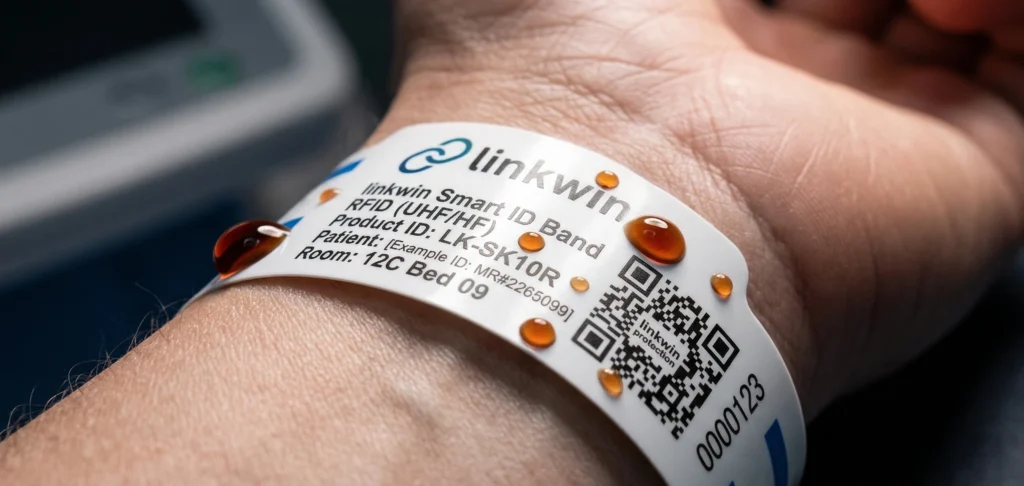
Thermal printing technology underpins this whole process by producing durable wristbands that resist smudging and wear. Thermal wristbands remain fully scannable even after exposure to water, alcohol, and the harsh conditions of the OR, making them the industry standard for dependable patient identification throughout the surgical journey. This combination of automated barcode scanning, EHR integration, and thermal wristband durability is essential to optimizing patient identification in surgical centers.
Hardware Spotlight: Why the Wristband is the Foundation of Safety
In surgical centers, the patient wristband is the cornerstone of positive patient identification and safety. It must hold up throughout the entire surgical process, resisting water, alcohol, and chemicals used in the operating room without smudging or fading. Thermal wristbands, like those from LinkWin, provide excellent durability that standard paper wristbands cannot match.
Aside from toughness, patient comfort is critical. Wristbands need to strike a balance—secure enough to prevent removal or tampering, yet gentle on sensitive skin, especially for pediatric and geriatric patients prone to irritation. Soft, flexible materials and hypoallergenic adhesives help maintain skin integrity while ensuring safety.
LinkWin thermal wristbands deliver 100% scan rates consistently by combining superior print clarity with rugged materials. This reliability eliminates scanning errors and supports seamless electronic health record (EHR) integration for accurate, real-time patient matching across all points of care. In sum, a high-quality wristband is the irreplaceable foundation of an optimized surgical patient identification system.
Implementing a Quality Improvement (QI) Project
Optimizing patient identification in surgical centers demands a well-structured Quality Improvement (QI) project. The PDSA (Plan-Do-Study-Act) cycle is key here. First, plan the changes needed to improve identification accuracy, then implement them on a small scale (Do). Next, study the data to see what worked and what didn’t. Finally, act by adjusting the process before wider rollout.
Staff training is crucial to overcome resistance to new scanning protocols and ensure everyone understands the importance of positive patient identification. Hands-on sessions combined with clear communication help embed new habits quickly.
Regular auditing is vital—tracking near-misses and errors exposes weak points in the process. Providing feedback based on audit data keeps the team accountable, allowing continuous refinement and sustained improvements in patient safety.
This structured approach ensures lasting gains in surgical center patient identification, reducing risks tied to misidentification.
Frequently Asked Questions About Surgical Patient Identification
Common identification errors in surgical centers often stem from registration mistakes, distractions in busy pre-op or OR areas, and reliance on memory rather than verified data. Simple data entry errors or unclear wristbands can also cause patient mismatches.
Technology plays a vital role in improving patient matching accuracy by automating identification with barcode scanning and real-time EHR integration. These systems reduce manual errors and ensure the right patient information flows seamlessly from admission through surgery.
Joint Commission requirements emphasize the use of at least two patient identifiers, typically name and date of birth or medical record number, verified at each step of care. Protocols like the National Patient Safety Goal (NPSG.01.01.01) guide surgical centers to consistently apply these checks via standardized processes such as the surgical time-out.
Thermal wristbands enhance patient safety by providing durable, smudge-proof, and easy-to-scan identifiers. Their resistance to water and disinfectants ensures scanning is reliable throughout the surgical journey, eliminating common hardware-related misidentification risks.
For Ambulatory Surgery Centers (ASCs), implementing a quality improvement project begins with applying the Plan-Do-Study-Act (PDSA) cycle to test new identification processes. Staff training to build buy-in and ongoing auditing of near-misses are crucial steps to embed sustainable improvements in patient safety.
