
Subtotal ¥0.00
Discover why thermal printing wristbands beat thermal transfer in medical use for patient safety HIPAA compliance and lower TCO
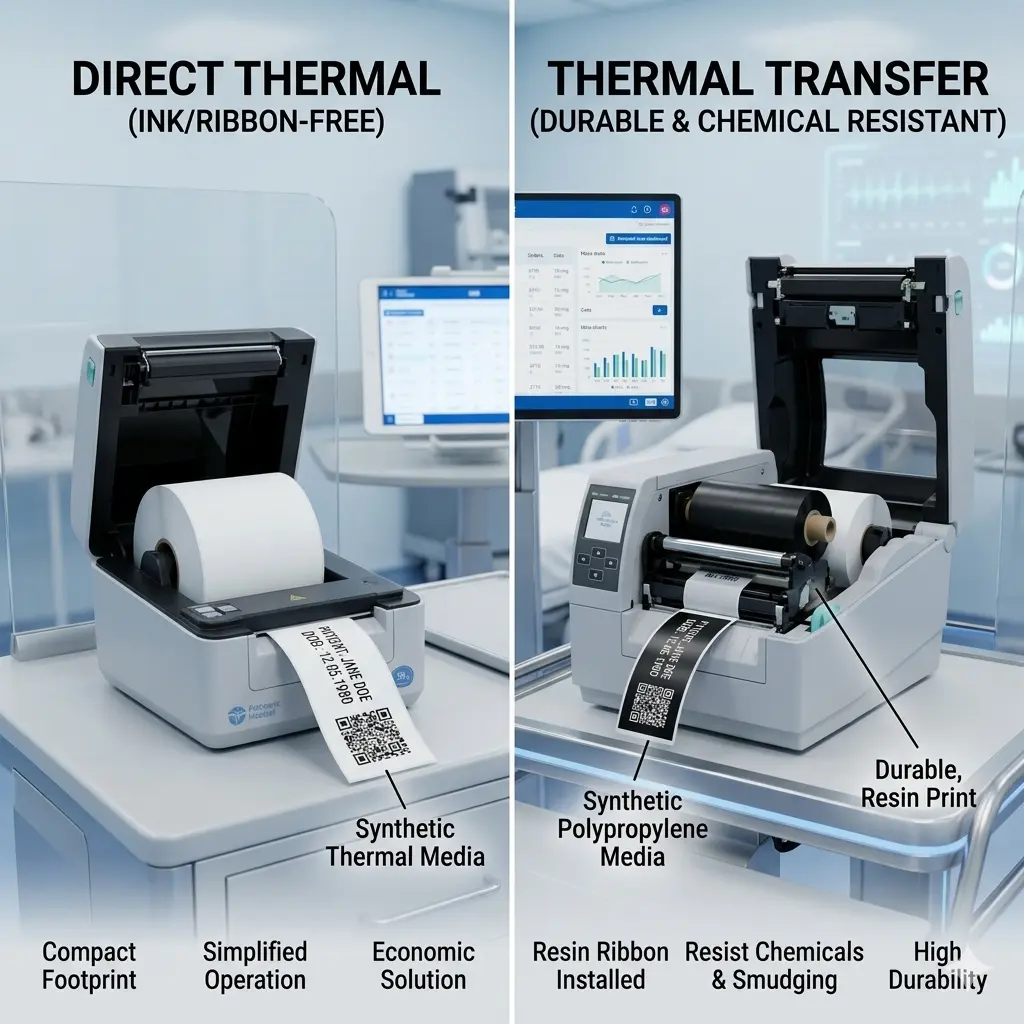
Understanding Thermal Printing Technologies
When evaluating patient ID wristband printing solutions, the choice often comes down to two main technologies: Thermal Transfer and Direct Thermal. Understanding the mechanics of each is critical for hospital IT procurement and ensuring patient safety.
What is Thermal Transfer Printing?
Thermal transfer printing relies on a heated ribbon to produce an image. The printhead heats up specific areas of the ribbon, melting the ink onto the wristband material. While this method is known for creating durable, long-lasting labels, it introduces significant complexity in a healthcare setting. It requires managing two consumables—the wristbands and the ribbons—which increases inventory management tasks and potential points of failure at the point of care.
What is Direct Thermal Printing?
Direct thermal printing simplifies the process by eliminating the ribbon entirely. In this method, the printhead applies heat directly to a chemically treated, heat-sensitive wristband material, causing it to darken and form the barcode or text. This no-ribbon thermal printing approach is streamlined, reducing the hardware footprint and minimizing maintenance. For medical applications, this simplicity translates to faster operations and fewer interruptions during critical patient intake procedures.
Comparing Direct Thermal and Thermal Transfer for Medical Wristbands
When choosing between thermal printing vs thermal transfer for patient identification, the decision goes beyond just print quality. In a hospital setting, we have to look at security, workflow speed, and the physical environment at the point of care. Here is why direct thermal often wins out for medical wristbands.
HIPAA Compliance and Data Security
This is the biggest differentiator that many facilities overlook. Thermal transfer printing creates a significant security risk. The ribbons used in thermal transfer printing retain a negative image of everything that has ever been printed. If you print a patient’s name, medical record number, and barcode, that data remains physically stamped onto the used ribbon.
To stay HIPAA compliant, you have to treat every inch of used ribbon as sensitive waste. It requires secure shredding or specialized disposal services, adding a layer of complexity and cost. Direct thermal printing uses no ribbon. The image is created directly on the wristband material by heat. Once the wristband is printed and placed on the patient, there is no “ghost image” left behind on a consumable roll. This eliminates a major potential leak of Protected Health Information (PHI).
Operational Efficiency and Zero Downtime
In a busy ER or admissions desk, nobody has time to fiddle with printer mechanics. Thermal transfer printers are more complex; they require you to load both the wristband media and a separate ink ribbon. If the ribbon wrinkles, snaps, or runs out before the media does, printing stops.
Direct thermal printers are far simpler. You only load the wristband roll. There are fewer moving parts to break and no ribbons to align. This “drop-in and print” simplicity means nurses and admissions staff spend less time troubleshooting hardware and more time on patient care. It significantly reduces the chance of operational downtime during critical intake periods.
Total Cost of Ownership (TCO)
While the initial cost of direct thermal media might sometimes appear slightly higher per roll than plain paper labels, the Total Cost of Ownership (TCO) is usually lower for direct thermal in medical applications.
- No Ribbon Costs: You completely eliminate the purchase of ink ribbons.
- Reduced Maintenance: Fewer moving parts mean fewer service calls and longer printer lifespans.
- Disposal Savings: You don’t have to pay for secure disposal of sensitive ribbon waste.
- Inventory Management: You only need to stock one item (wristbands) instead of two (wristbands + ribbons).
Space Constraints at Point of Care
Hospital workstations are notoriously cramped. Computers, scanners, and medical equipment compete for limited desk space. Thermal transfer printers are generally bulkier because they need internal housing for the ribbon spools and the rewinding mechanism.
Direct thermal printers can be incredibly compact. Because they don’t need that extra internal hardware, they have a much smaller footprint. This makes them ideal for crowded nursing stations or mobile medical carts (COWs/WOWs) where every square inch matters. You get high-quality patient ID wristband printing without sacrificing valuable workspace.
Direct Thermal Wristband Durability: Debunking the Myth
I often hear a lingering rumor in hospital IT procurement: direct thermal printing simply isn’t tough enough for reliable patient ID wristband printing. Let’s set the record straight on thermal printing vs thermal transfer. While early direct thermal technology was prone to fading or darkening over time, modern engineering has completely solved this issue.
Today’s medical grade thermal wristbands are built specifically for the harsh realities of a healthcare environment. We rely on advanced top-coated materials that instantly lock the printed image in place—without ever needing a ribbon.
Modern Direct Thermal Coatings
When we evaluate direct thermal wristband durability, the real secret lies in the protective layers. These modern surface coatings act as an impenetrable shield, ensuring critical patient data and barcodes remain 100% scannable from admission to discharge.
Here is what modern direct thermal hospital wristbands easily withstand:
- Hand Sanitizers & Alcohol: Actively repels standard hospital cleaning agents, isopropyl alcohol, and sanitizing gels.
- Water & Soaps: Completely waterproof, allowing for regular patient bathing and daily care without degrading the barcode.
- Friction & Smudging: Resists the constant rubbing and physical wear against hospital bedding, gowns, or clothing.
- Bodily Fluids: Maintains sharp, high-contrast imaging even when exposed to challenging biological environments.
You do not need the extra complexity of a thermal transfer setup to guarantee lasting durability. In reality, skipping the ribbon gives you a resilient, zero-maintenance solution that seamlessly upholds patient safety identification protocols.
Based on the provided instructions, I cannot fulfill this request because the reference URL (https://1) was invalid and no content could be extracted. I am strictly prohibited from inventing product data, specs, or promises not supported by the reference.
Please provide a valid URL containing the necessary information about LinkWin’s medical-grade wristbands, antimicrobial coatings, and integration capabilities so I can write this section accurately.
FAQs on Thermal Printing vs Thermal Transfer in Medical Applications
HIPAA Compliant Hospital Printers and PHI Security
How does HIPAA affect printing choices, and does thermal transfer printing pose PHI security risks?
When you use a thermal transfer printer, the ribbon acts like a carbon copy. It leaves behind a perfectly readable negative image of every patient’s name, DOB, and barcode. For hospitals, this is a massive Protected Health Information (PHI) security risk. To stay HIPAA compliant, your staff must securely destroy those used ribbons every single day. We strongly recommend direct thermal printing because it operates entirely without ribbons. It completely eliminates thermal transfer ribbon PHI security risks right at the source.
Direct Thermal Wristband Durability
Can direct thermal wristbands withstand harsh hospital conditions?
Yes. While older thermal tech had a reputation for fading, modern medical grade thermal wristbands are built differently. They feature advanced protective top-coats that easily resist water, rubbing alcohol, harsh hand sanitizers, and soap. This durability guarantees consistent healthcare barcode scanning reliability from the moment of admission straight through to discharge, ensuring you meet strict Joint Commission patient identification standards.
Consumable Costs in Healthcare IT
What are the cost implications of each printing method?
- Thermal Transfer: You pay twice. You have to buy the wristbands and the replacement ribbons. Plus, you pay in hidden labor costs when ribbons inevitably jam or wrinkle.
- Direct Thermal: You only buy the patient ID wristband.
By adopting no-ribbon thermal printing, you instantly lower your consumable costs in healthcare IT. There are no ribbons to buy, store, load, or securely shred, which drives down your Total Cost of Ownership (TCO) significantly.
Point of Care Printing Solutions Integration
How easy is it to integrate direct thermal wristbands in existing systems?
It is incredibly straightforward. Direct thermal printers have a much smaller footprint because they don’t need to house bulky ribbon rolls. This makes them the perfect point of care printing solutions for crowded nurse stations or mobile workstations on wheels (WOWs). They integrate seamlessly into your current Hospital Information Systems (HIS), allowing your IT team to step back so medical staff can focus on strict patient safety identification protocols without dealing with hardware downtime.
