
Subtotal ¥0.00
Learn test standards for waterproof wristband durability and thermosensitive printing bracelet performance from LinkWin experts
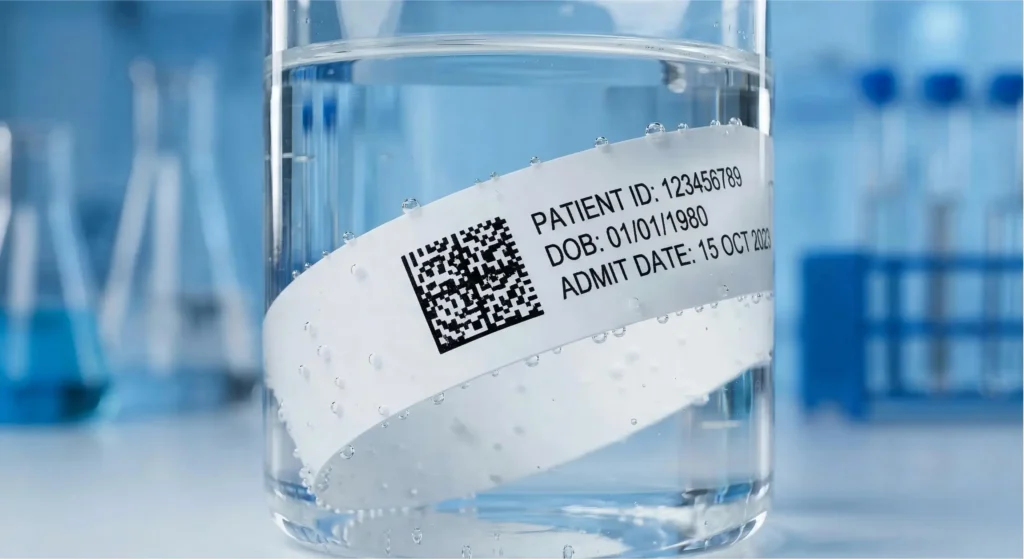
You’ve likely dealt with the nightmare of a patient’s barcode fading after a single hand wash, or an event guest losing their ID in the pool.
It’s a liability you simply can’t afford.
But how do you verify quality before you place a bulk order?
The secret lies in understanding the specific Test Standard for Waterproof and Durability of Thermosensitive Printing Bracelet.
At LinkWin, we don’t just guess; we engineer against failure.
In this guide, I’m going to show you the exact rigorous protocols—from chemical resistance to the IP68 waterproof wristband immersion test—that separate medical-grade safety from cheap imitations.
Let’s get into the data.
Understanding Moisture Resistance Standards
When we talk about patient identification or event access, the failure of a wristband isn’t just an inconvenience—it’s a security risk. At LinkWin, we know that moisture is the number one enemy of thermal printing. To ensure reliability, we strictly adhere to rigorous testing standards that separate true waterproofing from basic water resistance.
Defining Waterproof vs. Water-Resistant
It is crucial to distinguish between these two terms. Water-resistant wristbands can handle light splashes or sweat but will degrade if submerged. Waterproof wristbands, which are our standard for medical and multi-day use, are engineered to survive complete submersion without losing structural integrity or data readability. We design our thermal bands to meet specific IP ratings (often aiming for IP68 equivalence), ensuring that a barcode remains scannable even after a patient showers or takes a therapeutic bath.
The Immersion Test Methodology
We don’t guess; we test. Our quality assurance process involves a standardized immersion test methodology for all thermal bands:
- Duration: Wristbands are submerged in water at varying temperatures (typically 25°C to 40°C) for periods ranging from 24 to 72 hours.
- Agitation: We simulate movement to mimic the friction of a wrist moving through water.
- Evaluation: Post-immersion, we verify that the tensile strength remains unchanged and, most importantly, that the thermal image density has not faded below readable levels.
Why Synthetic Materials Outperform Coated Paper
The secret to passing these tests lies in the substrate. Traditional coated paper acts like a sponge; once moisture penetrates the edges, the wristband tears easily, and the thermal layer delaminates.
We exclusively utilize synthetic materials (such as polypropylene or specialized composites) for our waterproof lines. These materials offer:
- Zero Absorbency: Water beads off the surface rather than soaking in.
- Structural Stability: The band does not expand or weaken when wet.
- Topcoat Adhesion: Synthetic bases provide a superior anchor for the thermal coating, preventing the print from washing away under hydrostatic pressure.
Chemical Resistance and Alcohol Rub Tests
When we talk about durability, water is just the starting point. In real-world scenarios—especially in hospitals—wristbands face a much harsher enemy: chemicals. Specifically, the constant barrage of hand sanitizers and disinfectants. If a wristband can’t survive a nurse sanitizing their hands before checking a patient, it’s useless.
Why Resistance to Hand Sanitizers is Critical for Patient Safety
Imagine a scenario where a nurse uses hand sanitizer and then immediately adjusts a patient’s ID band. If that chemical contact smears the thermal print or dissolves the protective topcoat, the barcode becomes unreadable. This is a massive safety risk. Patient ID wristband compliance isn’t just about having a band on the wrist; it’s about ensuring that the data remains legible from admission to discharge.
We prioritize hospital wristband chemical resistance because a faded barcode leads to medication errors and identification mix-ups. It’s not just ink on paper; it’s a critical link in patient safety protocols.
Simulating Exposure to 70% Isopropyl Alcohol and Ethanol
To ensure our bands hold up, we don’t guess. We simulate the exact conditions found in medical environments. Our testing protocols involve rigorous exposure to the most common solvents used in healthcare:
- 70% Isopropyl Alcohol: This is the standard for most medical wipes and sanitizers. We test to ensure the thermal image doesn’t fade or turn black upon contact.
- Ethanol: Often found in gel sanitizers, this can be aggressive on thermal coatings.
- Common Disinfectants: We also test against bleach solutions and quaternary ammonium compounds often used for surface cleaning.
The goal is simple: the barcode must remain 100% scannable even after direct contact with these fluids.
Understanding the Crockmeter Rub Test Cycles and Metrics
It’s not enough to just spill alcohol on the band; we have to simulate friction. In the lab, we use a device called a Crockmeter. This machine rubs a “finger” (weighted usually with a specific load) back and forth across the printed surface.
Here is how we measure success using Crockmeter rub test cycles:
- Dry Rub: Testing basic abrasion resistance against clothing or bedding.
- Wet Rub (Alcohol): We soak the rubbing cloth in 70% Isopropyl alcohol and run it for a set number of cycles (often 50+ cycles).
- The Metric: After the cycles are complete, we scan the barcode. If the barcode readability retention drops or the grade falls below a specific ISO/ANSI standard, the batch fails.
We use these specific thermal print rub test standards to guarantee that when you buy a waterproof wristband from us, you’re getting a product that survives the harsh reality of clinical use, not just a splash of water.
Physical Durability and Abrasion Testing
We know that a wristband isn’t just sitting in a vacuum; it’s rubbing against bedsheets, clothing, and skin all day long. That’s why physical durability is non-negotiable. We don’t just guess if the print will hold up; we put it through rigorous dry abrasion testing. This process specifically targets the topcoat protection, ensuring that the thermal layer beneath remains intact even after repeated friction. If the topcoat fails, the data fails.
Ensuring Barcode Readability After Friction Wear
The ultimate test of durability isn’t how the band looks, but whether it works. A scuffed wristband is annoying, but a scuffed barcode is a liability. We focus heavily on barcode readability retention. Our testing simulates the daily wear and tear a patient ID wristband experiences to guarantee that scanners can still read the code on the first try. Whether it’s a nurse scanning medication or event staff checking access, that “beep” needs to happen instantly, every time, regardless of surface friction.
Balancing Tensile Strength with Tamper-Evident Safety
There is a fine line between a wristband that is tough and one that is safe. We engineer our bands to have high tensile strength so they don’t snap snagging on a door handle, but we also integrate precise tamper-evident safety features. The goal is a band that is impossible to transfer but easy to break if caught in a dangerous situation (like machinery or a playground hazard). It’s about finding that sweet spot where durability testing meets real-world safety compliance.
Biocompatibility and Skin Safety Standards
When we talk about durability, it’s easy to focus solely on whether the wristband survives water or chemicals. But for us, the most critical “durability” test is how well the material interacts with human skin over time. A wristband that stays intact but causes a rash is a failed product, especially in a medical setting where patients might wear these bands for weeks.
ISO 10993 Compliance for Sensitive Skin
We don’t guess when it comes to skin safety; we follow the ISO 10993 standard. This is the global benchmark for biological evaluation of medical devices. For a waterproof wristband used in hospitals, this compliance isn’t optional—it’s a necessity. It ensures that the synthetic materials and thermal coatings we use are safe for prolonged contact with the skin, even for vulnerable patients like newborns or the elderly.
Testing for Cytotoxicity, Sensitization, and Irritation
To guarantee safety, our materials undergo a rigorous battery of biological tests:
- Cytotoxicity: We verify that the materials do not damage or kill cells.
- Sensitization: We test to ensure the wristband doesn’t trigger allergic reactions after repeated exposure.
- Irritation: We confirm that the surface texture and chemical composition won’t cause redness or inflammation.
These tests are crucial because patient ID wristband compliance goes beyond just scanning a barcode; it’s about patient comfort.
Preventing Dermatitis During Long-Term Stays
Hospital-acquired dermatitis is a real issue. Moisture trapped under a non-breathable band can macerate the skin, creating a breeding ground for bacteria. Our approach involves selecting materials that balance waterproof capabilities with skin-friendly properties. By using high-grade synthetic materials rather than rougher substrates, we minimize friction and allow for safer long-term wear, significantly reducing the risk of skin breakdown during extended hospital stays.
Environmental Stress Testing for Thermal Stability
When we talk about durability, it’s not just about water or friction. Heat and humidity are silent killers for thermal images. A wristband might look great when it’s printed, but if it turns black or fades after a hot shower or a day in the sun, it’s useless. That’s why we put our materials through rigorous environmental stress testing to ensure stability in real-world conditions.
Heat and Humidity Chamber Testing Protocols
We don’t guess how a wristband will react to the environment; we force it to show us. Our testing involves placing printed wristbands into controlled environmental chambers. These aren’t just warm boxes; they are precision instruments that maintain specific conditions over extended periods.
- Standard Protocol: We typically expose the bands to 60°C (140°F) at 90% relative humidity for 24 hours.
- The Goal: We are looking for image preservation under moisture and heat. The barcode must remain scannable, and the text must remain legible without significant fading.
If a material can survive this “sauna test,” it can easily handle a patient’s fever sweat or a hot summer day at a music festival.
Preventing Background Scumming in High Temperatures
One of the biggest issues with low-quality direct thermal materials is “scumming.” This happens when the heat sensitivity of the paper is too unstable. In high temperatures, the white background starts to turn gray or black, reducing the contrast between the barcode and the background.
To prevent this, we select top-coated synthetic materials with high activation temperatures. Our testing ensures that the background optical density remains low (white) even when the ambient temperature spikes. This guarantees that the scanner can still distinguish the black bars from the white spaces, maintaining direct thermal wristband durability.
Ensuring Image Preservation Under Extreme Conditions
It is not enough for the image to just “be there.” It has to be sharp. Durability testing for us means checking that the edges of the printed characters don’t bleed or blur. Whether it is stored in a hot warehouse before use or worn in a humid climate, the thermal reaction needs to be permanent. We verify that the archival life of the image meets the necessary standards for medical records or event security, ensuring the data stays safe until the wristband is cut off.
The LinkWin Quality Assurance Process
At LinkWin, we believe that consistent quality starts long before the final product is packaged. Our manufacturing workflow is built on a rigorous “check-at-every-step” philosophy to ensure direct thermal wristband durability. We don’t leave reliability to chance; we verify it through a structured inspection cycle that guarantees performance in the field.
From Raw Material Inspection to Final Batch Testing
Our process begins with the raw synthetic stock. Before production starts, we test the base material for uniformity and coating integrity. If the material doesn’t meet our standards for moisture resistance or tensile strength, it is rejected immediately. Once production is complete, we perform final batch testing on random samples. This includes checking:
- Print Clarity: Ensuring the thermal layer reacts correctly to heat for sharp imaging.
- Adhesive Strength: Verifying the tamper-evident closure works as intended.
- Surface Integrity: Confirming no defects in the protective topcoat.
Customizing Durability Levels for Events vs. Medical Use
We understand that a music festival has different demands than a hospital ward. We customize our LinkWin thermal printing solutions to match the specific environment of our global customers.
- Medical Applications: We prioritize high-level chemical resistance and compliance. These bands must survive exposure to sanitizers and constant friction while maintaining barcode readability retention.
- Events and Leisure: The focus shifts to water resistance and physical tamper-evidence. We ensure these bands can handle sweat, rain, or a pool dip without falling off or fading.
By tailoring our QA protocols, we deliver the exact level of protection and performance your specific industry requires.
Frequently Asked Questions About Wristband Durability
How long do thermal wristbands actually last underwater?
Durability under moisture depends entirely on the base material. Unlike standard paper options that dissolve or tear, a synthetic waterproof wristband is engineered to survive full immersion. For medical contexts, we ensure barcode readability retention persists throughout a typical patient stay, even with daily exposure to showers or baths. The goal is to ensure the data remains scannable from admission to discharge without the material degrading.
Can common hand sanitizers erase thermal barcodes?
They certainly can if the protective coating is insufficient. Solvents found in sanitizers, specifically 70% Isopropyl alcohol, can react with the thermal layer, causing the image to fade or the background to turn black. We mitigate this by adhering to strict hospital wristband chemical resistance protocols. Our bands undergo rigorous thermal print rub test standards to verify that accidental splashes or cleaning routines do not compromise the patient ID.
What is the difference between direct thermal and thermal transfer durability?
Direct thermal wristband durability is achieved through a heat-sensitive coating on the band itself, eliminating the need for ink ribbons. While historically less stable than thermal transfer (which melts a ribbon onto the surface), modern premium direct thermal coatings have closed the gap. They now offer excellent image preservation under moisture and resistance to heat, making them the preferred choice for efficient hospital workflows that require easy deployment.
How do I know if a wristband meets ISO standards?
Compliance should be clearly stated in the manufacturer’s technical data. For patient safety, the most critical benchmark is ISO 10993 skin irritation testing, which certifies that the wristband is biocompatible and safe for prolonged skin contact. Additionally, verifying the Test Standard for Waterproof and Durability of Thermosensitive Printing Bracelet ensures the product can withstand the specific environmental stresses of your facility.
