
Subtotal ¥0.00
Explore why 70% IPA testing ensures superior solvent resistance and lasting barcode clarity in medical ID wristbands for patient safety.
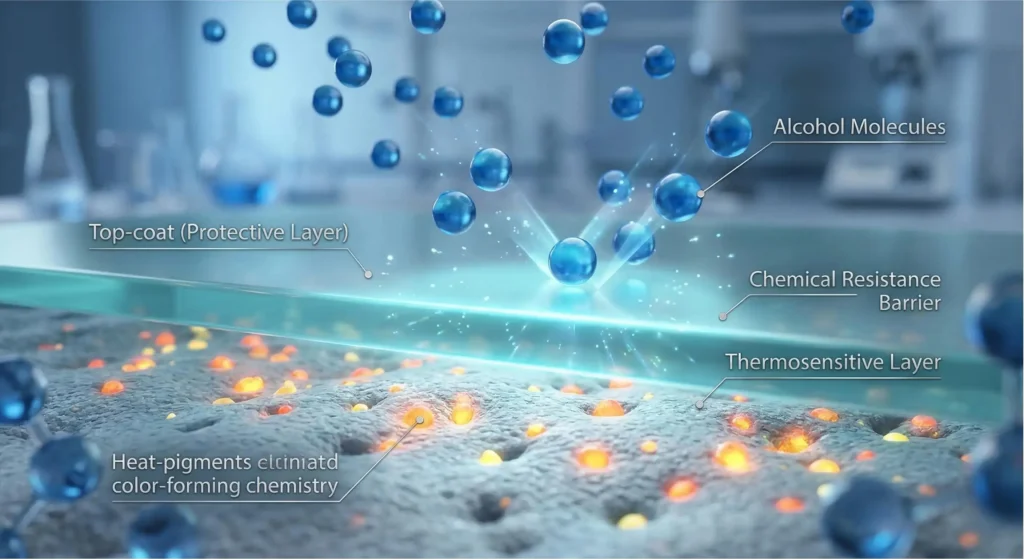
Understanding Solvent Resistance in Medical Wristbands
Solvent resistance is a critical property for medical wristbands, especially those using thermal-printed patient ID bands. It refers to the ability of the wristband’s surface and printed barcode to withstand exposure to various chemicals without fading, smudging, or degrading. This durability is essential in healthcare settings where patient ID bands face frequent contact with cleaning agents and disinfectants.
Common threats to medical wristband durability include:
- Alcohol-based hand rubs used by healthcare professionals
- 70% isopropyl alcohol (IPA) or ethyl alcohol wipes applied for surface cleaning
- Sanitizers and lotions containing emollients that can interact with printed materials
If a wristband lacks adequate solvent resistance, the consequences can be severe:
- Barcode degradation leading to illegible or damaged codes
- Scan failures causing delays in patient identification
- Increased caregiver time spent verifying or replacing wristbands
- Heightened safety risks due to potential patient misidentification
For these reasons, maintaining robust patient ID solvent resistance is fundamental to ensuring both operational efficiency and patient safety in hospitals and healthcare facilities worldwide.
The Chemistry and Science Behind 70% IPA
When it comes to medical wristband durability, the concentration of isopropyl alcohol (IPA) plays a big role. Pure 99% IPA might sound stronger, but 70% IPA is actually more effective for testing patient ID solvent resistance. Here’s why:
Protein Denaturation & Cell Wall Penetration: The 70% IPA solution works by penetrating microbial cell walls and denaturing proteins, which kills bacteria and viruses more thoroughly than higher concentrations.
Slower Evaporation: Unlike the nearly pure 99% IPA, 70% IPA evaporates more slowly. This longer contact time means better interaction with surfaces like thermal wristbands, giving a realistic simulation of how these bands hold up in hospital settings.
Water Content Matters: The water in 70% IPA prevents rapid coagulation on the surface it’s cleaning. This allows the alcohol to reach deeper, making it more effective at both killing microbes and stressing the materials it’s testing — just like what wristbands face during regular hospital disinfection.
In short, 70% IPA testing mirrors real-world conditions for thermal wristband alcohol resistance better than stronger or purer solvents. This makes it the gold standard for evaluating barcode fade resistance IPA and overall healthcare ID band chemical durability.
Why 70% IPA is Chosen as the Testing Standard
Hospitals rely heavily on 70% isopropyl alcohol (IPA) for hand hygiene and surface cleaning, following CDC and WHO guidelines. This makes it the most common solvent that medical wristbands encounter daily. Using 70% IPA testing for medical wristband durability gives a realistic simulation of what patient ID bands face in the real world, unlike 91% or pure solvents that evaporate too quickly and don’t reflect typical exposure.
Leading manufacturers like Zebra and PDC have set the industry benchmark by adopting 70% IPA tests in their wristband abrasion testing IPA and soak procedures. These tests often use Crockmeter or AATCC-style rub methods, running 50 to 100 cycles to mimic repeated contact with hand sanitizers and alcohol-based disinfectants. Post-exposure, the wristbands are checked for barcode fade resistance IPA and scan reliability to ensure patient ID stays readable and accurate.
This standard balances microbial efficacy and material stress well, which is why it remains the go-to protocol for proving thermal wristband alcohol resistance and overall patient ID solvent resistance. If a wristband can handle 70% IPA testing, you know it’s ready for the daily challenges in healthcare settings without risking scan failures or safety issues.
How Leading Thermal Wristbands Perform in 70% IPA Testing
When it comes to medical wristband durability, especially under the common stress of 70% isopropyl alcohol testing, not all bands are created equal. The real test is how well the thermal print holds up after repeated exposure to hospital-grade alcohol and hand sanitizers.
Key durability metrics include:
- Fade resistance: Bands must keep their barcode and text clear, even after multiple rubs or soaks in 70% IPA.
- Barcode scannability: Reliable scanning is crucial for positive patient identification, preventing delays or errors in care.
LinkWin thermal wristbands shine here. Engineered with advanced material science, they use high-density thermal imaging combined with specialized coatings and durable substrates designed for superior solvent resistance. This means the bands can withstand more than 500 cycles of the standard 70% IPA rub test—well beyond many competitors.
Their strong performance under this rigorous testing proves that LinkWin wristbands maintain legibility and scan reliability in real hospital environments, where wristbands face constant contact with alcohol-based disinfectants. This makes them a trusted choice for facilities prioritizing patient safety and workflow efficiency through robust thermal print solvent resistance and barcode fade resistance IPA testing standards.
In short, LinkWin’s focus on combining thermal imaging density wristbands with cutting-edge materials helps ensure long-lasting medical ID hand sanitizer exposure resistance—exactly what hospitals need for dependable patient tracking.
Additional Factors in Comprehensive Solvent Resistance
When it comes to medical wristband durability, testing with 70% IPA is crucial but not the whole story. Real hospital use means exposure to more than just isopropyl alcohol. Here are some key points to consider:
Beyond 70% IPA Testing: Wristbands face regular contact with hand sanitizers containing moisturizers, Betadine antiseptics, soaps, and alkaline cleaners. These can all impact thermal print solvent resistance and barcode fade resistance over time, sometimes in ways IPA alone doesn’t reveal.
Long-Term Performance Matters: Patients often wear ID bands for days or weeks. That means wristbands must handle repeated exposure—cumulative rubbing with alcohol-based disinfectants and other cleaners without losing scan reliability or legibility.
Supporting Infection Control Protocols: Strong solvent resistance helps ensure patient ID bands remain intact during rigorous antimicrobial cleaning cycles. This is essential for positive patient identification alcohol exposure without compromising safety or workflow efficiency.
Choosing medical ID solutions with proven chemical durability across various hospital wristband sanitizer tests—not just the standard 70% IPA rub test wristbands—ensures reliability in real-world healthcare environments. Thermal wristbands designed with advanced coatings and high thermal image density offer superior performance, protecting patient safety and operational efficiency.
Choosing the Right Medical ID Solution for Your Facility
When selecting medical wristbands, solvent resistance and scan reliability are top priorities. Here’s what to look for:
| Key Evaluation Criteria | Why It Matters |
|---|---|
| Independent test data | Verifies wristband durability under 70% IPA testing and other disinfectants |
| Scan reliability guarantees | Ensures barcodes stay readable after repeated exposure to sanitizers and hand rubs |
| Compliance support | Meets hospital and regulatory standards for patient safety and ID accuracy |
Benefits of High-Performance Wristbands
- Reduced read errors cut down on workflow delays and patient misidentification risks.
- Improved workflow efficiency means caregivers spend less time troubleshooting wristband issues.
- Enhanced patient safety through consistent, durable ID bands that withstand alcohol-based disinfectants.
Why LinkWin Stands Out
LinkWin’s thermal wristbands are engineered with high-density thermal imaging and tested extensively in 70% IPA rub tests. Their material science focus delivers:
- Superior barcode fade resistance IPA testing beyond 500 rub cycles.
- Reliable performance against common hospital disinfectants including hand sanitizers with moisturizers.
- Proven thermal print solvent resistance that supports antimicrobial protocols without compromising ID integrity.
Choosing LinkWin means trusting a wristband manufacturer that understands the global healthcare market’s needs for durable, safe, and easy-to-read patient ID solutions.
