
Subtotal ¥0.00
Discover how a medical wristband printer ROI delivers cost savings with direct thermal technology for efficient patient ID and error reduction.
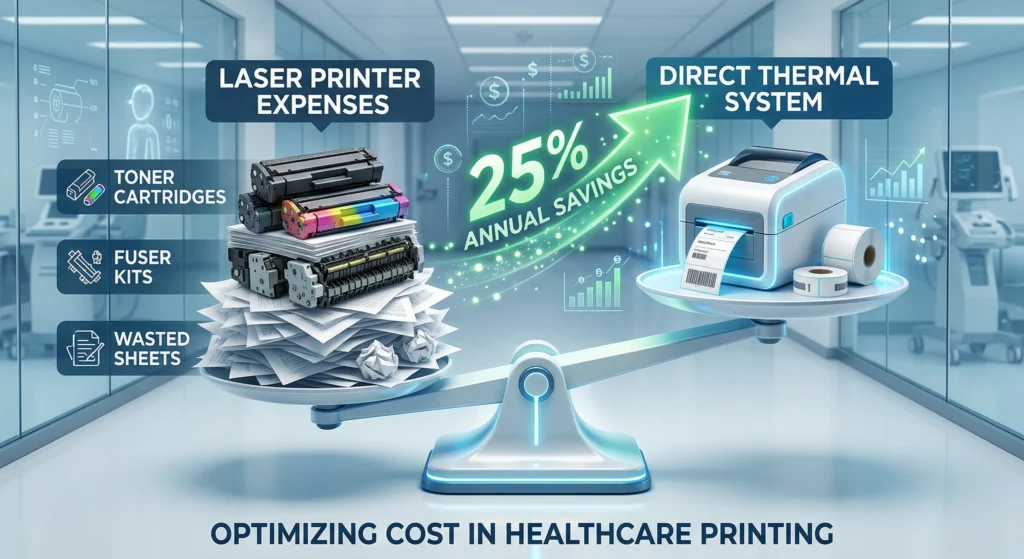
If you’re part of a hospital team wrestling with high costs and patient safety risks from outdated identification methods, understanding the ROI of a medical wristband printing system can be a game-changer. Switching to a thermal wristband printer isn’t just about better technology—it’s about unlocking measurable cost savings by cutting errors, slashing maintenance expenses, and speeding up workflows. In this post, you’ll discover how smart decision-makers calculate the true return on investment for wristband printing, why thermal printing outperforms laser systems, and how hospitals can recoup their investment in under 18 months while boosting patient safety. Ready to see how a modern wristband printer can transform your facility’s ID process and budget? Let’s dive in.
Understanding the Hidden Costs of Traditional Patient Identification Methods
Traditional patient identification methods, such as laser sheet printing and pre-printed or handwritten wristbands, often come with hidden costs that significantly impact hospital operations. While these methods may seem straightforward, they carry inefficiencies and risks that increase overall expenses and reduce patient safety.
Laser Sheet Printing Costs and Challenges
Laser sheet printing involves purchasing toner, ink cartridges, and specialized paper. These consumables add up quickly, especially with high patient volumes. Additionally, printers require regular maintenance and repairs, increasing operational costs. The process also generates substantial waste due to misprints and reprints, which inflates the total cost of ownership (TCO) over time.
Labor and Error Impact of Pre-Printed or Handwritten Bands
Using pre-printed or handwritten wristbands not only slows down the workflow but also raises the risk of human error. Staff spend valuable time sorting and matching bands or manually writing patient details. Mistakes such as incorrect patient information or illegible writing can lead to adverse events, resulting in costly administrative rework and potential litigation.
Quantifiable Impacts on Hospital Efficiency
Errors in patient identification often cause longer hospital stays and increased adverse events like medication errors or treatment delays. These issues trigger additional administrative tasks, including record correction and incident investigations, stretching staff capacity and budget. Collectively, these factors undermine patient safety and inflate operational expenses.
Why Traditional Methods Inflate TCO Without Scalability
Traditional identification approaches lack scalability. As patient volumes grow, the inefficiencies multiply, leading to higher labor costs, more frequent errors, and increased consumable use. This creates an unsustainable cycle, making traditional wristband methods expensive to maintain and inadequate for modern healthcare demands.
In , the hidden costs behind laser sheet printing and manual wristband processes reveal why many hospitals face rising patient identification system expenses. Understanding these challenges highlights the urgent need for more efficient solutions that lower the total cost of ownership while improving accuracy and safety.
What Is a Medical Wristband Printing System and Why Thermal Technology Excels
A medical wristband printing system is designed to produce patient ID bands on-demand, right at the point of care. Most hospitals today prefer direct thermal wristband printers because they’re simple to use and cost-effective. These printers work without ink or toner cartridges—instead, they heat specially coated thermal paper or wristbands to create the print. Cartridge loading is straightforward, making supplies easy to replace and reducing downtime.
Compared to laser or RFID printing, direct thermal technology offers clear advantages:
- No toner or ink needed, so you save on consumables and avoid messy spills.
- Minimal waste since you print only what you need when you need it.
- Durable, smudge-proof prints that last throughout a patient’s stay without fading or rubbing off.
Thermal wristbands are specially made to be water-resistant and long-lasting, ensuring accurate patient identification in all conditions. Plus, these systems integrate seamlessly with EHR/EMR platforms and barcode scanning workflows, improving accuracy and efficiency across hospital operations.
This integration supports faster scanning and reduces errors, driving down total patient identification system costs and improving ROI. Hospitals that switch to thermal wristband printers often see measurable savings in both operational costs and patient safety outcomes.
ROI Calculation Framework for Wristband Printing Systems
Calculating the ROI for a medical wristband printing system is key to understanding its real value. Here’s a simple step-by-step guide to help you build a custom ROI model, focusing on investment versus ongoing costs.
Step-by-Step ROI Model
- Identify Initial Investment
Include the cost of printers, thermal wristbands (like LinkWin thermal wristbands), installation, and integration with existing EHR/EMR systems.
- Calculate Ongoing Costs
Factor in consumables (thermal wristband cartridges), maintenance, and staff time spent on printing and error correction.
- Estimate Savings
Look at reduced media/consumable costs compared to traditional laser sheet printing. Account for labor saved by cutting down on error handling and pre-printed band management.
- Analyze Error Reduction Impact
Factor in savings from fewer identification errors, fewer adverse events, and less administrative rework. These often translate into shorter patient stays and reduced litigation risk.
Key Variables to Consider
- Patient Volume: Higher volumes typically mean faster ROI due to economies of scale.
- Unit Cost: Cost per wristband including consumables—thermal wristbands often show cost savings over laser-based options.
- Error Reduction: Quantify how many errors are avoided per month and their financial impact.
- Labor Saved: Calculate time saved for nursing and administrative staff on patient ID tasks.
Sample Templates and Calculator Prompts
To make applying this easier, use templates that prompt you for:
- Number of patients per day/month
- Current cost per wristband with laser or handwritten bands
- Estimated error rates before and after implementation
- Hourly labor costs for staff involved in ID tasks
- Maintenance and supply costs for existing vs new systems
This structured approach helps you build a hospital-specific model to clearly show the patient identification system ROI and justify switching to a direct thermal wristband printing system.
Quantifying Cost Savings: Direct and Indirect Benefits
When it comes to medical wristband printer cost savings, both direct and indirect benefits add up quickly. Here’s a clear breakdown:
Direct Savings
- Media and Consumables: Thermal wristband printing cuts costs by eliminating toner, ink cartridges, and reducing waste from reprints.
- Waste Reduction: On-demand printing means fewer unused or misprinted bands, lowering consumables expenses.
Labor Efficiency
- Nurses spend less time on patient ID tasks thanks to instant, accurate printing right at point-of-care.
- Saves valuable clinical hours previously wasted on manual corrections or tracking down lost wristbands.
Error Reduction and Risk Mitigation
- Accurate barcode wristband printing drastically cuts patient ID errors.
- Fewer errors mean fewer adverse events, which reduces expensive litigation and shortens patient length of stay.
Maintenance and Uptime Advantages
- Thermal printers have fewer moving parts, resulting in lower maintenance costs and higher operational uptime.
- Less printer downtime supports smooth hospital workflows without costly delays.
Hospital Savings in Action: Sample Highlights
| Benefit | Estimated Savings | Impact |
|---|---|---|
| Consumables Cost Reduction | Up to 30% lower media costs | Less waste, fewer reprints |
| Labor Savings | 20-40 minutes saved per nurse shift | Frees time for direct patient care |
| Error Reduction | 50-70% fewer ID-related errors | Cuts risk, reduces avoidable costs |
| Maintenance Costs | 25-50% less than laser alternatives | Fewer repairs, Lower downtime |
Hospitals using LinkWin thermal wristbands report substantial ROI by lowering total cost of ownership wristband printer expenses while improving patient safety and workflow efficiency.
The cost savings here aren’t just numbers—they translate into better care and smoother daily operations for healthcare teams worldwide.
Comprehensive Cost Savings Analysis: Thermal Wristband Printing in Action
When we compare total cost of ownership (TCO) over 3 to 5 years, switching from traditional laser sheet printing to direct thermal wristband printing clearly shows huge savings. Laser printing involves costs for toner, ink cartridges, and more frequent replacements due to waste and errors. On the other hand, thermal systems, especially with LinkWin thermal wristbands, cut consumable expenses drastically—no toner, no ribbons, less waste.
Side-by-Side TCO Comparison: Laser Sheets vs Direct Thermal
| Cost Factor | Laser Sheet Printing | Direct Thermal Printing |
|---|---|---|
| Consumables (ink, toner) | High | Minimal (specialized wristbands) |
| Waste & Reprint | Frequent | Rare |
| Printer Maintenance | Moderate to high | Low |
| Labor for Reprints & Errors | Significant | Reduced |
| Energy Consumption | Higher | Lower |
Break-even & Payback Timeline by Volume
- Low volume facilities often recover their initial investment in thermal printers within 12-18 months.
- Higher volume hospitals see paybacks as quick as 6-9 months thanks to labor and media cost savings.
- The ROI grows steadily as patient throughput increases, showing why scaling direct thermal systems makes economic sense.
Long-Term Benefits: Scalability, Sustainability, and Energy Savings
- Thermal printers deliver scalable solutions that grow with your hospital’s needs without ballooning costs.
- They reduce environmental impact through minimal waste and lower energy use compared to laser setups, supporting sustainable hospital patient identification costs.
- Durable, smudge-proof prints reduce the need for replacements, helping extend savings over time.
Specialized LinkWin Thermal Wristbands: Optimized for Cost and Durability
- LinkWin’s wristbands are designed for healthcare, ensuring thermal wristband durability and savings by resisting smudges, moisture, and fading.
- Their quality means fewer errors tied to illegible bands, translating to savings in barcode wristband error reduction and related medication error prevention ROI healthcare.
- Using LinkWin products ensures reliable performance, helping reduce maintenance and operational interruptions, further cutting costs.
Switching to direct thermal wristband printing with LinkWin solutions is clearly a smart investment for healthcare providers looking to lower their wristband printer maintenance cost reduction and improve overall efficiency.
Implementation Best Practices to Maximize ROI
To get the most from your medical wristband printer and see real cost savings, start with a solid needs assessment. Look closely at your current patient ID workflow, the printer fleet you have, and how well everything integrates with your existing EHR or EMR systems. Identifying bottlenecks early helps avoid costly surprises later.
When choosing a vendor, prioritize reliability and healthcare-grade materials. Durable, trusted thermal wristband printers and consumables like LinkWin thermal wristbands ensure fewer errors and less waste, directly impacting your total cost of ownership wristband printer savings. Don’t just look at price—consider long-term support, maintenance costs, and compatibility with your hospital’s technology.
Training is key. Make sure clinical staff get hands-on practice with the new system. Good training speeds up adoption and reduces mistakes. Change management should focus on ease-of-use and demonstrate how the new system cuts down on time spent fixing errors, boosting staff buy-in.
Finally, continuously monitor key performance indicators (KPIs) like scan success rates, error logs, and consumable spending. These metrics show whether your investment is paying off and where adjustments might improve efficiency. Tracking these helps maintain consistent wristband printer maintenance cost reduction and supports ongoing ROI improvements in your hospital’s patient identification system.
Potential Challenges and How to Overcome Them
Switching to a medical wristband printing system can bring up some real challenges, but none are deal-breakers. Here’s what hospitals usually face and how to handle them:
Upfront Capital Concerns
Buying new wristband printers and materials isn’t cheap initially. Hospitals can manage costs by:
- Exploring financing options or leasing instead of a large one-time purchase.
- Rolling out the system in phases rather than all at once to spread expenses.
- Comparing long-term savings from lower maintenance and consumables to justify the upfront investment.
Integration with Existing IT Systems
Connecting wristband printers with your current EHR or EMR can be tricky. To smooth this process:
- Work closely with vendors who have proven healthcare IT compatibility.
- Plan integration early, involving your IT team for seamless data sharing and barcode scanning workflows.
- Use standardized interfaces to reduce custom coding and ensure future upgrades are easier.
Staff Resistance
Change always meets some pushback. To win staff over:
- Highlight how thermal wristband printers cut down time and errors, making their jobs easier.
- Provide hands-on training so nurses and staff feel confident using the new equipment.
- Emphasize safety benefits like smudge-proof wristbands and improved patient identification accuracy.
Measuring Success
To keep things on track and maximize ROI:
- Conduct regular audits, tracking scan success rates, error logs, and consumable usage.
- Set clear KPIs focused on error reduction, labor savings, and patient safety improvements.
- Adjust workflows based on feedback to continuously improve efficiency and cost savings.
Addressing these common challenges proactively ensures a smoother transition to an efficient, cost-saving healthcare wristband cartridge printer system that delivers real ROI on patient identification.
