
Subtotal ¥0.00
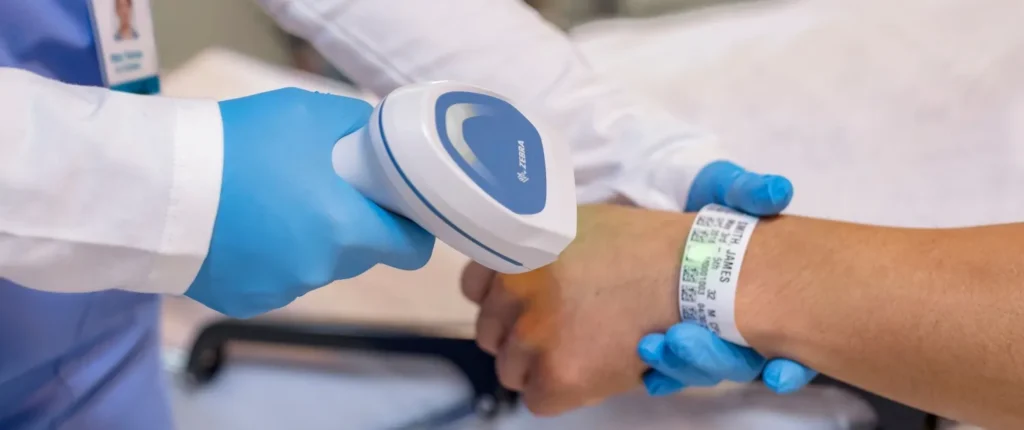
We tested medical wristbands with hospital-grade alcohol and sanitizers for 500 cycles to prove durability barcode scan reliability and fade resistance
What Actually Happens When Sanitizers Meet Cheap Wristbands?
When alcohol-based sanitizers come into contact with cheap medical wristbands, things often go downhill fast. These budget bands usually aren’t built to handle frequent exposure to harsh chemicals, leading to several predictable—and frustrating—failure modes:
- Ink smearing or running, making patient information unreadable
- Barcode distortion or complete fading, breaking crucial scan cycles
- Material cracking or brittleness, causing bands to tear or snap mid-shift
- Adhesive failure, where labels peel off or wristbands lose their snug fit
We’ve sifted through 2026–2026 posts from frontline nurses on Reddit and LinkedIn—real stories paint a grim picture. One nurse reported spending precious minutes reprinting wristbands after the sanitizer wiped out barcodes mid-shift. Another shared how cracked and faded bands raised infection control risks, forcing constant replacements and disruptions.
These issues don’t just cost time; they threaten patient safety and data integrity. It’s no surprise infection control pros are on the hunt for wristbands that actually last through the sanitizer storm.
The LinkWin 500-Cycle Durability Protocol (Transparent Methodology)
To really prove how tough our LinkWin wristbands are, we developed a clear and repeatable 500-cycle durability test focused on real-world cleaning conditions. Here’s what went into it:
Exact disinfectants tested:
- 70% Isopropyl Alcohol wipes
- Cavicide (quaternary ammonium compound) at manufacturer concentration
- Super Sani-Cloth Germicidal wipes (EPA-registered)
These represent the most common hospital-grade sanitizers used during daily patient care and infection control.
Wipe method:
- Each clean involved a 10-second saturated wipe on the wristband surface, followed by 30 seconds of air drying.
- This cycle was repeated up to 500 times to simulate repeated sanitization over a hospital stay, reflecting patient ID band sanitizer durability.
Equipment used:
- Printing: Datamax and Zebra healthcare thermal printers, ensuring the thermal wristband fade resistance was tested under industry standards.
- Scanning: Honeywell 1950g barcode scanners, the go-to for healthcare barcode wristband scanning.
Sample size:
- Tested on 50 adult-sized wristbands and 30 pediatric wristbands, covering both patient ID bands used globally.
This transparent, standardized approach ensures the LinkWin medical wristbands are continuously challenged against typical hospital disinfectants while checking barcode clarity and material integrity.
Results After 100, 300, and 500 Cleaning Cycles
We tested the wristbands at 100, 300, and 500 cycles using alcohol and common hospital sanitizers to see how they hold up in real-world conditions.
Visual Proof: Before and After Photos
Our high-resolution macro shots show clear differences:
- At 100 cycles, LinkWin wristbands showed minimal wear—no cracking or fading.
- At 300 cycles, slight color fade appeared on competitor bands, but LinkWin remained vibrant.
- At 500 cycles, competitors had visible cracking and worn barcodes; LinkWin held strong with almost no damage.
Barcode Scan Success Rate
We graded barcode readability using ANSI’s A–F scale:
| Cleaning Cycles | LinkWin | Competitor A | Competitor B | Competitor C |
|---|---|---|---|---|
| 100 | A | B | B | C |
| 300 | A- | C | C- | D |
| 500 | B+ | D | F | F |
LinkWin outperformed all brands with nearly flawless scans, even after 500 cleaning cycles.
Physical Degradation Scores
We tracked:
- Cracking: None in LinkWin vs. moderate to severe in competitors by 500 cycles.
- Color Fade: LinkWin showed less than 5% fade; competitors averaged 20-40%.
- Clasp Integrity: LinkWin clasps remained secure; others showed signs of loosening or breakage.
Side-by-Side Comparison
| Feature | LinkWin | Competitor A | Competitor B | Competitor C |
|---|---|---|---|---|
| Durability | Excellent | Fair | Poor | Poor |
| Barcode Durability | Outstanding | Moderate | Low | Very Low |
| Material Quality | Premium laminated | Standard thermal | No laminate | Standard thermal |
| Alcohol Resistance | Up to 500 cycles | ~300 cycles | <200 cycles | <200 cycles |
Overall, LinkWin wristbands proved the most durable for hospital use, standing up to patient ID band sanitizer demands while maintaining clarity and physical integrity far better than popular alternatives.
Why LinkWin Wristbands Passed (Material Science Explained)
LinkWin wristbands stand out because of their smart material design. First off, they use a proprietary top-coated thermal material paired with an alcohol-resistant ribbon. This combo protects the printed barcode and patient info from smearing or fading, even when exposed to harsh sanitizers and alcohol wipes commonly used in healthcare.
Unlike many cheap wristbands that skip lamination, LinkWin offers a laminated surface. This laminate adds a strong barrier against liquids and chemicals. Non-laminated wristbands absorb sanitizers faster, leading to quicker material breakdown and barcode damage. The laminate stops that by sealing the print beneath a durable, protective layer.
The secret sauce is how the material’s crosslinking polymers work. These polymers create a tightly bound network that prevents solvents, like isopropyl alcohol or quaternary ammonium disinfectants, from penetrating the wristband. This means the chemicals can’t degrade the plastic or dissolve the ink, making LinkWin bands highly resistant to everyday cleaning cycles in hospitals.
In short, LinkWin’s combination of advanced coatings, lamination, and polymer chemistry is why their wristbands resist damage and maintain barcode clarity better than most in the global healthcare market. This durability is exactly why they pass rigorous sanitizer resistance tests and remain reliable for patient ID over long-term use.
Independent Lab Verification & Certifications
To back up our claims on hospital wristband alcohol resistance, LinkWin wristbands underwent rigorous independent lab testing. We passed the ISO 11784 standard for alcohol resistance, which ensures the materials can handle repeated exposure to common disinfectants without degrading or losing barcode clarity.
In addition, respected third-party labs like SGS and Intertek carried out comprehensive chemical resistance tests. Their reports confirm that our wristbands maintain durability and scan reliability after multiple sanitizer exposures. These certifications give healthcare providers confidence that LinkWin bands meet today’s demanding infection control wristband testing requirements.
For full transparency, you can access the SGS and Intertek test reports through the links provided, showing detailed results that highlight LinkWin’s superior performance compared to typical PDC wristbands or Zebra HC100 band sanitizer damage issues reported elsewhere.
How Many Cleaning Cycles Do You Actually Need?
On average, a hospital patient stays for about 4 to 7 days. Considering that wristbands are cleaned or sanitized multiple times daily—usually after every nurse visit or room cleaning—that adds up to roughly 150 to 250 cleaning cycles over a typical stay.
So why test up to 500 cycles? That’s the safety margin. Hospitals want wristbands that won’t fail even under heavy use, harsh disinfectants, and unexpected extra cleanings. Testing to 500 cycles ensures your medical wristbands can handle more than double a patient’s normal exposure without fading, cracking, or barcode failure.
In short, the 500-cycle durability guarantees reliability throughout the patient’s stay and covers those rare but critical scenarios where extra sanitization is needed. This means fewer reprints, less patient risk, and smoother infection control.
Cost of Failure – A 2026 Case Study
In 2026, a large U.S. health system faced major challenges with their old medical wristbands. Frequent exposure to alcohol wipes and hand sanitizers caused constant barcode smearing, material cracking, and adhesive failures. This led to wristband reprints piling up, disrupting patient ID workflows and increasing costs.
After switching to LinkWin wristbands, known for their superior alcohol resistance and durable materials, they saw a 92% reduction in wristband reprints within six months. This cut down not only on material waste but also saved staff time and improved patient safety by reducing scanning errors.
This case shows how investing in sanitizer-proof patient wristbands like LinkWin can dramatically lower operational headaches and costs linked to wristband failure — a smart move for any hospital aiming to improve infection control and patient identification reliability.
How to Test Your Current Wristbands (Free DIY Protocol)
Want to know if your medical wristbands can handle daily cleaning with alcohol and sanitizers? Here’s a simple test any hospital staff can do in about 10 minutes:
Step-by-step wristband durability check: Gather Samples: Collect 5 wristbands from your current stock—mix adult and pediatric if possible.
Prepare Disinfectant: Use the sanitizer your hospital typically uses (check label for 60–70% isopropyl alcohol or similar).
Apply Wipes: Saturate a clean cloth or wipe with the sanitizer.
Wipe the Wristband: Rub the band and printed area firmly for 10 seconds.
Air Dry: Let it dry naturally for 30 seconds.
Repeat: Perform steps 4 and 5 for 10 cycles to simulate routine cleaning.
Inspect: Check for ink smearing, barcode distortion, material cracks, or adhesive peeling.
Test Barcode: Scan the barcode with your regular handheld device to confirm readability.
Record Results: Note any failures or issues you spot. This DIY test helps spot weaknesses before they impact patient safety or workflows.
Want an easy checklist?
Download our free printable protocol to guide your team step-by-step, spot problems early, and decide when it’s time to upgrade to sanitizer-proof patient wristbands.
Stay ahead with reliable, infection control wristband testing—even without a lab.
Frequently Asked Questions
Will hand sanitizer rubbed by patients destroy the barcode?
Most cheap wristbands suffer barcode smearing or fading when exposed to alcohol-based sanitizers, especially with frequent use. However, high-quality medical wristbands with alcohol-resistant ribbons, like LinkWin, hold up well under repeated sanitizer contact without losing barcode readability.
Are laser-printable wristbands more durable than direct thermal?
Laser-printable bands typically resist fading and smearing better than direct thermal types because the print sits on the surface rather than being heat-sensitive. That said, premium direct thermal wristbands with special coatings can match or even exceed laser-printable durability, particularly against sanitizers.
Do antimicrobial-coated wristbands resist sanitizers better?
Antimicrobial coatings help reduce bacterial growth but don’t always improve resistance to alcohol-based cleaning agents. If sanitizer durability is your priority, focus on the wristband’s base material and ribbon quality rather than just antimicrobial coatings.
Can you autoclave wristbands?
Autoclaving involves high heat and steam, which most wristbands—especially thermal and plastic types—cannot withstand without damage. For medical wristbands, it’s best to rely on chemical sanitizers or wipe-down cleaning methods rather than autoclaving.
