
Subtotal ¥0.00
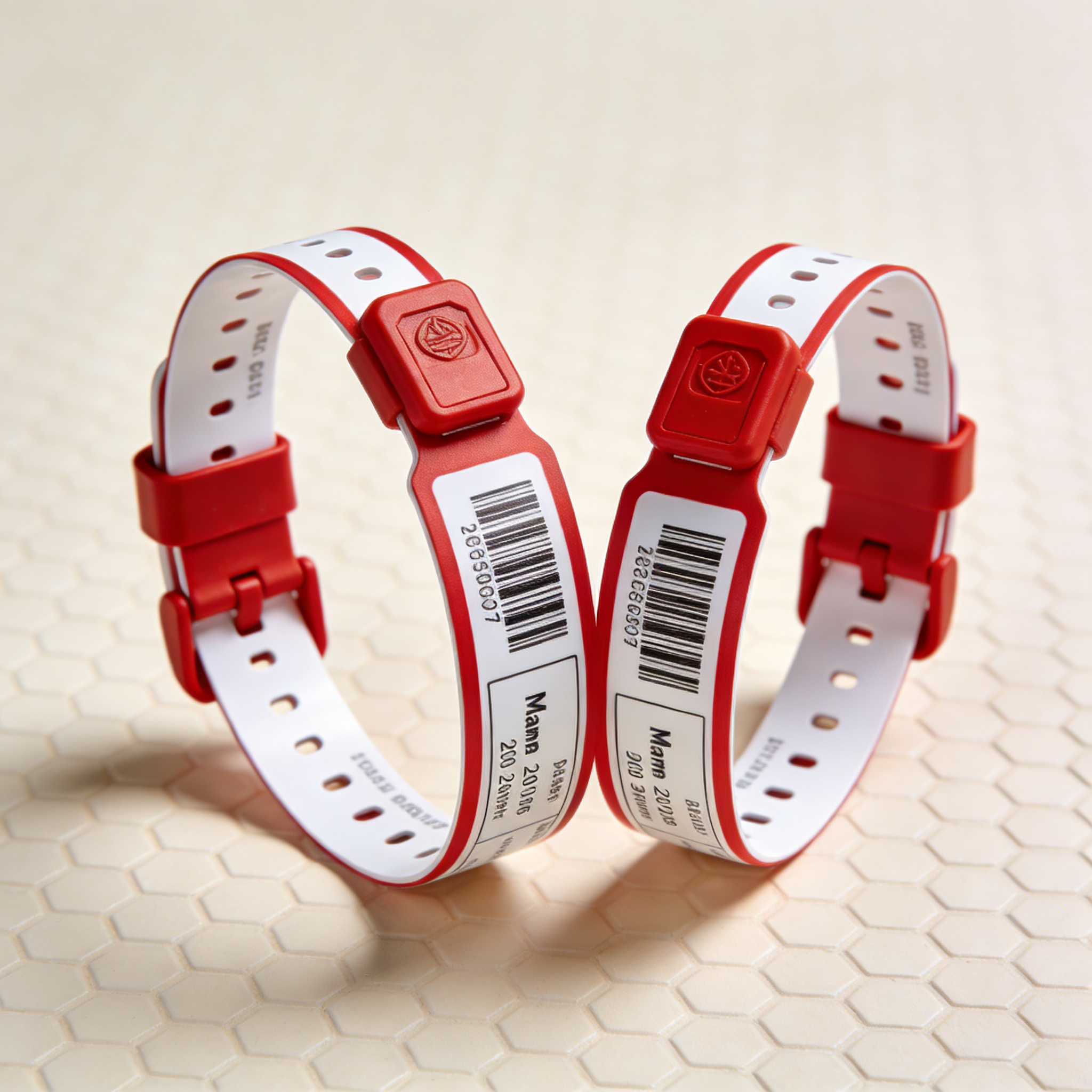
Compare pre printed vs flood coated red allergy wristbands to boost patient safety workflow and AHA compliant hospital ID systems
Patient Safety Wristband Standards
When seconds count in a clinical setting, there is no room for ambiguity. We’ve seen the confusion caused when different hospitals use different colors for the same medical alerts. To eliminate this risk, the American Hospital Association (AHA) and various state initiatives have standardized red allergy alert wristbands as the universal signal for patient allergies.
Why standardization matters:
- Eliminates Confusion: Uniformity ensures that traveling nurses and clinicians recognize alerts instantly, regardless of the facility.
- Reduces Medical Errors: Non-standard colors lead to “alert fatigue” or, worse, misinterpreted data.
- Global Compliance: Adhering to allergy alert banding protocols keeps your facility aligned with national safety mandates.
The Shift Toward Reliable, Visible Alerts
In today’s healthcare environment, a color alone isn’t enough. We prioritize integrating these bands with EHR systems and barcode scanning. This dual-layer approach ensures that while the red material provides an immediate visual cue, the barcode provides the hard data needed for safe medication administration.
| Feature | Impact on Patient Safety |
|---|---|
| AHA Red Color | Instant visual recognition of an “Allergy Alert.” |
| Text Labels | Confirms the alert for color-blind staff members. |
| Barcode Integration | Links the physical band to the Electronic Health Record (EHR). |
By moving away from inconsistent, legacy systems and toward standardized hospital patient identification bands, we bridge the gap between visual safety and digital accuracy. Our focus is on providing tools that make it impossible to miss a life-threatening allergy during the point of care.
Pre-Printed Red Allergy Wristbands: Simple, Reliable, and High-Visibility
I provide pre-printed red allergy wristbands for facilities that need a “grab-and-go” safety solution. These bands are manufactured with the bold “ALLERGY” text already applied at the factory. They feature a secure snap closure, ensuring the alert remains tamper-evident and permanently attached to the patient throughout their stay.
Key Features and Advantages
| Feature | Benefit |
|---|---|
| Factory-Printed Text | High-contrast black text on a red background eliminates legibility issues. |
| Snap Closures | Provides a tamper-proof fit that must be cut to be removed. |
| Zero Maintenance | No need for thermal printers, specialized software, or ink ribbons. |
| Color-Blind Safety | Pairing the word “ALLERGY” with the red color supports staff with color vision deficiencies. |
Why Choose Pre-Printed Allergy Snaps?
The main draw of these red allergy alert wristbands is their simplicity. Because they don’t require a printer, they are ready for immediate use during patient intake. This makes them a staple in allergy alert banding protocols where speed and reliability are non-negotiable.
- Immediate Visual Cue: The bright red material serves as an instant warning to every clinician who enters the room.
- Durability: These are durable hospital wristbands designed to withstand moisture, soaps, and common sanitizers without the text fading or the material tearing.
- Cost-Effective for Low Volume: Since there is no upfront investment in hardware, they are the most economical choice for smaller departments.
Ideal Use Cases for Pre-Printed Alerts
These bands excel in specific environments where a “second band” approach is preferred over a consolidated system.
- Supplemental Alerting: I often see these used as a secondary band paired with a primary white hospital patient identification band.
- Small Clinics & Specialized Units: Perfect for outpatient centers or small facilities with lower patient volumes that don’t justify a dedicated thermal printing setup.
- Emergency Backup: Every facility should stock these as a fail-safe backup in case of network outages or printer mechanical failures.
Efficiency with Flood-Coated Red Allergy Wristbands
For facilities that prioritize speed and integrated data, flood-coated red allergy wristbands offer a high-performance alternative to traditional snaps. These bands consist of solid red thermal media, allowing for on-demand patient ID printing directly onto the alert surface. Instead of applying two separate bands, our solution lets you print the patient’s name, MRN, and specific allergy details onto one high-visibility red strap.
Key Benefits of Flood-Coated Thermal Media
- 360-Degree Visibility: Since the entire band is red, the allergy alert is visible from any angle, ensuring clinicians never miss a warning.
- Consolidated Single-Band System: You can combine patient ID and alert status, reducing “band clutter” on a patient’s wrist.
- High-Definition Printing: Our barcode readable red bands ensure that scanners can easily pick up data despite the colored background.
- Durability: These are smudge-proof red allergy bands designed to resist water, alcohol, and frequent hand sanitizer exposure.
Ideal Use Cases for On-Demand Alert Banding
The flood-coated approach is the best fit for modern, digitized hospitals that follow strict allergy alert banding protocols.
| Use Case | Why It Works |
|---|---|
| High-Volume Admissions | Speeds up the intake process by printing ID and alert in one step. |
| Emergency Departments | Provides immediate, clear identification during fast-paced trauma care. |
| EHR Integration | Syncs directly with your hospital’s software for accurate allergy documentation best practices. |
We recommend flood-coated thermal media for facilities looking to streamline their workflow. It’s an efficient way to maintain patient safety wristband standards while reducing the manual labor of hand-writing or attaching multiple secondary alerts. This system ensures that the most critical information is always integrated and easy to read.
Comparison: Pre-Printed vs. Flood-Coated Red Allergy Wristbands
Choosing between pre-printed and flood-coated options comes down to how your facility manages patient flow and data integration. I’ve compared the two based on real-world hospital demands to help you decide which red allergy alert wristbands fit your workflow.
Performance and Reliability Factors
| Feature | Pre-Printed Red Bands | Flood-Coated Thermal Bands |
|---|---|---|
| Durability | High; ink is cured to resist water and soap. | High; specialized top-coat resists alcohol and sanitizers. |
| Barcode Scanability | Limited; usually text-only as a secondary alert. | Essential; requires high-contrast black thermal print. |
| Application Speed | Manual snap or adhesive; secondary step. | Automated; printed during the intake process. |
| Cost Profile | Lower upfront; pay per unit/box. | Higher upfront (printers); lower cost per patient. |
Durability and Resistance
In my experience, durable hospital wristbands must survive constant exposure to hand sanitizers and moisture. Our pre-printed bands use factory-set inks that won’t fade during a long stay. Meanwhile, high-quality flood-coated thermal media features a protective layer that prevents the red background from “bleeding” into the thermal print, ensuring the barcode readable red bands remain functional for the duration of care.
Barcode Scannability and Print Quality
The biggest challenge with thermal printable red wristbands is maintaining a high contrast ratio.
- Flood-Coated: These are designed for high-resolution thermal printers. You get a crisp, black barcode on a solid red background, consolidating ID and alert info into one band.
- Pre-Printed: These focus on visual alerts. Since the “ALLERGY” text is bold and permanent, it provides an immediate cue even if the primary ID band is obscured.
Workflow Impact and Cost
If your team is dealing with high-volume emergency admissions, on-demand patient ID printing via flood-coated bands is the winner. It eliminates the need to carry multiple types of stock. However, for smaller clinics or specialized units, pre-printed allergy snaps are a cost-effective way to add a layer of safety without investing in dedicated color-thermal printers.
Key Takeaways for Deployment
- Emergency Intake: Use flood-coated bands to print all data instantly.
- Long-Term Care: Pre-printed bands offer superior physical durability against wear and tear.
- Budgeting: Factor in the cost of thermal ribbons and printer maintenance for flood-coated systems versus the inventory management of pre-printed stock.
Best Practices for Deploying Red Allergy Wristbands in Hospitals
Deploying red allergy alert wristbands requires more than just picking a color; it’s about building a fail-safe system. I’ve seen that the most successful hospitals follow a strict set of allergy alert banding protocols to ensure patient safety and regulatory compliance.
Compliance and Visual Standards
To meet AHA color-coded wristbands standards, color alone isn’t enough. You must pair the red color with clear, bold text.
- Text Integration: Always ensure the word “ALLERGY” is visible. This provides a safety net for color-blind staff members.
- High Contrast: Use black ink on flood-coated red backgrounds to maintain high legibility.
- Standardization: Use the same shade of red across the entire facility to prevent confusion during patient transfers.
Optimized Admission Workflow
I recommend a dual verification process during the intake phase. Before any hospital patient identification bands are applied, staff should confirm allergy details directly with the patient and cross-reference the electronic health record (EHR).
- Verification: Confirm the allergy twice before the band is printed or snapped on.
- Placement: Apply the alert band on the same arm as the primary ID band to ensure clinicians see both simultaneously.
Technical Implementation and Training
When using thermal printable red wristbands, your hardware setup is critical. Poorly calibrated printers can lead to faded text or unreadable codes.
- Printer Compatibility: Ensure your flood-coated thermal media is matched to your printer’s heat settings to produce smudge-proof red allergy bands.
- Scanner Calibration: Regularly test your bedside scanners to ensure they can pick up data from barcode readable red bands without delay.
- Staff Training: Conduct routine drills so staff can instantly recognize AHA color-coded wristbands and know exactly which protocols to follow when they see one.
The Hybrid Strategy
I often suggest a hybrid approach for maximum reliability. While on-demand patient ID printing is the standard for modern units, keeping a stock of pre-printed allergy snaps is a smart move. These serve as an essential backup during power outages, printer downtime, or in high-velocity emergency room environments where immediate visual alerts are required before a full chart is even generated.
Choosing the Best Red Allergy Wristbands for Your Facility
Deciding between pre-printed and flood-coated red allergy alert wristbands comes down to your facility’s specific workflow and budget. I recommend evaluating your current patient volume and printer capabilities before making a final call on which system to implement.
Key Factors for Selection
- Patient Volume: For high-traffic hospitals, flood-coated thermal media is more efficient as it consolidates ID and alerts into one band. Smaller clinics often find pre-printed allergy snaps more cost-effective for supplemental use.
- Existing Hardware: If you already use thermal printers for patient IDs, switching to thermal printable red wristbands is a seamless upgrade that requires no new software.
- Budget Alignment: Pre-printed bands have a lower entry cost, while flood-coated bands reduce long-term labor costs by streamlining the admission process.
Strategic Decision Matrix
| Situation | Recommended Solution |
|---|---|
| Primary ID + Allergy Alert in one | Flood-Coated Thermal Bands |
| Supplemental alert for existing white bands | Pre-Printed Red Snaps |
| Emergency Backup/Power Outage Kits | Pre-Printed Wristbands |
| High-frequency barcode scanning | Flood-Coated Thermal Media |
Secure Your Facility with LinkWin Solutions
We design our LinkWin hospital patient identification bands to meet the strictest allergy alert banding protocols. Our products are built for durability, ensuring they remain smudge-proof and legible throughout the patient’s stay, even when exposed to water or sanitizers.
Whether you need the flexibility of on-demand thermal printing or the simplicity of pre-printed alerts, our solutions provide the reliability required for high-stakes healthcare environments. We focus on creating durable hospital wristbands that simplify compliance and prioritize patient safety across every department. Choosing LinkWin means investing in a system that supports both your staff’s efficiency and your patients’ well-being.
