
Subtotal ¥0.00
Clear guide to hospital color codes comparing US AHA and UK NHS standards to improve safety communication for healthcare professionals
The Framework: How Standards are Set
Ever walked into a new facility and wondered if “Code Yellow” meant a chemical spill or a missing patient? I know the feeling. For healthcare professionals moving across borders, specifically between the US and the UK, assuming you know the drill based on your previous job can be dangerous. Understanding Hospital Color Codes: Differences Between US (AHA) and UK (NHS) Standards isn’t just about passing an orientation quiz; it’s about ensuring rapid, accurate responses when seconds count.
US Standards: The AHA Approach
In the United States, standardization is largely voluntary but highly recommended. The American Hospital Association (AHA) released guidelines to unify AHA emergency code guidelines across states to reduce confusion. However, because the US healthcare system is decentralized, you will still find variations.
- Voluntary Adoption: Hospitals aren’t federally mandated to use specific colors, though most follow AHA to minimize liability.
- State Variations: Regional bodies, like the Hospital Association of Southern California (HASC hospital codes), often dictate local protocols.
- The Goal: To create a universal language so that a travel nurse in California reacts the same way as a doctor in New York.
UK Standards: The NHS Approach
The United Kingdom takes a slightly different path through the National Health Service. While individual trusts have some autonomy, clinical governance safety standards drive a more centralized approach to NHS major incident colors.
- Crash Call 2222: Unlike the US reliance on “Code Blue” for everything, the UK universally recognizes “2222” as the critical crash call number.
- Major Incidents: The NHS focuses heavily on major incident planning (MIP) where specific alerts trigger massive, coordinated responses across the network.
The Shift to Plain Language Alerts
Here is where the industry is heading: clarity over code. Both the US and UK are recognizing that cryptic colors can confuse staff, patients, and visitors. There is a significant push toward plain language emergency alerts. Instead of announcing “Code Gray,” many facilities are moving toward announcements like “Security Alert: Combative Person.” This reduces the cognitive load on staff during high-stress situations and ensures that hospital emergency preparedness protocols are transparent and effective.
Critical Differences in Overhead Emergency Codes
When I look at AHA emergency code guidelines alongside NHS major incident colors, it becomes obvious that assuming a color means the same thing everywhere is a dangerous gamble. While a few codes translate well, others have completely contradictory meanings that could lead to confusion during a crisis.
Universal Codes: Red and Blue
Fortunately, the two most urgent signals usually align. Code Red is the universal standard for fire across both the US and the UK. If you hear this, you know to follow the Code Red fire procedure immediately: close doors and prepare for evacuation.
Code Blue is synonymous with a medical emergency or cardiac arrest in the US. In the UK, while staff often understand “Code Blue,” the formal protocol is the NHS crash call 2222. If you are working in a British facility, dialing 2222 is the fastest way to get a resuscitation team, whereas “Code Blue” is the colloquial term used globally.
Conflicting Codes: Green, Black, Orange, Silver
The real trouble starts when we move past fire and cardiac arrest. The HASC hospital codes in America often clash with UK protocols. Here is a quick breakdown of where the meanings diverge:
| Color Code | US Meaning (AHA Guidelines) | UK Meaning (NHS/Standard Practice) |
|---|---|---|
| Code Green | Combative Patient / Security Assist | Evacuation / Medical Gas Emergency |
| Code Black | Bomb Threat | Hospital Capacity (OPEL 4) / Black Alert |
| Code Orange | Hazardous Material Spill (Hazmat) | Decontamination / Mass Casualty |
| Code Silver | Active Shooter / Weapon | Tactical Command (Major Incident) |
Code Green: Combative vs Evacuation
In the US, I associate Code Green with a security call—usually a combative patient requiring physical restraint. However, in many UK trusts, Green signals an evacuation order or an issue with medical gas supplies. Mistaking a call to evacuate for a request to restrain a patient creates a serious safety breach.
Code Black: Bomb Threat vs Hospital Capacity
The Code Blue meaning US vs UK is easy enough to navigate, but Black is tricky. In the US, Code Black indicates a bomb threat. In the UK, you are more likely to hear about a “Black Alert” (now formally OPEL 4), which means the hospital is at maximum capacity and unable to safely admit new patients. One requires clearing the building; the other requires clearing beds.
Code Orange: Hazmat vs Decontamination
Under AHA emergency code guidelines, Code Orange alerts staff to a hazardous materials spill or release. The NHS often utilizes Orange within their major incident plans to signal the need for decontamination of casualties or to alert staff of a CBRN (Chemical, Biological, Radiological, Nuclear) event. While related, the response protocols differ significantly.
Code Silver: Active Shooter vs Tactical Command
This is perhaps the most critical distinction. In the US, Code Silver active shooter alerts mean there is a person with a weapon and staff should run, hide, or fight. Conversely, in the UK emergency services hierarchy, “Silver” refers to the Tactical Commander managing a major incident. If a UK staff member hears “Silver Command,” they are looking for a manager, not running from a gunman.
Patient Safety: Wristband Color Standardization
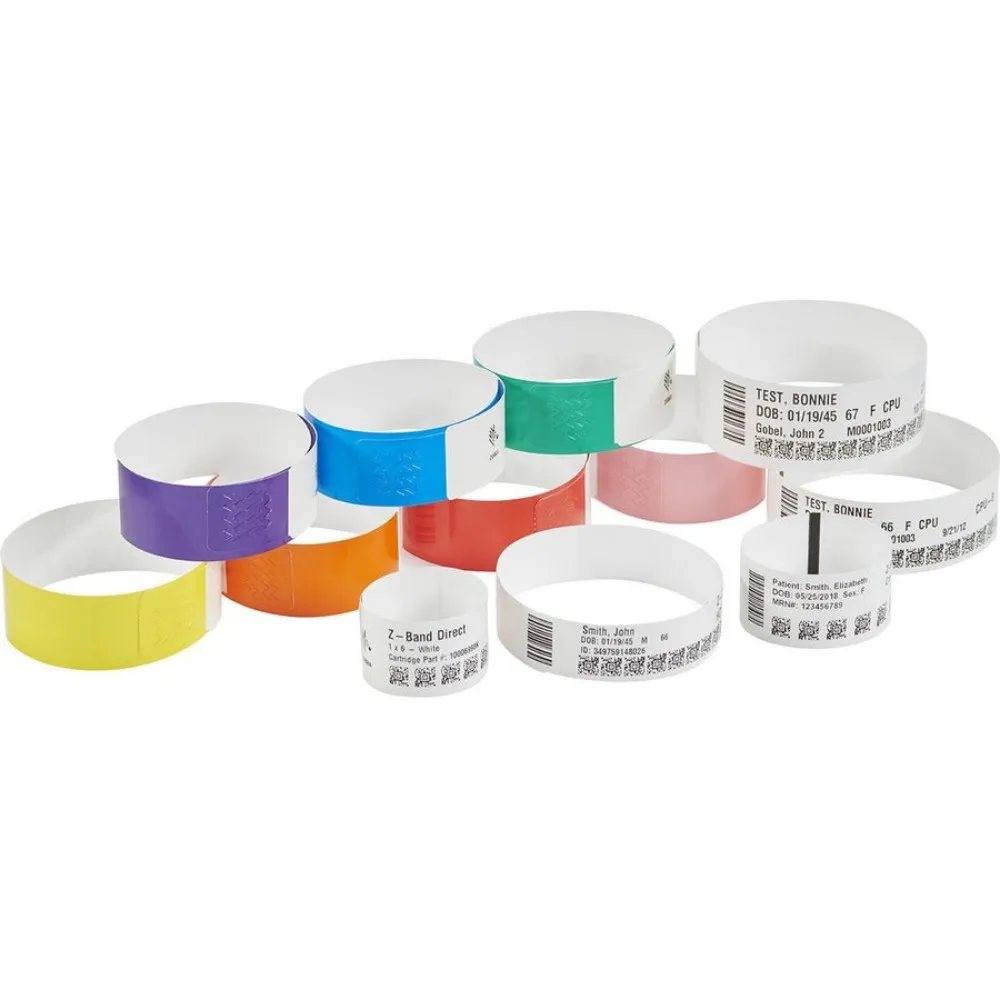
When we talk about safety, we often focus on the loud overhead alarms, but the quietest alerts are right on the patient’s wrist. Patient safety identification bands are the last line of defense against medication errors and wrong-site surgeries. However, just like overhead codes, the color standards for these bands differ significantly depending on which side of the Atlantic you are working on.
AHA Stoplight Standard: Red, Yellow, Purple
In the US, the AHA emergency code guidelines have influenced a standardized “Stoplight” system for wristbands. Before this standardization, hospitals used a rainbow of colors that varied from facility to facility, which was a recipe for disaster when staff moved between locations.
To fix this, most US hospitals now stick to three core hospital wristband color meanings:
- Red: Allergy Alert. This signals the nurse to “STOP” and check the medical record before administering drugs or food.
- Yellow: Fall Risk. This warns staff to use “CAUTION” when moving the patient or leaving them unattended.
- Purple: DNR (Do Not Resuscitate). This indicates the patient’s end-of-life wishes.
Some facilities still use Code Pink bands for infants or restricted extremities, but the red-yellow-purple trio is the gold standard for medical alert wristband standards in the States.
NHS Wristband Protocols
The UK approach through the NHS is far more conservative regarding color usage. The National Patient Safety Agency (NPSA) found that using too many colors actually increased risk because staff couldn’t remember what they all meant.
NHS wristband protocols prioritize positive identification over color-coding conditions:
- White: The standard band for almost all patients. It must clearly display the patient’s name, date of birth, and NHS number.
- Red: Exclusively used to signal a known risk, typically allergies or liability to drug reactions.
Unlike the US, you won’t typically see a specific color for “Fall Risk” or “DNR” on the wristband itself in the UK. Instead, these alerts are managed through the patient’s chart and bedside signage to maintain clinical governance safety standards.
Importance of Durable Printing on Wristbands
Regardless of whether you follow AHA or NHS standards, the color is useless if the text is unreadable. I always emphasize that a faded wristband is a dangerous wristband.
Hospitals are harsh environments. Wristbands are constantly exposed to water, alcohol-based hand sanitizers, and friction from bed linens. If you use standard inkjet or low-quality direct thermal printing, that vital patient data can vanish in hours.
Best practices for wristband durability include:
- Resistant Materials: Using synthetic materials rather than paper that tears or soaks up fluids.
- Thermal Transfer or Laser Printing: These methods bond the image to the band, ensuring the patient safety identification bands remain legible throughout the entire stay.
- Barcode Readability: As we move toward digital scanning for medication administration, the barcode must remain crisp to prevent scanning failures at the bedside.
The Shift to Plain Language Alerts
We are currently witnessing a massive transition in how hospitals communicate danger. While color codes have been the industry standard for decades, the confusion caused by inconsistent definitions has forced a rethink. I am seeing more institutions move toward plain language emergency alerts to ensure that everyone—staff, patients, and visitors—understands exactly what is happening without needing a decoder ring.
US Trend: 2014 AHA Recommendations
In the United States, the catalyst for change came from the AHA emergency code guidelines released in 2014. The American Hospital Association recognized that variation between facilities was a major patient safety risk. If a nurse floats between three different hospitals, remembering that “Code Gray” means a combative person at one site but a severe weather alert at another is a recipe for disaster.
To fix this, the AHA recommended dropping most color codes in favor of transparent announcements. Instead of announcing a cryptic color, the operator states the specific alert type.
- Old Way: “Code Gray, ICU.”
- New Way: “Security Alert: Combative Person, ICU.”
UK Perspective: METHANE Reporting Model
The UK takes a highly structured approach to communication, particularly during a major incident. The NHS utilizes the METHANE reporting model to ensure nothing gets missed during the chaos of an emergency. This goes beyond simple color triggers and forces the reporter to provide actionable intelligence.
The METHANE Protocol:
- Major Incident declared?
- Exact Location
- Type of incident
- Hazards present
- Access routes
- Number of casualties
- Emergency services present
This method ensures that whether it is a NHS crash call 2222 or an external disaster, the information flow is standardized and comprehensive.
Pros and Cons: Speed vs Clarity
Moving to plain language isn’t without its critics. I often hear debates regarding the trade-off between the speed of a code and the clarity of plain speech.
- Speed: Codes are faster. Yelling “Code Blue” is immediate and triggers a muscle-memory response for the resuscitation team.
- Privacy and Panic: Codes prevent patient panic. Announcing “Bomb Threat” over the intercom creates chaos; announcing “Code Black” allows staff to evacuate calmly.
- Clarity: Plain language eliminates ambiguity. In a fire or active shooter scenario (Code Silver in the US), clarity saves lives. There is no time to wonder if “Code Red” means fire or cardiac arrest.
Ultimately, the goal is hospital emergency preparedness protocols that work for the specific environment, balancing the need for secrecy with the absolute necessity of clear communication.
Best Practices for Traveling Healthcare Professionals
Moving between facilities—especially across international borders—requires a complete reset of your safety reflexes. For locum tenens and agency nurses, the orientation phase is the critical moment to internalize the local hospital emergency preparedness protocols. I cannot stress this enough: never rely on the specific color definitions from your previous assignment, as the variation between US (AHA) and UK (NHS) standards can be drastic.
Orientation for Locum Tenens and Agency Nurses
When I step into a new facility, my first priority is identifying how they communicate disaster. Whether it is a Code Silver active shooter alert or a fire alarm, knowing the trigger mechanism is vital.
- Review the Policy: Don’t just skim the safety manual; look specifically for the emergency operations plan.
- Identify the Number: Know if you need to dial a specific internal number (like 2222 in the UK) or a standard code.
- Clarify Plain Language: If the hospital uses plain language emergency alerts, ensure you understand the specific terminology used to describe locations and threats.
Using Badge Buddies for Quick Reference
When adrenaline kicks in, memory often fails. I always recommend carrying a physical cheat sheet. An emergency code Badge Buddy attached behind your ID card provides an immediate visual key for the facility’s specific alerts. It is a simple, low-tech tool that prevents hesitation during critical moments, allowing you to instantly distinguish between a Code Pink infant abduction and a medical emergency.
The Code Blue Rule: Don’t Assume
The most dangerous mistake a traveling professional can make is assuming universality. I call this the “Code Blue Rule.”
- Verify the Cardiac Call: While Code Blue is the standard for cardiac arrest in the US, the UK NHS generally utilizes Crash Call 2222.
- Check the Threat Codes: A Code Black might mean a bomb threat in one hospital and a bed capacity shortage in another.
- Validate Safety Standards: If the clinical governance safety standards aren’t clear during onboarding, ask immediately. Never guess when patient lives are on the line.
Frequently Asked Questions About Hospital Codes
Navigating the differences between AHA emergency code guidelines and NHS major incident colors can be tricky, especially for traveling staff. Here are the answers to the most common questions I get regarding international safety protocols.
What is Code Blue in the UK?
In the US, Code Blue meaning US vs UK is one of the biggest points of confusion. In American hospitals, Code Blue is the universal signal for cardiac arrest. However, if you are working in an NHS facility, you typically won’t hear this term. The UK standard is a “Crash Call”—often triggered by dialing 2222. While some private British hospitals might adopt American terminology, the NHS crash call 2222 is the definitive alert for a medical emergency requiring a resuscitation team.
Does the UK use Code Silver?
Generally, no. The Code Silver active shooter alert is a staple in US hospital emergency preparedness protocols due to higher rates of gun violence. In the UK, the approach to an armed intruder or weapons incident is different. instead of a specific color code, NHS trusts usually follow the police-led “Run, Hide, Tell” guidance or specific security alerts. You generally won’t hear a “Code Silver” broadcast overhead in a British hospital.
What are the standard hospital wristband colors?
Hospital wristband color meanings are critical for at-a-glance patient safety.
- US (AHA Standards): We follow a “stoplight” system. Red indicates allergies, Yellow signals a fall risk, and Purple denotes Do Not Resuscitate (DNR).
- UK (NHS): The primary focus is on accurate patient identification via white bands. However, Red wristbands (or red toggles) are commonly used to signal allergies or drug intolerances.
- Global Rule: Never assume. Medical alert wristband standards can vary, so always verify the local protocol during orientation.
Why are hospitals switching to plain language?
The shift to plain language emergency alerts is all about reducing cognitive load during a crisis. Color codes can be ambiguous; “Code Green” might mean evacuation in one facility and a combative patient in another. By switching to plain language (e.g., “Fire Alarm, Ward 3” instead of “Code Red”), hospitals eliminate the need for staff to mentally decode the signal. This ensures a faster reaction time and reduces errors, which is why both the AHA and NHS are moving toward clearer, descriptive alerts.
