
Subtotal ¥0.00
Enhancing patient safety with durable thermal wristbands that prevent ID errors improve barcode scanning and support reliable hospital workflows
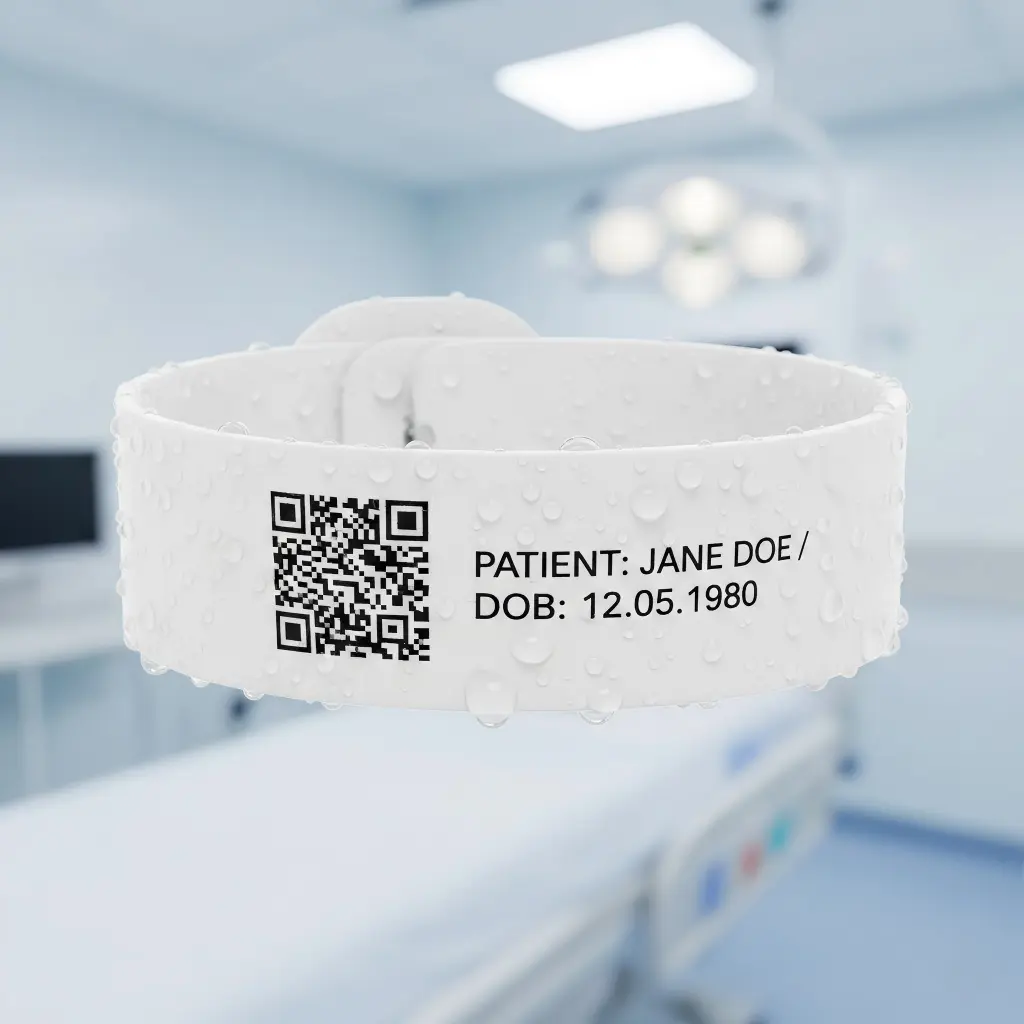
The Silent Threat: The Cost of Poor Patient Identification
Have you ever stopped to consider that the most critical piece of technology in a hospital room might be a simple plastic band? It is the foundation of every safety check. When patient identification fails, the consequences aren’t just administrative headaches—they are life-threatening. Enhancing Patient Safety: The Role of Reliable Thermal Wristbands in Error Prevention starts with acknowledging that cheap, unreliable bands are a silent liability.
The “Fading” Problem: Smudging and Tearing
We have all seen it happen. A patient has been admitted for less than 24 hours, yet their wristband is already compromised. Traditional inkjet or laser-printed bands often struggle against the harsh reality of a clinical environment.
- Ink Smudging: Moisture from showers, sweat, or spills turns vital text into an illegible blur.
- Material Failure: Flimsy bands tear during patient transfer or sleep.
- Loss of Data: Vital demographics disappear, breaking the chain of Positive Patient Identification (PPID).
The Ripple Effect: From Unreadable Barcodes to Human Error
When a barcode fades or scuffs, the technology designed to protect patients becomes a hurdle. If a nurse cannot perform point-of-care barcode scanning on the first try, they are forced to use workarounds. This usually means manually entering patient data into the system.
This manual entry is the breeding ground for mistakes. A single typo during this process can bypass adverse drug events prevention protocols, leading to the wrong medication reaching the wrong patient. High barcode readability rates are not a luxury; they are a necessity to keep the workflow automated and secure.
Regulatory Pressure and Compliance
Hospitals are under immense pressure to meet strict standards. Adhering to the Joint Commission patient safety goals—specifically the requirement for two unique patient identifiers—is non-negotiable.
If a wristband is unreadable, you are technically non-compliant the moment that patient needs care. Reliable, medical-grade thermal printing ensures that identifiers remain crisp and scannable from admission to discharge, keeping your facility compliant and your patients safe.
Why Direct Thermal Technology is the Gold Standard for Hospitals
In my experience working with healthcare providers, I’ve seen that standard office printers simply cannot handle the demands of a clinical setting. This is why direct thermal hospital wristbands have become the non-negotiable standard for patient identification. We aren’t just printing names; we are creating a durable link between the patient and their care.
No Ink, No Smudge: The Heat Advantage
The biggest failure point I see with traditional wristbands is the ink. If you are using ribbons or cartridges, you are introducing a risk of smearing before the band is even fastened.
Medical grade thermal printing eliminates this variable entirely. By using heat to activate pigment embedded directly within the wristband material, we ensure the image is part of the band itself, not just sitting on top of it.
- Zero Drying Time: The image is permanent the second it leaves the printer.
- Crisp Edges: Heat technology creates sharper lines than liquid ink, which is critical for high-density barcodes.
Resistance to Hospital Environments
A hospital is a hostile environment for paper. Between showers, sweat, and constant cleaning, a standard label disintegrates quickly. We focus heavily on material science to ensure our bands can withstand the daily chemical barrage.
It is vital that these bands act as isopropyl alcohol resistant labels. Nurses and doctors are constantly sanitizing their hands and the patient’s immediate area. If a splash of sanitizer wipes out a barcode, patient safety is compromised. Our thermal coating protects the data from:
- Moisture: Water, sweat, and bio-fluids.
- Abrasion: Friction from bedsheets and clothing.
- Chemicals: Common hospital disinfectants and soaps.
High-Resolution Scannability
Nothing frustrates a nursing team faster than a scanner that beeps three times before registering. Poor barcode readability rates don’t just waste time; they contribute to alarm fatigue and encourage staff to bypass safety checks.
We utilize direct thermal technology because it delivers the high-contrast blacks needed for instant point-of-care barcode scanning. When the scanner picks up the data on the first try, every time, we aren’t just improving efficiency—we are ensuring that the safety protocols are actually followed.
The “Five Rights” of Medication Administration: The Wristband’s Role
We treat the “Five Rights”—Right Patient, Right Drug, Right Dose, Right Route, and Right Time—as the holy grail of patient care. However, these checks are only as strong as the identification tool on the patient’s wrist. Enhancing Patient Safety: The Role of Reliable Thermal Wristbands in Error Prevention starts right here, at the bedside.
Validating Safety at the Point of Care
The wristband is the physical key to Closed-loop medication administration. When a nurse scans a barcode, they aren’t just logging data; they are actively engaging in Adverse drug events prevention.
- Instant Verification: A quick scan confirms Positive Patient Identification (PPID) immediately, ensuring the medication matches the patient record.
- Real-Time Alerts: If there is a mismatch, the system flags it instantly before any harm is done.
- Zero Ambiguity: Direct thermal printing eliminates smudged ink that leads to guessing games.
Streamlining Nursing Workflows
Nurses are under immense pressure, and equipment failure adds unnecessary stress. Point-of-care barcode scanning should help them, not slow them down. When a wristband scans on the first try, it drastically improves Hospital admission workflow efficiency and daily rounds.
- Reduced Frustration: No more flattening crinkled bands or adjusting scanner angles for minutes.
- Eliminating Workarounds: High-quality print prevents nurses from bypassing safety protocols to manually enter IDs.
- Focus on Care: Less time fighting technology means more time focused on the patient.
Comfort Meets Compliance: The Human Side of Thermal Wristbands
We often get caught up in the technical specs of barcode readability, but we cannot ignore the human element. A wristband is the one piece of equipment that touches the patient 24/7. If that band is scratchy, stiff, or causes an allergic reaction, the patient is going to try to take it off. Once that band is removed, the chain of Positive Patient Identification (PPID) is broken, and safety is compromised.
We believe that true compliance starts with comfort. When patients are comfortable, they are less likely to tamper with their ID, ensuring that the Enhancing Patient Safety protocols remain intact throughout their stay.
Material Science: Soft, Antimicrobial, and Non-Irritating
We engineer our wristbands using advanced material science to protect the most vulnerable patients, from neonates to the elderly with fragile skin. Using medical grade thermal printing stocks, we prioritize hypoallergenic properties to prevent dermatitis and skin breakdown.
Key material features include:
- Antimicrobial Coatings: Antimicrobial patient ID bands inhibit the growth of bacteria on the wristband surface, adding an extra layer of protection against hospital-acquired infections.
- Soft-Edge Technology: We ensure edges are smooth, not sharp, to prevent paper cuts or abrasion during movement.
- Breathable Design: Materials that allow air circulation to prevent moisture buildup and skin maceration underneath the band.
Durability vs. Comfort: Balancing Rugged Scannability
There is often a misconception that for a wristband to be durable enough to withstand isopropyl alcohol resistant labels testing, it must be rigid and thick. We challenge that trade-off. Our thermal wristbands are designed to be rugged enough to maintain barcode readability rates despite exposure to showers, sanitizers, and bed linens, yet flexible enough to contour naturally to the wrist.
We balance these needs by using high-density thermal coatings that protect the data without adding unnecessary bulk to the substrate. This ensures the barcode remains scannable for medication administration and lab work without making the patient feel like they are wearing a shackle.
LinkWin Solutions: Engineered for Zero-Error Environments
At LinkWin, we don’t just manufacture labels; we engineer safety nets for healthcare providers. We understand that in a high-pressure hospital environment, equipment failure isn’t just an annoyance—it’s a liability. That is why we have developed our thermal wristbands to serve as the backbone of Positive Patient Identification (PPID), ensuring that the data on the wrist matches the patient in the bed, every single time.
Seamless EMR Integration & Customization
We know that hospital admission workflow efficiency relies heavily on technology talking to technology. You shouldn’t have to overhaul your IT infrastructure just to get a clear barcode. Our EMR integration compatible wristbands are designed to work right out of the box with major platforms like Epic, Cerner, and MEDITECH.
Whether you are using standard desktop printers or industrial-grade hardware from Zebra or Sato, our bands feed smoothly without jamming. We offer customization options that allow you to configure the print area for optimal barcode readability rates, ensuring that nurses spend less time fighting with printers and more time on patient care.
Tamper-Proof Security & Diverse Form Factors
Security is non-negotiable. To prevent the risk of patient swapping or accidental removal, we utilize tamper-proof medical wristbands. Our design includes strategic security cuts and high-performance adhesives; if anyone attempts to peel or transfer the band, it shreds instantly, making reuse impossible.
We also recognize that patients come in all sizes. A wristband that fits a linebacker won’t work for a preemie. We provide a complete range of form factors:
- Adult & Pediatric: Durable yet comfortable bands for general admissions.
- Neonatal Identification Solutions: Ultra-soft materials designed for delicate skin, preventing abrasions on newborns.
- Mother-Infant Pairing: Linked barcode sets that create an unbreakable digital bond between mother and child immediately after birth.
LinkWin Wristband Feature Breakdown
| Feature | Benefit | Clinical Application |
|---|---|---|
| Security Cuts | Prevents transfer/reuse | Tamper-proof medical wristbands for secure ID |
| Soft-Feel Material | Reduces skin irritation | Neonatal identification solutions & long-term care |
| Universal Core | Fits existing printers | Seamless integration with Epic/Cerner systems |
| Resistant Topcoat | Withstands alcohol/soap | Maintains barcode readability rates during hygiene checks |
By choosing LinkWin, you are deploying a solution engineered to withstand the rigors of a hospital while maintaining the highest standards of electronic health record (EHR) accuracy.
Future-Proofing Patient ID Systems
Technology moves fast, and patient safety protocols need to stay ahead of the curve. We aren’t just looking at what works today; we are engineering what hospitals need for tomorrow. Enhancing Patient Safety: The Role of Reliable Thermal Wristbands in Error Prevention is evolving into a high-tech ecosystem where physical bands meet digital intelligence.
RFID and Thermal Hybrid Integration
The convergence of printing and tracking is the next frontier in Positive Patient Identification (PPID). We are seeing a massive shift towards combining standard direct thermal hospital wristbands with embedded RFID tags. This hybrid approach offers dual layers of safety that traditional bands cannot match:
- Visual & Digital Verification: Nurses can still perform point-of-care barcode scanning for medication administration, while RFID allows for non-line-of-sight identification.
- Enhanced Security: This is critical for wandering patient protocols and infant security, ensuring safety beyond the bedside.
- Data Integrity: This seamless link improves Electronic Health Record (EHR) accuracy by automating location and status updates without manual input.
Sustainability in Medical Grade Thermal Printing
Global standards are shifting towards greener healthcare, and our materials reflect that. We prioritize manufacturing medical grade thermal printing supplies that are safe for both the patient and the environment. Moving towards BPA-free and phenol-free thermal papers eliminates potential irritants, making them safer for sensitive neonatal and geriatric skin.
- Reduced Chemical Exposure: We use cleaner chemistry in our top-coats without sacrificing the barcode readability rates required for safety.
- Waste Reduction: Durable, eco-friendly materials mean fewer reprints and less waste, supporting hospital sustainability goals while maintaining strict Joint Commission patient safety goals.
Frequently Asked Questions About Thermal Wristbands
How does thermal printing differ from traditional inkjet for patient ID?
The main difference lies in reliability and mechanics. Traditional inkjet printers spray liquid ink onto the surface, which can smear if it gets wet or hasn’t dried completely—a major risk in a hospital setting. Direct thermal hospital wristbands, on the other hand, use heat to activate pigments embedded directly into the material. There is no ink to smudge, no ribbon to wrinkle, and no cartridge to replace. This results in medical grade thermal printing that remains crisp and readable, ensuring that barcode readability rates stay high from admission to discharge.
Can thermal wristbands withstand daily exposure to hospital disinfectants?
Yes, they are built for exactly that environment. We engineer our products as isopropyl alcohol resistant labels because we know nurses sanitize their hands and equipment constantly. A standard paper label would disintegrate or fade under these conditions. Our thermal bands are resistant to:
- Common Sanitizers: Withstanding repeated exposure to alcohol gels and foams.
- Moisture: Waterproofing protects against showers and spills.
- Abrasion: Resisting wear from bed linens and clothing.
This durability is essential for maintaining Positive Patient Identification (PPID), ensuring the barcode works every time a nurse performs a scan.
What are the key benefits of using LinkWin thermal wristbands for patient safety?
At LinkWin, we focus on creating tools that support closed-loop medication administration. Our wristbands are designed to be the reliable anchor in your safety protocols.
- EMR Compatibility: These are EMR integration compatible wristbands, meaning they work seamlessly with major systems like Epic and Cerner to ensure data accuracy.
- Error Prevention: By ensuring first-time scan success, we help in adverse drug events prevention and reduce manual entry workarounds.
- Hygiene and Comfort: We utilize antimicrobial patient ID bands that are soft on the skin, reducing irritation while preventing the spread of bacteria.
- Security: Our tamper-evident designs ensure that the right patient is always matched to the right treatment, aligning with Joint Commission patient safety goals.
