
Subtotal ¥0.00
Discover how surgical wristbands enhance operating room safety with PPID color coding thermal durability and EHR barcode integration
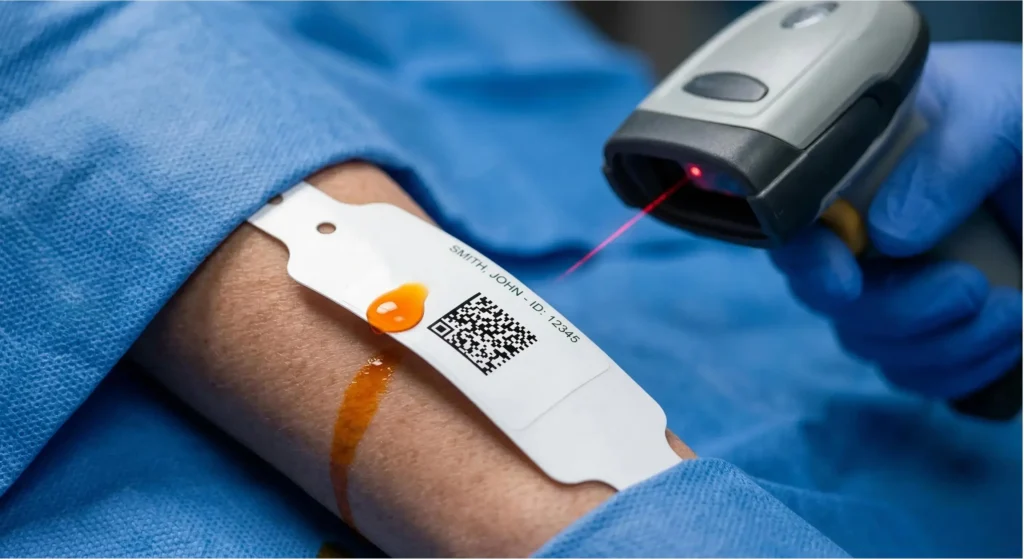
You know that in the Operating Room, there is absolutely no margin for error.
A single mix-up doesn’t just cost money—it can cost a life.
Yet, many hospitals still overlook their first line of defense against catastrophic “Never Events”: the surgical wristband.
It’s not just a piece of plastic. It is the critical link between your patient and their Electronic Health Record (EHR) during the most vulnerable moments of care.
In this guide, we’re going to move beyond the basics of identification.
You’ll discover how superior thermal printing technology and strictly enforced Positive Patient Identification (PPID) protocols can virtually eliminate wrong-site surgeries and ensure Joint Commission compliance.
Ready to secure your OR workflows?
Let’s get started.
The High Stakes of Operating Room Safety
Are you confident your facility is fully insulated against catastrophic “never events”? In the relentless, high-pressure environment of the modern surgical suite, how do we completely eliminate the risk of wrong-patient or wrong-site procedures?
We know firsthand that the modern operating room is incredibly complex. Amidst a chaotic symphony of monitors, advanced surgical tech, and critical timeframes, even the most elite clinical teams carry immense cognitive loads. When seconds count, clinical workflows must be bulletproof.
The True Cost of Surgical Errors
Let’s look at the reality. Despite the implementation of rigorous operating room safety protocols, surgical errors remain a persistent, high-stakes threat in healthcare risk management. The consequences of wrong-site surgery and wrong-patient procedures are devastating across the board:
- Clinical Impact: Severe, irreversible patient harm or preventable mortality.
- Legal Liability: Multimillion-dollar malpractice lawsuits, intense Joint Commission scrutiny, and irreparable damage to hospital reputation.
- Financial Drain: Denied Medicare and Medicaid reimbursements, alongside skyrocketing liability insurance premiums.
The Indispensable First Line of Defense
Where does uncompromising safety actually begin? Long before the anesthesia is administered or the first incision is made, patient identity management starts with a simple, tangible fail-safe.
The surgical wristband is the absolute foundation of safety in the OR. It serves as the ultimate, indispensable first line of defense, physically anchoring the digital data in your hospital’s system to the human life on the operating table. Without a highly durable, instantly readable medical wristband, achieving flawless positive patient identification (PPID) is impossible.
Preventing “Never Events”: The Surgical Wristband as a Clinical Fail-Safe
Enforcing Positive Patient Identification (PPID)
In a high-stakes surgical suite, bridging the gap between a digital Electronic Health Record (EHR) and the physical patient on the operating table is critical. This is exactly where we rely on a high-quality surgical wristband. It is the absolute foundation of Positive Patient Identification (PPID).
When dealing with sedated or unconscious individuals, verbal confirmation is impossible. A durable medical wristband serves as a scan-ready, foolproof physical anchor for effective patient identity management in hospitals. It directly links the individual on the table to their complete digital medical history, eliminating deadly guesswork.
The Pre-Surgical Time-Out Checklist
Meeting rigorous Joint Commission patient safety goals requires strict adherence to standardized operating room safety protocols. The most crucial step in this process is the mandated pre-surgical time-out.
During this mandatory pause, the surgical wristband becomes the definitive source of truth for the entire surgical team. We view it as the ultimate tool for wrong-site surgery prevention. Immediately before the first incision is made, the wristband is actively used to execute the WHO safety checklist:
- Verify Identity: Confirming the exact patient on the table via a quick barcode scan or clear visual text.
- Confirm Surgical Site: Cross-referencing the wristband data with the charted surgical plan to ensure the correct site is marked and prepped.
- Validate Procedure: Ensuring the specific surgical procedure perfectly matches the patient’s verified EHR profile.
By keeping the wristband central to the pre-surgical time-out checklist, we turn routine protocols into a concrete clinical fail-safe, protecting both the patient and the healthcare providers from devastating surgical errors.
Beyond Identification: Color-Coding Surgical Wristbands
In a high-stress surgical environment, our teams don’t always have time to dig through charts to find critical warnings. That’s why color-coding is a core part of our operating room safety protocols. A quick glance at a surgical wristband instantly flags risks, giving us the visual cues we need to act safely and fast.
AHA Standardized Alert Colors
We rely on AHA standardized alert colors to remove any guesswork. These widely recognized bands are fundamental to solid healthcare risk management:
- Red (Allergies): A mandatory visual stop sign to prevent severe allergic reactions to medications, iodine, or latex.
- Yellow (Fall Risk): Alerts our transport and nursing teams to take extra physical precautions when moving the patient.
- Purple (Do Not Resuscitate): Ensures we strictly honor patient wishes during critical, life-or-death moments.
OR-Specific Visual Alerts
General hospital alerts are a great baseline, but fast-paced perioperative patient care workflows demand more granular data. We use specialized visual alerts on the medical wristband to highlight complex risks right on the operating table:
- Airway Warnings: Instantly alerts our anesthesia teams to difficult intubation risks before putting the patient under.
- Blood Type Needs: Crucial for massive transfusion protocols where the surgical team needs to know specific blood requirements at a single glance.
By using these bold, color-coded visual alerts, we make sure that critical patient information is never missed in the high-stakes environment of the OR.
The Anatomy of a Surgical Wristband: Material and Print Quality
Built for Operating Room Safety
In our experience as a thermal medical wristband manufacturer, we know the OR environment is unforgiving. Standard patient ID bands won’t survive the demanding conditions of a surgical suite. We engineer our surgical wristbands to be completely impervious to the harsh elements present during surgery.
- Fluid Resistance: Instantly repels water, blood, and other bodily fluids.
- Chemical Defense: Withstands harsh surgical scrubs, alcohol wipes, and heavy betadine exposure without degrading or snapping.
Medical Wristband Durability and Scanning
When a patient is on the operating table, clinical staff cannot afford to deal with faded text or a ruined barcode. Traditional inkjet or laser-printed bands smudge and fail when exposed to moisture. We rely exclusively on direct thermal printing to guarantee a fail-safe system.
- Zero Smudging: Heat-activated printing means there is absolutely no ink to smear or wash away.
- 100% Scannability: Barcodes and critical patient data remain perfectly crisp and readable from pre-op preparation all the way through the recovery room.
Hospital Acquired Infection Control
Patient comfort and infection prevention must go hand-in-hand. We build our surgical wristbands with specific physical features that protect the patient’s skin and minimize cross-contamination risks.
- Antimicrobial Coatings: Specially treated surfaces actively repel bacteria to support your strict hospital acquired infection control protocols.
- Soft-Edge Design: Smooth, contoured edges prevent painful skin abrasions, bruising, or paper cuts on vulnerable, sedated patients.
- Strategic Placement: Designed to be secured comfortably on various limbs, keeping the band safely away from active surgical sites and primary IV access points.
Transforming the Surgical Wristband with Smart Tech
We recognize that modern healthcare demands more than just printed text. Today, an effective surgical wristband acts as a dynamic digital bridge, transforming basic identification into a highly connected smart system.
Electronic Health Record (EHR) Integration
Connecting the physical patient on the operating table to their digital footprint is non-negotiable. Implementing a reliable barcode patient tracking system links the patient directly to hospital databases, ensuring vital data is instantly accessible.
- Automated Charting: A quick scan seamlessly syncs with the patient’s file. This automates routine charting and drastically reduces nursing fatigue during high-stress procedures.
- Real-Time Medication Checks: Scanning the band during surgery allows for instant medication administration cross-checking, preventing adverse drug events.
- Streamlined Operations: Deep Electronic health record (EHR) integration actively supports and accelerates complex perioperative patient care workflows.
RFID Surgical Wristbands and the IoT
The future of operating room management relies on real-time, frictionless data. We are pushing the boundaries of traditional tracking by incorporating Radio Frequency Identification (RFID) and Internet of Things (IoT) technology directly into the band.
- Dynamic Patient Flow: RFID surgical wristbands passively track patient movement from the induction room, into the OR, and safely into the Post-Anesthesia Care Unit (PACU).
- Optimized Hospital Management: Hands-free location tracking provides real-time visibility into OR utilization, allowing staff to eliminate bottlenecks and optimize the entire surgical schedule.
Best Practices for Implementing Surgical Wristband Protocols
To truly enhance operating room safety protocols, hospitals must treat patient identification as a unified system rather than an afterthought. In our experience working with global healthcare providers, a fragmented approach to patient identity management in hospitals leads to dangerous gaps in care.
Here is how we execute a seamless and safe rollout across any facility:
Standardize Procurement Company-Wide
- Eliminate “Mixed-System” Errors: Allowing different departments to buy different brands or formats creates massive confusion. We mandate standardized hospital-wide procurement for every surgical wristband. This guarantees that barcode scanners in the operating room read the exact same formats as those in the ER or ICU, streamlining your healthcare risk management.
Strict Staff Training Protocols
- Zero Tolerance for Damaged Bands: Clinical staff must be trained to recognize and act on unreadable tags instantly. If a wristband is stretched, torn, or illegible, our protocol is simple: print an immediate replacement. There is absolutely no room for guesswork right before an incision.
Robust IT and Printing Infrastructure
- Decentralized, High-Volume Access: Your IT systems must support fast, decentralized printing at every single admission point and nursing station. If servers lag or printers constantly jam, staff will naturally find dangerous workarounds. A reliable network ensures a fresh, 100% scannable wristband is always ready the second a patient enters the surgical workflow.
