
Subtotal ¥0.00
Learn how long term care wristbands ensure compliant patient identification and safety with durable thermal bracelets and best practice guidelines
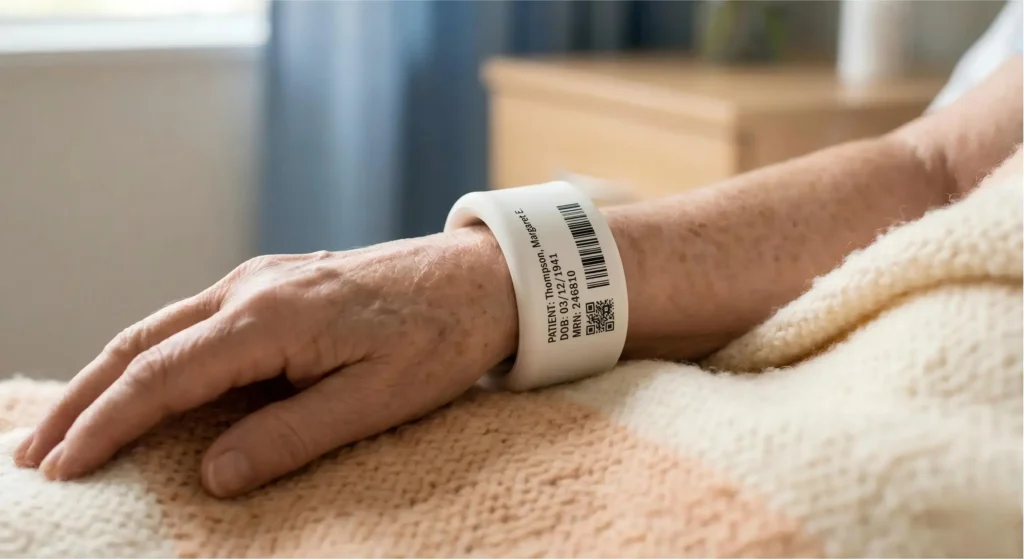
The Stakes: Why Long-Term Care Wristbands Require a Specialized Approach
As facility administrators, we face a unique set of daily operational challenges. Ensuring accurate patient identification isn’t just a matter of checking a compliance box; it is the fundamental safety net for our most vulnerable residents. Standard, short-term hospital bands simply do not hold up in our environment. We need specialized long-term care wristbands engineered specifically for the realities of extended stays, cognitive challenges, and fragile health.
Our facilities require a targeted approach due to three critical, everyday risk factors:
Patient Misidentification Prevention in Dementia Care
Residents facing cognitive decline or Alzheimer’s often cannot reliably self-identify or state their own name. This inability drastically elevates the risk of severe medication errors and wandering incidents. Furthermore, confused patients frequently pick at or attempt to remove unfamiliar items from their wrists. We must implement secure, tamper-evident bands that stay in place without causing the resident unnecessary emotional or physical distress.
Elderly Skin Tear Prevention
Geriatric skin is exceptionally thin and fragile, often likened to tissue paper. Rigid plastics or sharp-edged identification bands pose a severe, daily danger to skin integrity.
- The Risk: Continuous friction from a poorly designed band quickly leads to bruising, painful abrasions, and dangerous skin tears.
- The Solution: We must prioritize soft, hypoallergenic medical bracelets that actively protect delicate skin while securely maintaining the patient’s identity.
Durable Thermal Identification Bands for Extended Wear
Unlike a typical acute care hospital stay, our residents wear their ID bands for months or even years. These bracelets must survive relentless, daily wear and tear.
- Constant Moisture: Submersion during daily bathing routines and accidental spills.
- Harsh Chemicals: Repeated exposure to medical-grade sanitizers, soaps, and skin barrier lotions.
- Physical Friction: Continuous rubbing against heavy bedding, clothing, and bed rails.
If a band degrades, tears, or a barcode fades due to chemical exposure, our entire safety protocol breaks down. We require highly durable materials designed to withstand this grueling environment without compromising barcode scannability or resident comfort.
Regulatory Standards for Long-Term Care Wristbands
When we implement long-term care wristbands, absolute compliance and patient safety drive every decision. Here is how we navigate the essential regulatory standards for patient identification bracelets to protect both our residents and the facility.
Joint Commission Patient Safety Goals
To meet the core Joint Commission patient safety goals (specifically NPSG.01.01.01), we mandate the use of at least two unique patient identifiers on every wristband.
- Approved Identifiers: Full name, date of birth, or a direct medical record number.
- Strictly Prohibited: Room numbers. Relying on a room number for identification is a massive safety risk and a direct compliance violation.
HIPAA Compliant Patient ID
Protecting data privacy is non-negotiable. A strictly HIPAA compliant patient ID ensures that sensitive medical information is never exposed to visitors walking down the hall. Instead of printing specific diagnoses or private alerts in human-readable text, we rely on secure medical barcode wristbands. The barcode houses the sensitive clinical data for authorized staff to scan, while the visible text is restricted to the basic identifiers.
AHA Standardized Wristband Colors
Instant visual recognition prevents critical errors. Understanding universal hospital wristband color meanings allows staff to act swiftly and safely. We strongly enforce the use of AHA standardized wristband colors to maintain consistency across the board:
- Red: Allergy Alert
- Yellow: Fall Risk
- Purple: Do Not Resuscitate (DNR)
While the industry continues pushing for mandatory state-wide standardization, adhering to these recognized colors establishes a safe, reliable baseline for our long-term care operations.
Technology Behind Long-Term Care Wristbands
Direct Thermal Wristband Printers vs. Laser
When it comes to printing a patient identification bracelet, long-term care facilities are leaving laser tech behind. We always recommend using direct thermal wristband printers instead. Here is exactly why this switch makes sense:
- No Toner Required: It saves your facility money and cuts out the mess of ink replacements.
- Fade-Proof Durability: The print stands up to daily showers, heavy friction, and harsh alcohol-based sanitizers.
- Crisp 2D Barcodes: Thermal tech guarantees sharp, high-contrast barcodes for flawless scanning, ensuring seamless integration with your medical barcode wristbands system.
Hypoallergenic Medical Bracelets
Geriatric skin requires special attention. Rigid or sharp materials easily cause abrasions and dangerous skin tears. You need a substrate that is naturally antimicrobial, non-abrasive, and completely safe for extended wear. That is why we engineered our LinkWin thermal wristbands. We built these durable thermal identification bands specifically to maximize long-term patient comfort. They stay soft against fragile skin while keeping the printed data perfectly intact for months at a time.
Tamper-Evident Hospital Bands
A long-term care wristband only works if it stays on the right person. Security fasteners are non-negotiable.
- Tamper-Evident Closures: Whether utilizing high-security adhesive tabs or physical snap closures, the band must lock permanently.
- Preventing Swapping: Once our bands are applied, the closure will noticeably shred or break if someone tries to force it open. This eliminates accidental removal or unauthorized patient swapping, acting as a baseline for your patient misidentification prevention strategy.
Nursing Home Patient Safety Protocols in Action
To maximize the effectiveness of Patient Identification Bracelets in Long-Term Care Facilities, we recommend establishing strict, actionable routines. A proper operational setup is your frontline defense for total patient misidentification prevention.
Standardizing Application SOPs
Consistency is everything. We enforce clear Standard Operating Procedures (SOPs) for exactly how and when long-term care wristbands are secured on residents.
- When to Apply: Fasten the wristband immediately upon a resident’s admission—no exceptions.
- Where to Apply: Default to the preferred limb (typically the dominant wrist).
- Compromised Extremities: Always maintain a documented protocol for alternative placement (such as the ankle) if the primary limb is compromised by edema, IV lines, or severe skin conditions.
Zero-Delay Band Replacement
Wear, tear, and patient tampering happen. When medical barcode wristbands become faded, unreadable, or go missing entirely, a zero-delay replacement protocol is essential. Staff must be trained to replace compromised bands instantly, ensuring continuous identification without stalling daily care workflows.
Barcode Medication Administration (BCMA)
Physical ID bands are only as useful as the systems they interact with.
- Close the Loop: Ensure your wristbands perfectly bridge the gap between physical identity and Barcode Medication Administration (BCMA) software.
- Prevent Drug Errors: A flawless scan seamlessly connects the resident to their electronic health records (EHR) integration. This acts as the ultimate safeguard against adverse drug events every single time medication is dispensed.
Nursing Home Patient Safety Protocols: Staff Training
Having the most durable long-term care wristbands is only half the battle. If our team doesn’t use these patient identification tools correctly, the system falls apart. I make sure our facilities prioritize hands-on training and daily accountability to handle patient identification flawlessly.
Practical Training for Patient Identification
We rely on role-playing to train our nurses and aides. The main focus is on verifying identity accurately without upsetting our residents.
- Scan with Care: Staff practice scanning barcodes quickly and smoothly to avoid invading a resident’s personal space.
- Verbal Verification: Whenever possible, staff politely ask for the resident’s name and date of birth in a conversational tone.
- Minimize Distress: We heavily train aides on how to check patient identification bracelets on sleeping, confused, or agitated patients gently.
Shift Audits for Patient Misidentification Prevention
You can’t expect what you don’t inspect. To guarantee 100% compliance and total patient safety, we bake auditing directly into our daily operations.
- Handoff Checks: Both outgoing and incoming staff must visually inspect every patient’s wristband together during shift changes.
- Condition Audits: Staff actively check that the band isn’t faded, damaged, or causing any skin irritation.
- Zero-Delay Replacement: If a band is missing or unreadable, staff must print and apply a new one immediately. No excuses, no waiting.
