
Subtotal ¥0.00
Compare synthetic vs coated paper tensile strength and moisture resistance for durable wristbands labels and menus
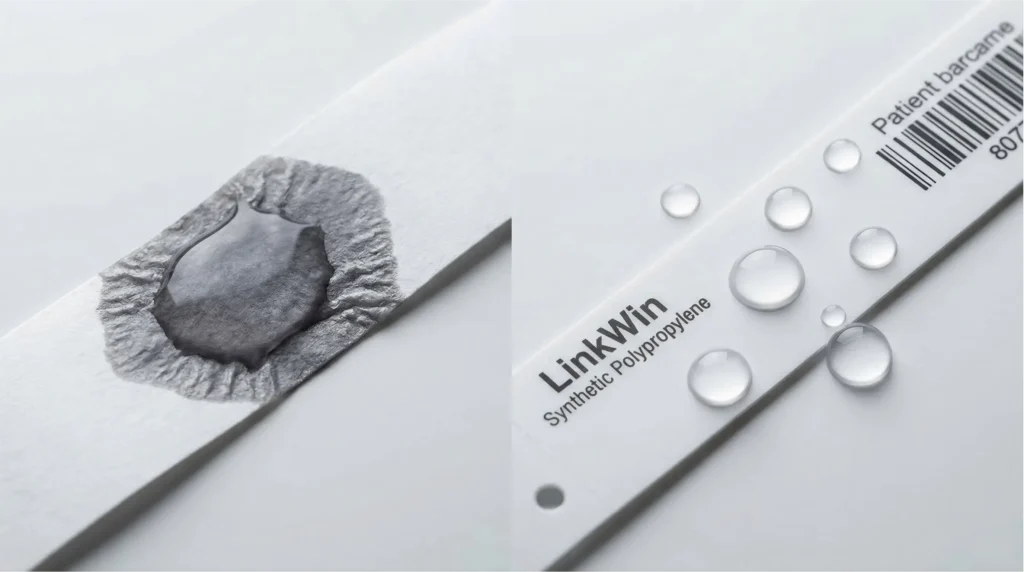
Synthetic vs. Coated Paper: A Tensile and Moisture Resistance Showdown
Ever had a critical label tear off in transit or an important document turn to mush in the rain? When your bottom line depends on durability, you are usually choosing between coated paper and synthetic alternatives. Let’s break down the material science basics so you know exactly what you are paying for.
What is Coated Paper?
Coated paper starts its life as standard wood pulp. Manufacturers apply a thin layer of clay or polymer to the surface. This coating smooths out the sheet, makes ink colors pop, and adds a very mild protective layer against everyday wear.
The Core Breakdown:
- Base Material: Natural wood-pulp fibers.
- The Finish: A surface wash of clay or polymer to improve printability.
- The Reality: It handles basic handling well, but beneath the glossy coating, it remains fundamentally vulnerable paper.
Polymer-Based Printing Substrates
Synthetic paper skips the tree pulp completely. We manufacture these substrates using pure polymers, primarily relying on polypropylene synthetic paper construction. It is engineered to mimic the exact look, feel, and print-receptiveness of traditional paper, but it behaves entirely like high-grade, durable plastic.
The Synthetic Advantage:
- Construction: 100% polymer-based.
- The Illusion: Feels and prints exactly like a standard premium sheet.
- The Performance: Delivers extreme, unyielding durability against physical stress and harsh environments.
The Tensile Strength Test: Resisting Tears and Snaps
When evaluating synthetic vs. coated paper, a tensile and moisture resistance showdown always starts with raw physical stress. How much pulling force can the material handle before it fails?
Coated Paper’s Limits Under Stress
In high-stress printing environments, the physical limits of coated paper become obvious very quickly. At its core, this substrate is still just pressed wood pulp. When you apply high tension, those natural fibers simply separate and break.
Many people are fooled by the stiffness of coated paper. Manufacturers apply heavy clay or thin polymer layers to the surface, which creates a false sense of security. While these coatings improve print quality and add minor scratch resistance, they offer a mere illusion of strength. Once a tear starts, the coated vs uncoated paper durability difference drops to zero—it rips straight through.
The Polymer Advantage in Synthetic Paper
This is exactly where polypropylene synthetic paper outclasses traditional pulp. Because it is engineered from a solid polymer base, its molecular structure flexes and holds together under extreme force. The high tensile strength of synthetic paper means it stretches instead of snapping.
Here is why polymer-based printing substrates dominate in durability:
- No Fiber Separation: Polypropylene molecules are tightly chained together, preventing the quick tearing typical of wood fibers.
- Core Strength: The tear-resistant printing materials don’t rely on a surface coating; the structural integrity is built directly into the base layer.
- Tamper-Proof Reliability: We see this play out in the real world every day. For applications where failure isn’t an option, synthetic materials are mandatory. This is exactly why we build our LinkWin thermal wristbands using high-tensile polymers. Whether used for medical patient IDs or heavy-duty event crowd control, the wristband simply cannot tear under physical stress or tampering.
Moisture Resistance Showdown: Water, Grease, and Chemicals
The “Water-Resistant” Myth of Coated Paper
We see it all the time: businesses relying on coated paper, expecting it to survive damp conditions. It’s a costly myth. While a surface coating delays moisture absorption, it never truly prevents it. The ultimate fatal flaw is edge-wicking in coated paper. Water easily seeps into the raw, unsealed edges of the material. Once moisture breaches that perimeter, the underlying wood-pulp swells, the layers delaminate, and your print is effectively destroyed. It is a temporary shield, not a permanent solution.
100% Waterproofing with Synthetic Paper
For genuine moisture-proof paper applications, we rely entirely on polypropylene synthetic paper. Because it is engineered as a solid polymer from edge to edge, it naturally and completely repels liquids. There is no hidden paper core to absorb moisture, making it the ultimate choice for high-stress printing environments.
Here is exactly how these waterproof paper alternatives perform under extreme pressure:
- Zero Edge-Wicking: Cut edges remain completely impervious to liquids.
- No Swelling or Delamination: The material structure stays perfectly intact, never peeling or separating.
- Total Chemical Defense: Naturally blocks heavy grease, oils, and industrial chemicals.
- Extreme Submersion: Easily survives full, long-term underwater immersion without degrading.
Performance Breakdown
| Feature | Coated Paper | Polypropylene Synthetic |
|---|---|---|
| Moisture Defense | Temporarily delays absorption | 100% Waterproof barrier |
| Edge-Wicking Risk | Extremely High | Zero |
| Chemical Resistance | Weak (Stains and degrades) | High (Repels oils and solvents) |
| Structural Integrity | Weakens when wet | Retains full tensile strength |
When your application demands absolute durability, a surface coating simply isn’t enough. You need the engineered structural integrity of a synthetic substrate to guarantee your materials survive the elements.
Total Cost of Ownership (TCO): Is Synthetic Worth the Premium?
When I evaluate printing materials, the initial price tag only tells half the story. Yes, standard coated paper is noticeably cheaper out of the gate. However, if you only look at the upfront cost, you are entirely ignoring the hidden, ongoing expenses associated with standard coated vs uncoated paper durability limits.
Upfront Price vs. Long-Term Reality
In high-stress printing environments, traditional pulp-based paper fails fast. When that happens, you end up paying repeatedly for:
- Frequent Replacements: Constantly reprinting damaged, torn, or waterlogged materials.
- Wasted Labor: The time your team spends replacing unreadable tags or swapping out degraded labels.
- Pouch Lamination: Paying extra for heavy lamination alternatives just to artificially mimic the natural durability of polymer-based printing substrates.
Polypropylene synthetic paper requires a higher initial investment, but it actively stops this financial bleed. It eliminates the need for secondary protective pouches and stops the endless replacement cycle dead in its tracks.
Calculating Long-Term ROI
For high-turnover or high-risk applications, the math heavily favors synthetic materials. Here is a quick breakdown of how these materials actually perform over their lifespan:
| Material Strategy | Initial Cost | Hidden Expenses | Long-Term ROI |
|---|---|---|---|
| Coated Paper (Bare) | Very Low | High (Constant reprints due to edge-wicking and tearing) | Poor |
| Coated Paper + Lamination | Moderate | Moderate (Extra labor, pouch materials, eventual delamination) | Fair |
| Synthetic Paper | Higher | Zero (Naturally tear-resistant and completely moisture-proof) | Excellent |
Whether you are sourcing waterproof paper alternatives for outdoor operational tags or durable thermal wristband material for high-volume events, synthetic paper is a one-and-done solution. You are not just paying for superior tensile strength; you are buying total operational efficiency. The premium price of synthetic paper pays for itself the very first time you avoid a ruined print run.
Real-World Applications: Matching Material to Purpose
Understanding the spec sheet is one thing, but how do these materials actually perform in the field? I always advise our clients to match the substrate directly to the environment it will live in.
When Coated Paper Makes Sense
Regular coated paper is perfectly fine for controlled, indoor settings. It provides excellent print clarity for items that won’t face physical abuse or moisture. It is best suited for:
- High-end brochures: Where a premium, glossy feel matters more than ruggedness.
- Indoor packaging: Standard retail boxes and short shelf-life labels.
- Short-term promotional materials: Event flyers and handouts meant for brief use.
When Synthetic Paper is Non-Negotiable
If you are operating in high-stress printing environments, standard paper will fail. You need the sheer durability of polypropylene synthetic paper. This is where heavy-duty, moisture-proof paper applications become mandatory:
- Industrial drum labels: Resisting harsh chemicals, weather, and maintaining critical industrial label durability.
- Restaurant menus: Surviving constant handling and wiping away grease or spills without edge delamination.
- Outdoor field manuals: Thriving in rain, mud, and heavy physical use where tear-resistant printing materials are essential.
Durable Thermal Wristband Material
At LinkWin, we manufacture thermal wristbands where material failure simply isn’t an option. Whether we are supplying hospitals for patient identification or large-scale outdoor festivals for crowd control, we rely entirely on the high tensile strength of synthetic substrates.
Our wristbands are engineered using premium polymer-based materials that guarantee reliable, long-lasting identification. Because they are 100% waterproof and tamper-proof, they easily survive sweat, showers, and constant friction without losing scannability. When security and identification are on the line, we build our products to withstand the absolute worst conditions.
Environmental Impact and Recyclability
When evaluating synthetic vs. coated paper for my projects, I’ve noticed people usually assume traditional paper is automatically the greener choice. However, the reality of recycling these materials tells a different story.
The Coated Paper Complication
Wood-pulp paper starts out natural, but to make it durable, manufacturers add heavy clay or polymer coatings. This creates a mixed-material product that causes headaches at the processing plant.
- Contamination: Plastic and clay coatings are incredibly difficult to separate from the underlying paper fibers.
- Recycling hurdles: Heavily coated papers often get rejected by standard recycling facilities because they contaminate the clean paper stream.
Why Polypropylene Synthetic Paper Makes Sense
This is where modern polymer-based printing substrates have a surprising eco-friendly edge.
- Mono-material build: Top-tier synthetic papers are usually made from 100% polypropylene.
- Clean recycling: Because they aren’t a messy blend of pulp and plastic, pure polypropylene synthetic paper can be cleanly processed in specific plastic recycling streams without cross-contamination.
- Reduced waste: Thanks to its massive tensile strength and waterproof nature, synthetic paper simply lasts longer. You print a durable label or tag once, cutting down on the resources wasted by constantly reprinting and replacing ruined coated paper.
Frequently Asked Questions (FAQs)
Can I run synthetic paper through a standard laser printer?
It depends on the specific material. Standard laser printers use high heat to fuse toner, which can easily melt standard polymer-based printing substrates. If you need to print in-house, you must buy polypropylene synthetic paper that is explicitly formulated for high-heat laser printers. Otherwise, you risk destroying both the sheet and your printer hardware. For heavy-duty industrial applications, thermal transfer printing remains the standard.
Does coated paper require lamination to be waterproof?
Yes, absolutely. A glossy finish does not make it a true waterproof paper alternative. The coating only delays moisture absorption. If a coated sheet is submerged, water quickly attacks the unsealed borders—a destructive process known as edge-wicking. To completely protect coated paper, you must encapsulate it in lamination. If you want to eliminate the cost and hassle of laminating, switching to a 100% synthetic substrate is your best bet.
What makes thermal wristbands tear-proof?
It comes down to the core material and its tensile strength. Our LinkWin wristbands are built from high-grade plastics, primarily polypropylene, rather than standard wood pulp.
- No fibers to pull apart: Unlike traditional paper, the polymer structure doesn’t separate under stress.
- Built to stretch, not snap: The material absorbs pulling force without breaking.
- Built-in security: This incredibly durable thermal wristband material ensures that once a band is applied, it acts as a reliable, tamper-proof security measure for events, healthcare, and crowd control.
