
Subtotal ¥0.00
Discover how telemedicine wristbands improve patient identification and remote monitoring with smart, durable, and EHR-integrated medical wristbands.
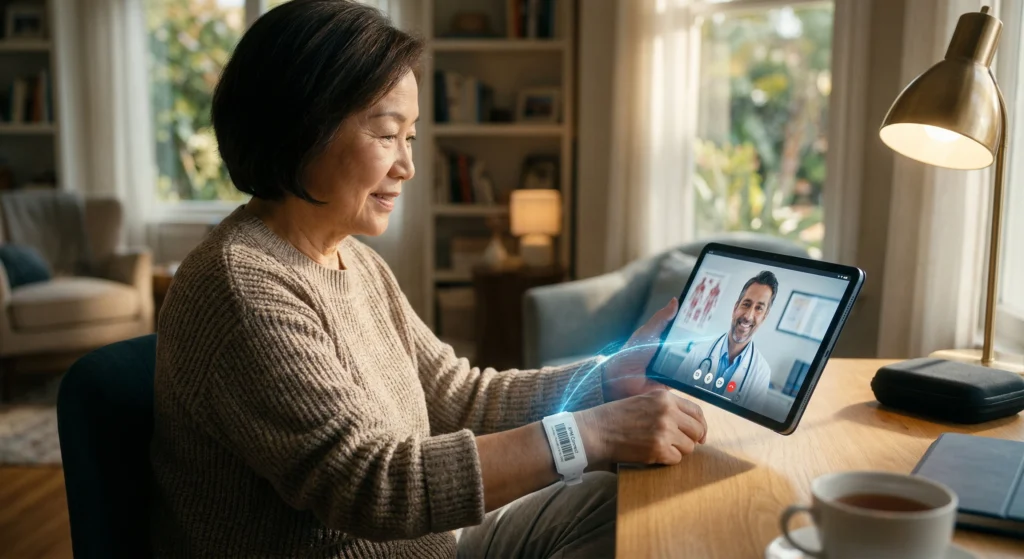
Understanding Medical Wristbands: From Traditional to Smart
Medical wristbands have long been a staple in healthcare settings, serving as essential tools for patient identification and safety. Traditionally, these wristbands come in several types:
- ID Wristbands: Display basic patient information like name, date of birth, and medical record number.
- Allergy Wristbands: Highlight patient allergies to prevent medication errors.
- Fall Risk Bands: Warn staff about patients at high risk of falls.
With advances in technology, medical wristbands have evolved from simple color-coded bands to sophisticated devices integrating barcode, RFID, and thermal printable technology. Today’s smart medical wristbands for telemedicine include sensors that can monitor vital signs, transmit data wirelessly, and link to electronic health records (EHR). Some key features of these advanced wristbands are:
- Durability: Made from hospital-grade, waterproof materials built to last during extended use.
- Scannability: Equipped with barcodes or RFID tags compatible with hospital systems.
- Comfort: Designed for all-day wear, including sensitive skin-friendly materials.
- Printing Compatibility: Support thermal printing for quick, onsite updates of patient info.
It’s important to distinguish these hospital-grade wristbands from consumer wearables. Unlike fitness trackers or generic smartwatches, medical wristbands are purpose-built to meet strict healthcare standards, ensuring reliable patient identification, data security (HIPAA compliance), and seamless integration with clinical workflows.
In the realm of telemedicine, leveraging these advanced wristbands ensures accurate patient identification remotely and enhances various aspects of remote patient monitoring (RPM). They form a vital bridge between patients and providers, supporting safer, more efficient care outside traditional hospital walls.
The Intersection of Telemedicine and Remote Patient Monitoring
Telemedicine has exploded globally, making healthcare accessible from home or anywhere. Alongside, remote patient monitoring (RPM) is growing fast, letting doctors track vital signs like heart rate, SpO2, temperature, ECG, and activity remotely. These remote patient monitoring wristbands and telecare wearable devices play a key role in gathering this real-time health data.
However, virtual care has a gap without solid patient identification. Without physical ID verification, it’s tough to ensure data matches the right person, increasing risks of errors in diagnosis or treatment. That’s where medical wristbands in telemedicine come in—they link patient ID directly to their health data, making telehealth safer and more reliable.
How Medical Wristbands Enhance Telemedicine Delivery
Medical wristbands play a crucial role in making telemedicine more effective and reliable. First, they ensure accurate patient identification by linking wristbands directly to electronic health records (EHR), which is vital in remote or hybrid care settings. This clear ID connection helps avoid errors and mix-ups during virtual consultations.
These wristbands also work seamlessly with remote patient monitoring (RPM) systems, sending real-time vital signs like heart rate, SpO2, and temperature straight to healthcare providers. Alerts for any abnormal readings, such as arrhythmia or sudden falls, can be triggered instantly, enabling quick response.
Emergency features built into smart medical wristbands, like SOS signals and fall detection, add a safety net for patients, especially the elderly or those with chronic diseases being monitored remotely.
Beyond monitoring, wristbands support medication management by reminding patients to take doses on time and tracking adherence, which improves treatment outcomes and reduces hospital visits.
In short, smart medical wristbands not only connect patients to their care teams but also enhance safety and support throughout telecare, making remote healthcare more dependable and patient-friendly.
Key Benefits for Patients, Providers, and Healthcare Systems
Medical wristbands in telemedicine bring solid advantages for everyone involved. Here’s a quick breakdown:
| Benefit | Impact | Keywords & LSIs |
|---|---|---|
| Patient Safety | Accurate ID reduces medical errors, ensuring correct treatment | patient identification in telehealth, barcode hospital wristbands RPM |
| Better Health Outcomes | Continuous monitoring helps catch issues early for timely care | remote patient monitoring wristbands, wearable vital signs monitoring |
| Operational Efficiency | Cuts admin work, streamlines telehealth workflows for providers | hospital wristband integration EHR, telecare wearable devices |
| Cost Savings & Access | Supports hospital-at-home and elderly care, lowering expenses | elderly telehealth wristband, chronic disease remote monitoring |
| Privacy & Security | Meets HIPAA/GDPR standards to protect sensitive patient data | durable thermal wristbands healthcare, RFID medical wristbands |
How Patients Benefit
- Faster, safer treatment with precise patient ID.
- Real-time alerts on health changes improve chronic disease monitoring.
- Medication adherence reminders help keep treatment on track.
For Providers and Healthcare Systems
- Less paperwork, fewer errors, and smoother telehealth sessions.
- Better data flow from wristband sensors to EHR systems means smarter decisions.
- Easier remote care for elderly or high-risk patients reduces hospital visits.
Privacy Matters
- Wristbands use secure data handling meeting global standards like HIPAA and GDPR.
- Ensures patient information remains confidential even in remote monitoring setups.
In short, smart medical wristbands in telemedicine boost safety, care quality, efficiency, and save costs—all while protecting privacy. They’re a game changer for modern healthcare worldwide.
Types of Wristbands Suited for Telemedicine Applications
When it comes to telemedicine wristbands, there are two main types to consider: traditional thermal/barcode ID bands and smart sensor wristbands. Each serves different needs in remote patient monitoring and telehealth.
| Feature | Traditional Thermal/Barcode ID Bands | Smart Sensor Wristbands |
|---|---|---|
| Purpose | Basic patient identification | Continuous vital signs and health data capture |
| Technology | Barcode or thermal printing | RFID, Bluetooth, integrated sensors |
| Durability | Durable but limited water resistance | Waterproof and built for long-term wear |
| Battery Life | No power needed | Long battery life, usually days to weeks |
| Connectivity | None | Wireless (Bluetooth, Wi-Fi) for data sync |
| Data Collected | Patient info, allergy, fall risk | Heart rate, SpO2, ECG, temperature, fall detection |
| Integration | EHR via barcode scanning | Direct integration with RPM and telemedicine platforms |
| Use Cases | Hospital ID, allergy alerts | Chronic disease monitoring, emergency alerts |
| Ideal For | Short-term patients, easy ID verification | Remote monitoring of pediatric, geriatric, and high-risk patients |
Features Ideal for Telemedicine
- Waterproof Design: Essential for continuous wear and hygiene.
- Long Battery Life: Minimizes charging needs to keep data flowing.
- Wireless Connectivity: Enables real-time updates and alerts.
- Comfort: Lightweight and hypoallergenic to encourage constant use.
Specialized Wristbands for Different Patient Groups
- Pediatrics: Small size, gentle materials, easy on/off.
- Geriatrics: Extra durability, fall detection, medication reminders.
- High-Risk Patients: Multi-parameter sensing, SOS alerts, real-time ECG monitoring.
Choosing the right type of medical wristband for telemedicine depends on the patient’s specific needs and care setting. Smart medical wristbands in telemedicine not only provide reliable patient identification but enhance remote patient monitoring wristbands capabilities, improving outcomes and safety across global healthcare settings.
Challenges and Best Practices for Implementation
Implementing telemedicine wristbands and remote patient monitoring wristbands comes with some real challenges. Here’s what tends to come up:
- Tech Adoption: Not all patients or staff are quick to use new devices. Getting everyone comfortable with smart medical wristbands in telemedicine requires clear guidance and patience.
- Data Accuracy: Reliable data from wristbands is crucial. Faulty readings or missed alerts can put patients at risk and reduce the trust in wearable vital signs monitoring.
- EMR Integration: Connecting hospital wristband systems with electronic health records (EHR) smoothly can be tricky but is essential for effective telecare wearable devices use.
- Patient Compliance: Patients might forget to wear their wristbands or not use the features correctly, especially elderly telehealth wristband users.
- Regulations: Ensuring all wristband data handling follows privacy laws (HIPAA, GDPR) isn’t just legal—it builds trust.
To tackle these hurdles well, here are some best practices that have worked globally:
- Choose Medical-Grade Materials: Durable thermal wristbands healthcare-grade materials resist wear, are waterproof, and comfortable, helping with patient adherence.
- Ensure Seamless Workflows: Integrate barcode hospital wristbands RPM and smart sensor wristbands into daily routines without extra hassle for staff or patients.
- Train Staff and Patients: Hands-on sessions and clear instructions improve confidence and correct use, boosting the success rate of chronic disease remote monitoring.
- Focus on User-Friendly Design: Wristbands that are comfortable and easy to use, like those with long battery life and wireless connectivity, make a difference.
- Continuous Monitoring: Set up alerts and regular check-ins to ensure the remote patient monitoring wristbands are worn and working properly.
Tips for Successful RPM Implementation Incorporating Wristbands
- Start small with pilot groups before scale-up.
- Use wristbands that support multiple sensors like ECG monitoring wristband or fall detection telemedicine features.
- Regularly review data for accuracy and troubleshoot early.
- Communicate clearly with patients about the benefits and privacy protections.
- Update systems and software to stay compliant with regulations and new tech standards.
By addressing these challenges thoughtfully, medical wristbands can truly enhance telemedicine services worldwide.
Future Trends: Innovations Shaping Wristbands in Telemedicine
Medical wristbands for telemedicine are evolving fast, thanks to AI and smart tech. AI-driven predictive analytics are now turning the data from wearable vital signs monitoring into early warnings. This means issues can be spotted before they become emergencies, helping with chronic disease remote monitoring and overall patient safety.
We’re also seeing advanced biometrics and multi-parameter sensing packed into smart medical wristbands. These devices can track heart rate, SpO2, ECG, temperature, and even detect falls — all in one wearable. This makes remote patient monitoring wristbands far more powerful and useful in everyday telecare wearable devices.
Integration with fast networks like 5G and the Internet of Things (IoT) is another game-changer. This connectivity enables continuous care, with seamless data flow between barcode hospital wristbands, RFID medical wristbands, and electronic health record (EHR) systems. It helps improve medication adherence wearables by providing real-time data to doctors and caregivers.
Finally, these innovations support personalized care and broader population health management. Sustainable materials and more durable thermal wristbands healthcare options are also becoming standard, matching the global push for eco-friendly medical devices. Elderly telehealth wristbands, in particular, are benefiting from these advances, making home care safer and more efficient.
In short, the future of telemedicine wristbands lies in smart, connected, and sustainable tech that boosts patient ID in telehealth and remote care.
