
Subtotal ¥0.00
Discover customized medical wristbands designed to enhance patient safety with color coding, thermal printing, durability, and allergy alerts.
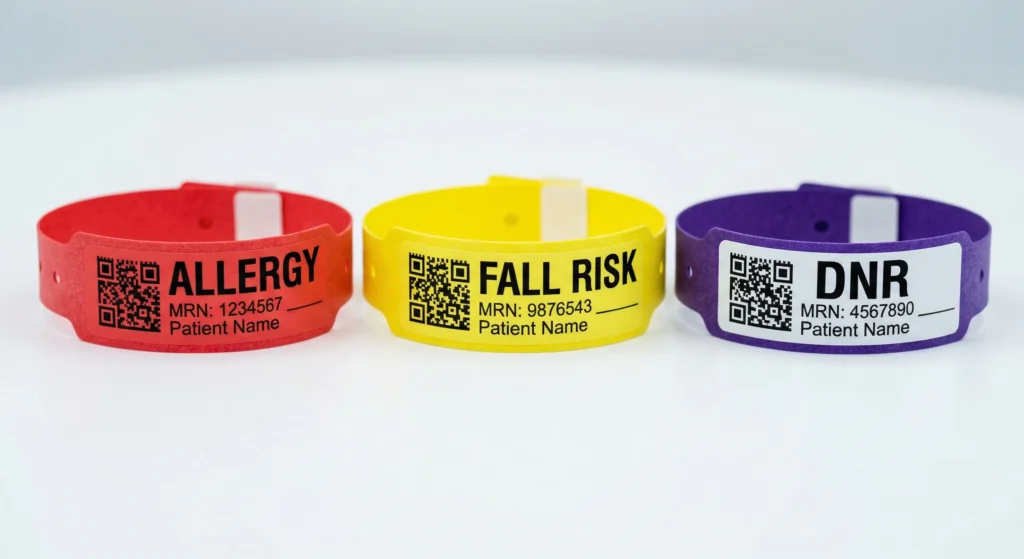
Imagine a patient rushing into the ER with multiple allergies and a complex medical history—how do you ensure every caregiver instantly knows their critical information? Customized medical wristbands are the unsung heroes in these moments, providing clear, reliable, and personalized alerts that can prevent life-threatening errors. In today’s fast-paced healthcare world, custom medical wristbands aren’t just ID tools—they’re vital communication lifelines tailored to meet special medical needs. Ready to discover how thermal printing and smart customization empower hospitals to boost patient safety, streamline workflows, and comply with strict standards? Let’s explore why these wristbands are essential for every facility aiming to enhance care quality and efficiency.
The Importance of Patient Identification in Specialized Healthcare
In specialized healthcare settings, accurate patient identification is critical to ensuring safety and effective treatment. High-acuity environments, such as intensive care units and emergency departments, face rising challenges with patient safety due to complex medical conditions and fast-paced care demands. Customized medical wristbands play a vital role in meeting these challenges by providing standardized yet adaptable solutions that align with national safety goals.
Hospitals globally have adopted patient safety identification solutions that emphasize both uniformity and flexibility. These wristbands—ranging from custom barcode medical wristbands to allergy alert wristbands for hospitals—help reduce errors by reliably linking patients to their medical records and care instructions. Recent studies show that properly implemented and personalized wristbands can reduce identification errors by up to 50%, highlighting the urgent shift toward patient-specific solutions.
By integrating features like thermal printable patient wristbands and color coded medical alert bands, healthcare providers ensure precise, real-time patient information is available, supporting safer decisions and enhancing overall care quality. This proactive approach not only protects patients but also boosts staff confidence and adherence to protocols in complex clinical environments.
Types of Custom Medical Wristbands and Their Applications
Custom medical wristbands come in various types, each designed to meet specific healthcare needs. Here’s a quick look at the main types and how they’re used:
| Wristband Type | Key Features | Applications |
|---|---|---|
| Patient ID Wristbands with Barcodes/QR Codes | Scannable for EHR integration; fast data access | Accurate patient ID verification and record updates |
| Color-Coded Medical Alert Bands | Visual codes for allergies, DNR, fall risk | Quick alert to staff about important patient info |
| Condition-Specific Bands | Mark chronic illnesses, restricted limbs | Tailored patient care for special conditions |
| Thermal Printable Patient Wristbands | On-site customization with clear printing | Immediate updates with real-time info like meds or allergies |
| Specialized Sizes | Pediatric, neonatal, maternity, bariatric | Comfort and secure fit for all patient groups |
| One-Time-Use vs Durable Wristbands | Disposable for infection control; durable for long stays | Cost and usage dependent on patient needs |
These customized wristbands ensure patient safety by offering clear, real-time, and easy-to-read information. Whether it’s an allergy alert wristband for hospitals or hypoallergenic medical ID bands for sensitive skin, these solutions fit specialized healthcare settings perfectly.
Key Benefits of Customized Medical Wristbands
Customized medical wristbands offer clear advantages in specialized healthcare settings. Here’s why they matter:
| Benefit | Details |
|---|---|
| Enhanced Patient Safety | Reduce errors with clear, accurate ID info. Color coded medical alert bands warn staff about allergies, DNR, or fall risks instantly. |
| Improved Staff Efficiency | Scan custom barcode medical wristbands for quick EHR access, speeding up care and reducing wait times. |
| Regulatory Compliance | Meet hospital protocol and safety standards effortlessly with wristbands tailored to guidelines. |
| Cost Savings | Fewer adverse events and smoother workflows cut costs over time. |
| Patient Comfort | Hypoallergenic medical ID bands and adjustable fits keep patients comfortable during long stays. |
| Support for Non-Verbal Patients | Customized bands convey crucial info for cognitively impaired or non-verbal patients, aiding clear communication. |
These benefits all add up to safer, faster, and more reliable patient identification solutions, making customized wristbands a vital tool in healthcare today.
Customization Options for Meeting Special Medical Needs
Customized medical wristbands offer a range of features that make them perfect for specialized healthcare settings. Here’s what you can expect:
| Customization Feature | Benefit/Use Case | Related Keywords |
|---|---|---|
| Thermal printing | Prints variable data like name, DOB, MRN, allergies, medications clearly and quickly on-site | thermal printable patient wristbands, hospital patient identification wristbands |
| Clear text and symbols | Ensures legibility and helps staff recognize alerts fast | allergy alert wristbands for hospitals, color coded medical alert bands |
| Color coding | Easily identifies medical alerts like DNR, fall risks, allergies | DNR fall risk color coded bands, specialized healthcare wristband customization |
| Tamper-evident closures | Prevents band removal or switching, improving safety | tamper evident medical bands |
| Hypoallergenic materials | Avoids skin irritation, perfect for sensitive or long-term wear | hypoallergenic medical ID bands, pediatric customized wristbands |
| Integration with hospital software | Enables automated wristband printing tied to EHR systems for accuracy and speed | EHR integrated patient wristbands, custom barcode medical wristbands |
| Waterproof and antimicrobial coatings | Protects bands from water, sanitizers, and bacteria to maintain durability | waterproof hospital wristbands, specialized healthcare wristband customization |
| Adjustable sizing and fits | Suits neonatal, pediatric, maternity, and adult patients comfortably | neonatal infant ID wristbands, bariatric wristbands |
These customization options ensure that patient safety identification solutions work smoothly across different hospital departments and special medical needs. By combining clear, colour-coded info with advanced printing and secure materials, hospitals can prevent errors and cater to patient comfort simultaneously.
Materials and Durability Considerations for Custom Medical Wristbands
When choosing custom medical wristbands, materials matter a lot. Thermal synthetic papers, vinyl, silicone, and tri-laminate are the popular options, each with strengths:
- Thermal synthetic papers offer clear printing for thermal printable patient wristbands, but can be less durable in wet or harsh environments.
- Vinyl wristbands resist water, alcohol, and sanitizers well, making them ideal for everyday hospital use.
- Silicone bands are highly flexible, durable, and hypoallergenic—perfect for patients with sensitive skin or long-term wear.
- Tri-laminate materials combine strength, water resistance, and print quality, balancing comfort and durability.
Hospitals need wristbands that can withstand frequent cleaning, smearing, and tears without losing readability or integrity. Comfort matters too — patients, especially in settings like NICU or maternity wards, benefit from soft, skin-friendly bands that don’t cause irritation during extended wear.
In specialized units like NICU or operating rooms, environmental factors play a role. Wristbands must meet sterility standards and withstand exposure to alcohol-based sanitizers without fading or degrading. This ensures patient information stays accurate and legible under strict infection control protocols.
Selecting the right material improves patient safety identification solutions by keeping barcodes and info scannable throughout a patient’s stay. It also helps staff rely on waterproof hospital wristbands that won’t fail during critical moments.
In sum, picking the best material means balancing durability, comfort, allergy safety, and environmental needs to keep every patient properly identified and safe.
How to Choose and Implement Custom Wristbands in Your Facility
Selecting the right customized medical wristbands starts with understanding your facility’s specific needs. Here’s a quick guide to help you get it right:
| Step | What to Do | Keywords to Consider |
|---|---|---|
| Assess Facility Needs | Identify patient types (pediatric, bariatric, neonatal), conditions, and workflow demands. | pediatric customized wristbands, neonatal infant ID wristbands |
| Select Reliable Suppliers | Choose vendors with proven quality: thermal printable patient wristbands, tamper-evident medical bands, hypoallergenic medical ID bands. | thermal wristband manufacturer, durable hospital wristbands |
| Test for Scannability & Durability | Make sure barcode/QR codes scan easily; wristbands resist water, tearing, and smearing. | custom barcode medical wristbands, waterproof hospital wristbands |
| Train Staff Effectively | Provide simple hands-on training focused on correct wristband application, reading alerts, and scanning. | patient safety identification solutions |
| Adapt for Special Patients | Use specialized sizes and materials for pediatrics and neonates, ensuring comfort and safety. | pediatric customized wristbands, neonatal infant ID wristbands |
| Standardize Use Across Departments | Implement consistent wristband policies facility-wide to avoid confusion. | color coded medical alert bands, DNR fall risk color coded bands |
Following these steps ensures your custom medical wristbands improve patient safety, streamline workflows, and support national healthcare goals.
Case Studies and Real-World Examples
In hospitals worldwide, customized medical wristbands have proven essential for managing complex patient needs. For example, patients with multiple allergies benefit greatly from color coded medical alert bands that clearly communicate their risks to all staff. This simple step has significantly reduced allergy-related incidents.
Elderly patients at fall risk often wear DNR fall risk color coded bands, helping staff quickly identify and implement special care protocols. This has led to fewer falls and safer patient environments.
Emergency admissions are another area where thermal printable patient wristbands shine. Hospitals customize wristbands on the spot, printing vital info like name, DOB, and condition alerts instantly. This speeds up EHR integrated patient wristbands use and improves patient throughput in hectic situations.
Across these cases, hospitals report:
- Reduced medical errors
- Faster patient identification
- Better staff communication
- Overall improved patient safety identification solutions
By choosing specialized healthcare wristband customization tailored to patient needs, facilities can enhance care quality and safety in real-world practice.
Common Challenges and Solutions with Custom Medical Wristbands
When working with custom medical wristbands, hospitals face a few common headaches but also have good ways to handle them.
Printing quality issues:
Thermal printable patient wristbands sometimes suffer from smudging or fading, especially when exposed to water or sanitizers. To fix this, choose wristbands with high-quality thermal synthetic papers or tri-laminate materials that resist smearing. Regular testing ensures barcodes and QR codes stay scannable, supporting smooth EHR integrated patient wristbands use.
Band removal risks:
There’s always a chance patients might accidentally remove their wristbands, causing ID or alert info to be lost. Using tamper-evident medical bands with secure closures helps reduce this risk, especially in busy wards. Hypoallergenic medical ID bands also lower skin irritation, encouraging patients to keep them on longer.
Standardization across shifts:
Different staff members may handle wristband application inconsistently, leading to errors. Training all teams on standardized protocols for applying color coded medical alert bands, allergy alert wristbands for hospitals, and other specialized healthcare wristband customization ensures every shift follows the same high safety standards.
Supply chain and customization demands:
Bulk ordering customized medical wristbands while maintaining quick turnaround can be tough. Partnering with reliable thermal wristband manufacturers who offer bulk customization services guarantees a steady supply and helps hospitals meet fluctuating patient needs without delays.
Quality assurance:
Maintaining high standards means working closely with trusted manufacturers who provide quality materials and consistent print clarity. Regular audits and feedback loops secure the performance needed from hospital patient identification wristbands in critical environments.
By addressing these typical challenges head-on, healthcare providers can fully leverage the benefits of custom medical wristbands, ensuring patient safety identification solutions work smoothly across all departments.
Future Trends in Customized Medical Wristbands
The future of customized medical wristbands is moving fast, and it’s all about smarter, greener, and more personalized solutions. Hospitals worldwide are embracing smart wristbands that use RFID and NFC technology. These let medical staff quickly access patient info without scanning barcodes, speeding up care while reducing errors.
Sustainability is another big focus. More facilities are switching to eco-friendly materials for wristbands—biodegradable and recyclable options that cut down waste but still hold up against water, sanitizers, and wear. This shift helps hospitals meet modern environmental goals without compromising patient safety.
AI is also stepping in for next-level personalization. Imagine wristbands that automatically update with the latest patient data, allergies, or medication changes, all tailored in real-time. This boosts accuracy and staff efficiency, crucial in busy or specialized healthcare settings.
Lastly, color-coding standards are evolving to better highlight critical alerts, like allergies or fall risk. New, widely accepted color systems make it easier for global healthcare teams to quickly recognize patient needs, no matter where they work.
Looking ahead, these advances in specialized healthcare wristband customization will keep improving patient safety, comfort, and hospital workflows worldwide.
