
Subtotal ¥0.00
Discover how large hospital systems enhance patient safety with advanced wristband management systems and integrated thermal printing
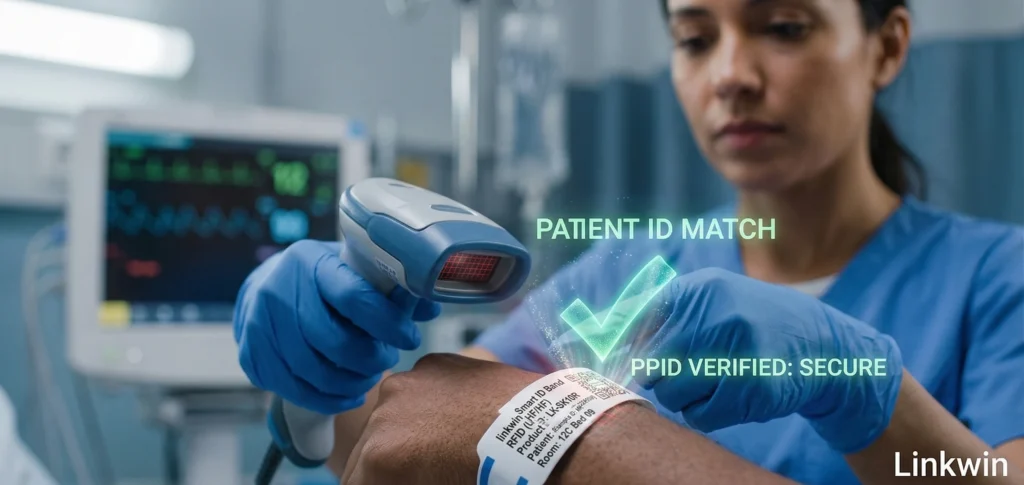
The Anatomy of a Modern Wristband Management System
Modern wristband management systems have evolved far beyond simple handwritten bands. Automated thermal printing delivers crisp, legible patient identifiers, eliminating human error inherent in manual entry. These systems serve as a crucial physical link—bridging the gap between bedside patient identification and the Electronic Health Record (EHR). By encoding barcode data directly on wristbands, they facilitate seamless data integration that supports accurate positive patient identification (PPID) across clinical workflows.
This integration relies on a well-coordinated synergy between high-resolution thermal printers and sophisticated hospital information systems (HIS). Thermal printers provide fast, durable printing that withstands frequent handling and sanitation, while HIS software controls real-time data updates, ensuring wristband information stays current and compliant. This hardware-software partnership underpins the accuracy and reliability hospitals require to enhance patient safety and streamline care delivery in large healthcare networks.
4 Strategic Ways Wristband Systems Enhance Safety in Large Networks
Wristband management systems play a critical role in improving patient safety across large hospital networks by targeting key risk areas:
Eliminating Medication Errors (BCMA): Barcode scanning on wristbands enforces the “Five Rights” of medication administration – right patient, right drug, right dose, right route, and right time. This reduces the chance of harmful drug errors and supports full Barcode Medication Administration (BCMA) compliance.
Standardizing Color-Coded Alerts: Unified color codes on wristbands for allergies, fall risk, and Do Not Resuscitate (DNR) orders reduce alert fatigue among clinicians. Consistent visual signals make it easier to recognize patient risks quickly and without confusion across departments.
Streamlining Specimen Collection: Wristband barcodes ensure exact matching of samples with the right patient at bedside. This reduces mishandling or mislabeling of blood and tissue samples, a common source of diagnostic errors in large hospitals.
Enhancing Surgical Site Safety: Wristband confirmations at the point of care prevent wrong-site or wrong-procedure surgeries. Verifying patient ID directly before procedures adds a crucial safety check that minimizes surgical errors network-wide.
These four strategies leverage wristband data as a foundation for safer clinical workflows in complex hospital systems.
Overcoming the Challenges of Large-Scale Wristband System Implementation
Implementing wristband management systems across large hospital networks means tackling several key challenges head-on. First, legibility and durability are non-negotiable. High-quality thermal wristbands must withstand soaps, hand sanitizers, moisture, and wear throughout a patient’s stay—ensuring barcodes and critical info stay clear and scannable.
Interoperability is another major hurdle. The wristband system must seamlessly communicate across departments like ER, Radiology, ICU, and Pharmacy, integrating with the hospital information system (HIS) to deliver real-time, reliable patient data. Without smooth data flow, errors and delays become risks.
Finally, staff training and compliance are crucial. Shifting from manual workarounds to a strict scan-first culture requires ongoing education and monitoring. Consistent workflow adoption is essential to fully realize the patient safety benefits wristband management promises in large-scale settings.
The LinkWin Advantage: Excellence in Thermal Wristband Technology
LinkWin wristbands are built tough for high-volume hospital environments, engineered specifically for long-term inpatient stays. Their durability stands up to constant exposure to soaps, sanitizers, moisture, and daily wear without fading or tearing. This reliability ensures patient safety by keeping essential identification clear throughout a hospital stay.
Patient comfort is also a key safety factor. LinkWin uses hypoallergenic, soft-touch materials that minimize skin irritation and reduce the risk of patients removing their bands. Comfortable wristbands mean fewer interruptions and better compliance with positive patient identification protocols.
Cost-efficiency is critical for large hospital systems aiming to scale safety without escalating procurement expenses. LinkWin’s thermal wristband technology offers consistent quality while keeping costs manageable, enabling networks to maintain patient safety standards across multiple facilities without ballooning budgets.
Compliance and Regulatory Standards
Large hospital systems must rigorously meet Joint Commission National Patient Safety Goals (NPSG), where wristband management plays a key role in patient identification and error reduction. Our wristband systems ensure compliance with HIPAA by securely handling Protected Health Information (PHI) on printed patient bands, safeguarding privacy without compromising accessibility. For multi-state networks, we apply standardized wristband protocols that harmonize data formats and scanning procedures across facilities, ensuring consistent patient safety practices and regulatory adherence nationwide. This commitment to compliance underpins trust and operational excellence in every clinical environment.
The Future of Patient ID: RFID and Beyond
Large hospital systems are moving beyond 1D and 2D barcodes toward RFID technology for patient identification. RFID offers real-time location tracking and faster, hands-free data capture, enhancing patient safety through continuous monitoring. This shift helps prevent misidentification and streamlines workflows in busy clinical environments.
To future-proof wristband management, hospitals must invest in scalable RFID solutions that integrate seamlessly with existing Electronic Health Records (EHR) and hospital information systems (HIS). Adopting RFID today prepares healthcare networks to meet evolving safety standards while improving positive patient identification and care coordination across departments.
FAQs on Wristband Management Systems for Hospital Patient Safety
Wristband management reduces medication errors by enforcing barcode scanning at the point of care, ensuring the “Five Rights” of medication administration—right patient, drug, dose, route, and time. This systematic check minimizes human mistakes and improves overall patient safety.
Thermal printing outperforms manual wristband methods by providing crisp, durable, and legible bands that resist smudging and moisture. Automated printing drastically reduces misidentification risks tied to handwriting errors or worn-out bands.
Interoperability across hospital departments allows seamless data flow between the wristband system, Electronic Health Records (EHR), and Hospital Information Systems (HIS). This alignment enhances clinical workflows, enabling faster verification and fewer delays in treatment.
Regulatory compliance for wristband systems includes meeting Joint Commission National Patient Safety Goals (NPSG), adhering to HIPAA rules to protect patient health information on bands, and following standardized protocols – especially important for multi-state hospital networks.
Hospitals should consider RFID technology when their patient volume and complexity require real-time tracking and enhanced location accuracy beyond barcode scanning, future-proofing wristband management against evolving safety demands.
