
Subtotal ¥0.00
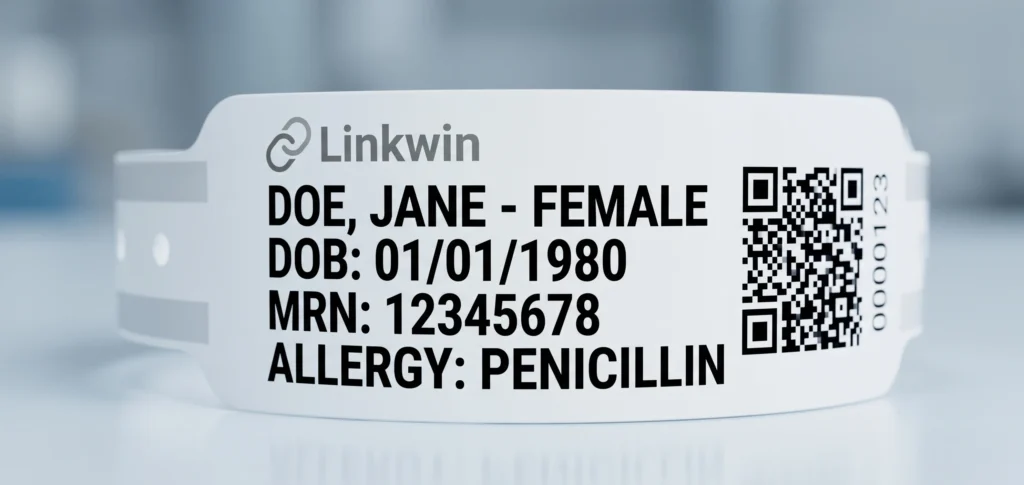
Accessibility Design and Legal Requirements for Medical Wristbands guide compliant thermal wristbands patient safety ADA AHA and HIPAA
Legal Framework
I design medical wristbands to support ADA compliance, Section 1557 of the ACA, and the 2026 DOJ Final Rule under Title II, while also protecting patient privacy under HIPAA. That means the band must be readable, accessible, and limited to the right clinical data only.
Core Requirements
- ADA compliance: clear identification for patients with visual, cognitive, or physical access needs
- Section 1557 of the ACA: nondiscrimination in healthcare communication and access
- 2026 DOJ Final Rule and Title II: stronger accessibility standards for public healthcare services
- HIPAA considerations: minimum necessary information, secure labeling, and privacy-first patient identification protocols
Design Rule
I use text plus color because accessibility medical devices must work for every staff member and every patient, including those who cannot rely on color alone.
AHA Color-Code Standards in Medical Wristbands
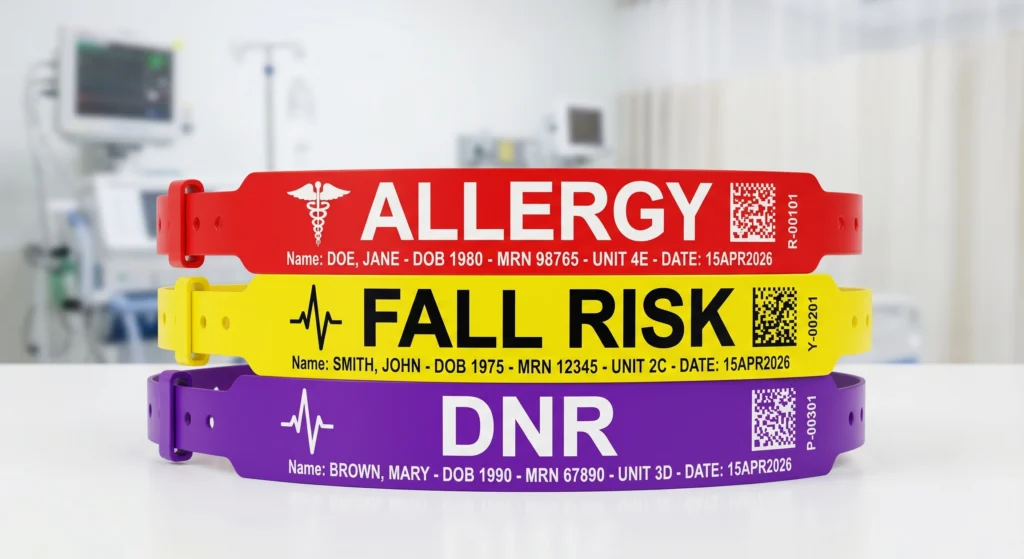
I use AHA color-code standards to make patient alerts fast to read and easy to trust. In most U.S. hospitals, red signals allergy alerts, yellow shows fall risk, and purple is used for DNR status. Some facilities also use secondary color alerts for extra safety notes, but the system works best when the text and color both matter. Color gets attention fast, and clear wording supports ADA compliance, visual accessibility, and stronger patient identification protocols.
Inclusive Design for Medical Wristbands
I build accessibility medical devices with real-world hospital use in mind, so the medical wristbands are easy to read, easy to wear, and easier to trust. For visual impairment accessibility, I use high-contrast printing, larger font sizes, and clean spacing so key patient ID details stand out fast.
Clear, Safe, Comfortable
- High-contrast text improves quick reading at the bedside
- Large, legible font supports staff and patients with low vision
- Tactile indicators help with non-visual identification
- Adjustable sizing keeps the band secure without pressure
- Latex-free medical supplies and skin-safe materials reduce irritation
- Medical grade synthetic paper supports comfort and durability
These choices support ADA compliance and better patient identification protocols while keeping the band practical for everyday use in U.S. hospitals.
Thermal Printing and Durability
I rely on thermal printable wristbands because they stay clear, fast to print, and dependable at the bedside. For medical wristbands, that matters from admission to discharge.
Thermal Wristband Advantages
- Clean, sharp text and barcodes
- Fast printing for patient identification protocols
- Strong fit for HIPAA-compliant ID bands and barcode medication administration (BCMA)
Built to Last
- Barcode integrity stays intact for scanning
- Smudge resistance helps prevent misreads
- Water and sanitizer resistance holds up in real hospital use
- Legibility from admission to discharge supports safer care
I use durable medical labeling and medical grade synthetic paper to keep the band readable, even with daily wear, cleaning, and movement.
Hospital Implementation
Staff Training
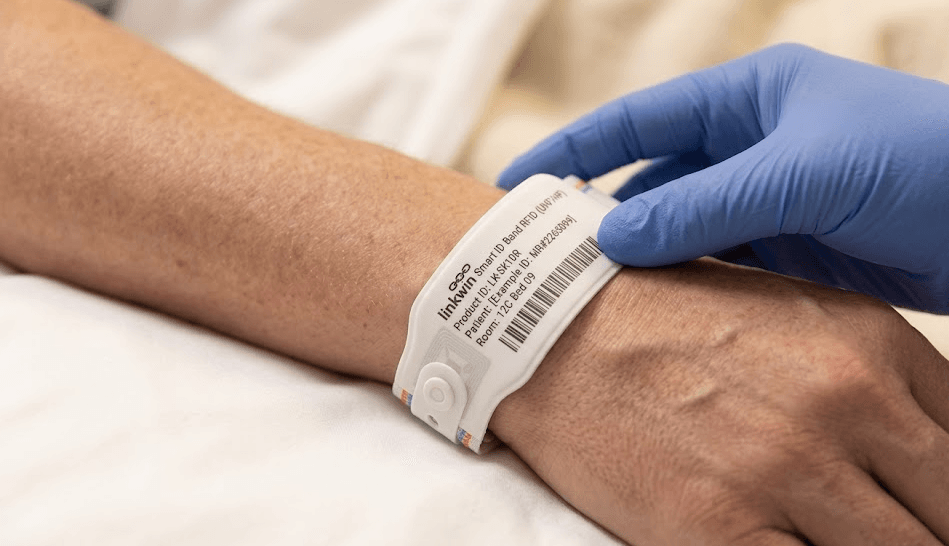
I build medical wristbands into daily workflow with clear staff training on patient identification protocols, ADA compliance, and HIPAA-compliant ID bands. Teams should know how to place, read, and verify wristbands fast, especially for visual impairment accessibility and fall risk assessment.
Patient Communication
I keep instructions simple and direct so patients understand why the wristband matters. Clear wording, high-contrast printing, and easy-to-read labels support inclusive healthcare design and cut confusion at the bedside.
Audit Trails
I track wristband use with audit trails tied to barcode medication administration (BCMA) and patient records. That helps maintain compliance documentation, supports Patient Safety Organizations (PSOs), and makes reviews easier when errors need to be traced.
Reducing Medical Errors
I use durable medical labeling that stays legible through a full stay, from admission to discharge. Strong thermal printable wristbands, smudge resistance, and water-resistant materials help reduce scan failures and support safer care in U.S. hospitals.
Medical Wristband FAQs
Required by law?
Medical wristbands are not always required by one single federal law, but they are widely used to support patient identification protocols, ADA compliance, and HIPAA-compliant ID bands in U.S. hospitals.
ADA impact
ADA Title II regulations push me to use accessibility medical devices that work for more people. That means clear text, strong contrast, and readable medical wristbands for visual impairment accessibility.
Standard alert colors
In many hospitals, the usual color-coded alert standardization is:
- Red for allergy alerts
- Yellow for fall risk
- Purple for DNR
- Secondary colors for other local alerts
Privacy and accessibility
I balance privacy and inclusive healthcare design by keeping only needed data visible, using durable medical labeling, and making sure the band is easy to read without exposing extra patient details.
Durable and compliant
A wristband stays compliant when it offers:
- Thermal printable wristbands
- Smudge resistance
- Water and sanitizer resistance
- Barcode integrity
- Latex-free medical supplies
- Legibility from admission to discharge
