
Subtotal ¥0.00
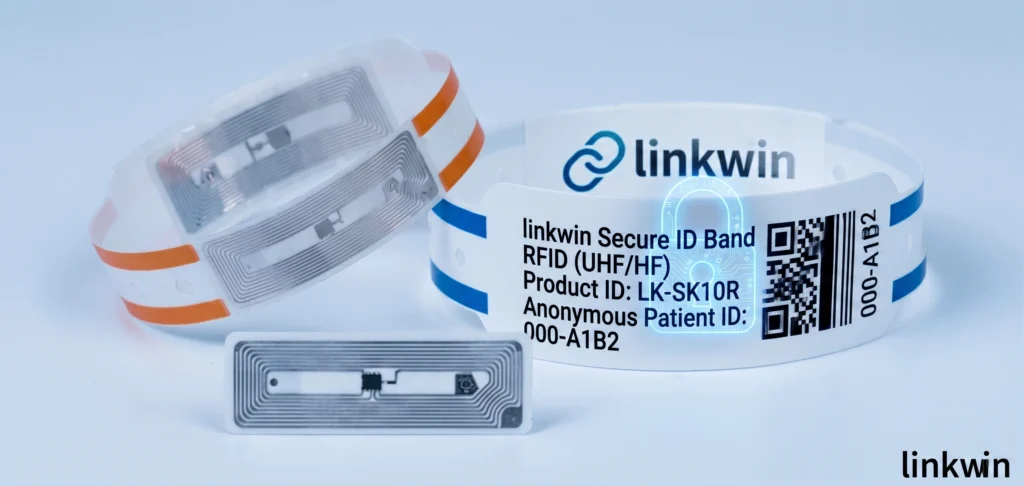
Data Protection and GDPR Compliance for Medical Wristbands secure direct thermal patient ID bands for safer healthcare data handling
Data Protection and GDPR Compliance for Medical Wristbands
Medical wristbands are more than an identification tool. They are patient data carriers that often hold names, dates of birth, hospital numbers, barcodes, QR codes, or linked Electronic Health Records (EHR) references. In practice, that makes data protection and GDPR compliance for medical wristbands a frontline issue, not a back-office one.
For me, the link is clear: wristbands support patient safety, privacy, and compliance at the same time. If the data is wrong, visible to the wrong person, or handled without control, the risk is not only a breach of GDPR principles but also a real patient identification error.
This matters across the care pathway, so hospitals, clinics, and healthcare procurement teams all have a responsibility. Choosing the right wristband is part of healthcare data security and part of safe, compliant care in the UK.
Why GDPR Matters in Healthcare
GDPR matters in healthcare because I handle some of the most sensitive special category data GDPR covers: health information. On medical wristbands, even basic details can link straight back to a patient, so data protection and GDPR compliance for medical wristbands is not optional. It sits right at the point where patient privacy in hospitals, safety, and day-to-day care meet.
Special Category Health Data
Under GDPR, health data needs extra care. A wristband may hold or reveal:
- Patient name or ID
- Date of birth
- NHS number or barcode linked to records
- Allergy or treatment alerts
That means GDPR medical data must be kept to the minimum needed for safe care, with data minimisation and pseudonymisation used wherever possible.
Key GDPR Principles
For GDPR compliant patient ID bands, I focus on:
- Data minimisation: only print what staff actually need
- Accuracy: avoid errors that cause patient identification errors
- Security: control access with role-based access control
- Storage limitation: do not keep wristband data longer than needed
- Integrity and confidentiality: protect printing, scanning, and disposal
What Happens If Compliance Fails
When healthcare organisations get this wrong, the risks are real:
- Fines and regulatory action
- Breaches of medical data protection laws
- Loss of trust from patients and staff
- Avoidable safety incidents from wrong or unreadable wristbands
In practice, poor healthcare data security can put both patient safety and data privacy at risk.
How Medical Wristbands Expose Patient Data
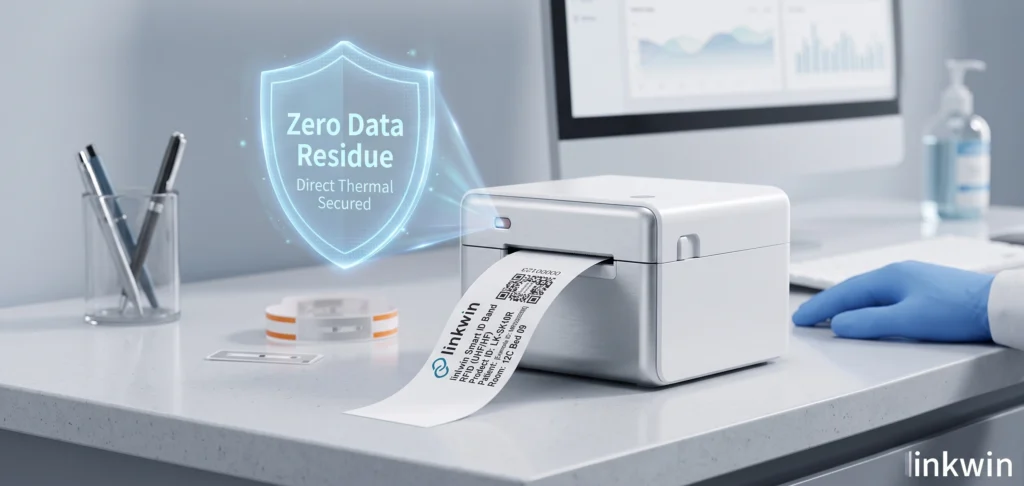
Medical wristbands can carry patient data in plain view, so I treat them as a privacy risk as well as a safety tool. Even a small band can expose names, NHS-style identifiers, dates of birth, allergy notes, or other sensitive details if the print is too detailed.
Printed Data on Wristbands
- Full names and ward details
- Patient IDs and date of birth
- Allergy or treatment alerts
- Barcode labels that link back to records
Barcode, QR Code, and RFID Risks
Barcode scanning security matters, because a quick scan can reveal more than it should if access is not tightly controlled. QR codes and RFID medical wristband privacy also need care, since they may link to wider Electronic Health Records integration and expose special category data under GDPR.
Hidden Exposure from Printing
I also watch the printing process itself. Printer ribbons, labels, and leftovers can hold readable patient information if they are not handled and destroyed properly. That is where secure thermal wristband printing and careful disposal help reduce hidden data exposure and support patient privacy in hospitals.
Main GDPR Risks with Medical Wristbands
Medical wristbands carry real GDPR medical data risks if they are not handled properly. The biggest problems I see are:
- Unauthorised scanning of barcodes, QR codes, or RFID tags, which can expose patient privacy in hospitals
- Lost, discarded, or misused wristbands, where printed details may still identify a patient
- Faded or unreadable print, which can lead to patient identification errors and unsafe care
- Data retention risks in thermal transfer printing, where ribbons and labels may hold hidden patient data longer than needed
For GDPR compliant patient ID bands, I keep the data on the wristband to the bare minimum, use secure printing, and treat every used band as sensitive waste. That is the simplest way to reduce healthcare data security risks and protect patient safety and data privacy.
GDPR Compliance for Medical Wristbands
I keep medical wristbands GDPR compliant by using data minimisation first: only the details needed for safe patient identification go on the band. I use pseudonymisation with a unique patient ID wherever possible, so sensitive information stays off the wristband.
Secure Access and Printing
I also limit access with secure scanners and role-based access control, so only authorised staff can view or scan patient data. For GDPR compliant patient ID bands, I keep printing and disposal tight:
- use safe, on-demand printing
- remove and destroy used wristbands properly
- follow clear handling rules for leftover labels and waste
This helps protect patient privacy in hospitals while supporting safer, cleaner workflows.
Direct Thermal Wristbands for Better Data Protection
Direct thermal wristbands are a strong fit for data protection because they remove the ribbon from the printing process. No ribbon means less chance of hidden data being left behind during printing, storage, or disposal, which helps reduce privacy risk in busy NHS and private healthcare settings.
Secure patient identification
I use direct thermal printing to keep patient details clear, simple, and limited to what is needed. That supports secure patient identification, reduces patient identification errors, and helps staff scan wristbands quickly at the bedside without exposing extra data.
Durable and reliable
These wristbands are built for real hospital conditions. They stay readable through water, alcohol, and daily wear, with good scan accuracy for barcodes and QR codes. That makes them more dependable for healthcare data security, patient privacy in hospitals, and GDPR medical data handling.
Medical Wristband Security Features
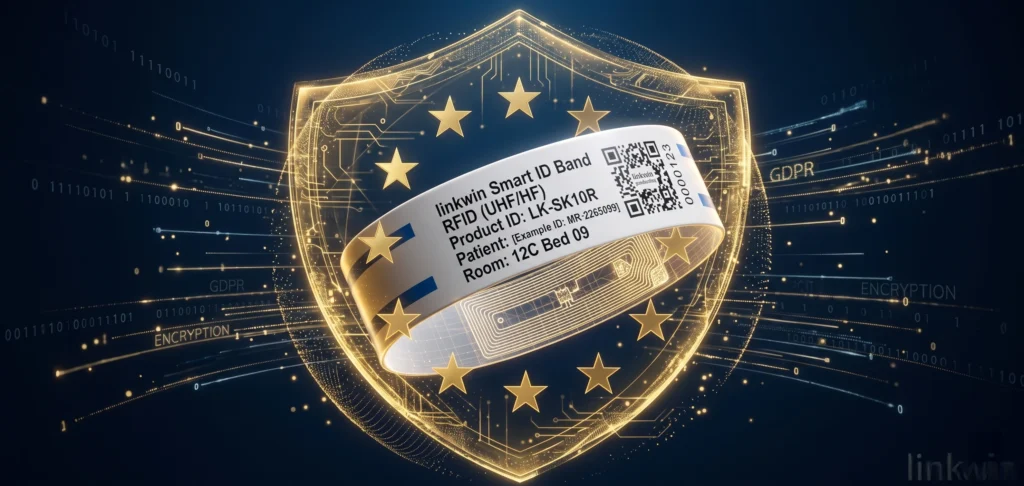
When I look at medical wristbands for Data Protection and GDPR Compliance, I focus on features that keep patient privacy in hospitals tight without slowing staff down.
| Feature | Why it matters |
|---|---|
| Tamper-evident closures | Makes it clear if a band has been removed or changed |
| Water and alcohol resistance | Helps the print stay readable through cleaning and daily wear |
| Readable barcodes and QR codes | Supports fast, accurate scanning and cuts patient identification errors |
| EHR system compatibility | Keeps the wristband linked to Electronic Health Records integration |
| Secure on-demand printing | Limits exposure of GDPR medical data and reduces waste |
I always prefer tamper-evident wristbands because they add a simple layer of protection for patient safety and data privacy. Water-resistant and alcohol-safe materials also matter in UK wards, where wristbands need to hold up through handwashing, sanitising, and routine care.
For GDPR compliant patient ID bands, clear barcode scanning security is a must. If the code does not scan cleanly, it creates delays and raises the risk of error. Secure, on-demand printing also helps with healthcare data security by printing only what is needed, when it is needed.
Hospital Procurement Checklist for Compliant Wristbands
When I buy GDPR compliant patient ID bands, I keep the focus on patient privacy in hospitals, reliable scanning, and day-to-day use on the ward. For UK healthcare procurement, I want wristbands that support medical data protection laws without making the workflow harder.
Supplier checks I use
- What patient details are printed, and can this be reduced with data minimisation?
- Does the supplier support pseudonymisation and unique patient IDs?
- Are the wristbands suitable for secure thermal wristband printing and on-demand use?
- Is there clear support for barcode scanning security and controlled access?
- Do the wristbands fit with Electronic Health Records integration and hospital systems?
Security features I verify
- Tamper-evident wristbands
- Clear barcodes and QR codes for safe scanning
- Water and alcohol resistance for clinical use
- Secure storage and handling of print data
- Role-based access control for printing and reprinting
Print and lifecycle standards
I also check print quality, durability, and how long the wristband stays readable during normal hospital use. A compliant option should stay scannable, resist wear, and avoid unnecessary data exposure from the start to the end of its lifecycle.
Vendor readiness
For a GDPR-focused healthcare environment, I want a supplier that understands healthcare data security, safe disposal, and the practical demands of UK hospitals, clinics, and procurement teams. That means consistent output, sensible privacy controls, and wristbands that help protect both patient safety and data privacy.
Patient Safety and Privacy
Medical wristbands help me cut patient identification errors by keeping the right details tied to the right person at the bedside. When used well, they support safer checks for medication, tests, and transfers, which is a big part of patient safety and data privacy.
Safer Medication Checks
A clear wristband makes reliable medication administration much easier. Staff can confirm identity quickly with a name, date of birth, barcode, or QR code, without handling extra personal data. That helps reduce mix-ups and supports GDPR medical data handling by keeping the print details to a minimum.
Less Data, Better Flow
I prefer wristbands that improve ward workflow without exposing more than needed. Using data minimisation, secure scanning, and controlled access keeps information tight, while still supporting fast care in busy UK hospitals and clinics. It is a simple way to balance speed, accuracy, and privacy.
Secure Wristband Disposal
Used medical wristbands should be treated as patient data, not just waste. For GDPR medical data compliance, I keep disposal tight because names, dates of birth, barcodes, QR codes, and patient IDs can still expose sensitive information after discharge.
Safe destruction
- Cut or shred wristbands before disposal
- Remove labels, inserts, and printer waste at the same point
- Use secure disposal of patient wristbands in locked clinical waste streams
- Make sure thermal print, barcodes, and RFID-related parts are not left readable
Internal handling
I would expect clear hospital policies for:
- discharge collection
- ward-level waste handling
- secure bins for used bands
- staff training on patient privacy in hospitals
A simple rule works best: if a wristband has personal data on it, it stays protected until it is fully destroyed.
FAQs About Data Protection and GDPR Compliance for Medical Wristbands
What patient details should be printed on a wristband?
I keep it to the minimum needed for safe identification: usually the patient name, date of birth, and a unique patient ID. For GDPR medical data, less is better, so I avoid printing anything extra unless it is clearly needed for care.
Are barcodes or QR codes GDPR compliant?
Yes, they can be, as long as they support data minimisation and do not expose more information than needed. In practice, I treat barcode scanning security as part of the system, so access controls and secure EHR integration matter just as much as the code itself.
Is RFID safe for medical wristbands?
RFID can be used safely, but it needs tighter controls because of RFID medical wristband privacy risks. I only see it as suitable where scanning is restricted, role-based access control is in place, and the data stored is kept very limited.
How long should wristbands be kept after discharge?
I follow local policy and keep it simple: once the wristband is no longer needed, it should be removed and disposed of securely. That helps reduce patient privacy risks in hospitals and keeps retention under control.
What should a hospital ask before buying compliant wristbands?
I would check for:
- GDPR compliant patient ID bands
- tamper-evident wristbands
- secure thermal wristband printing
- clear barcode or QR code readability
- compatibility with Electronic Health Records integration
- secure disposal guidance
- support for role-based access control
These checks help hospitals and procurement teams balance patient safety and data privacy without adding unnecessary risk.
